






The projector market has become fiercely competitive, with many brands rushing to launch triple-laser models and challenge high-end traditional projectors costing hundreds of thousands of yuan. After years of development, Optoma has finally launched its next flagship laser projector following the UHZ886—the UHR90DV, its first RGB native triple-laser 4K home theater projector.
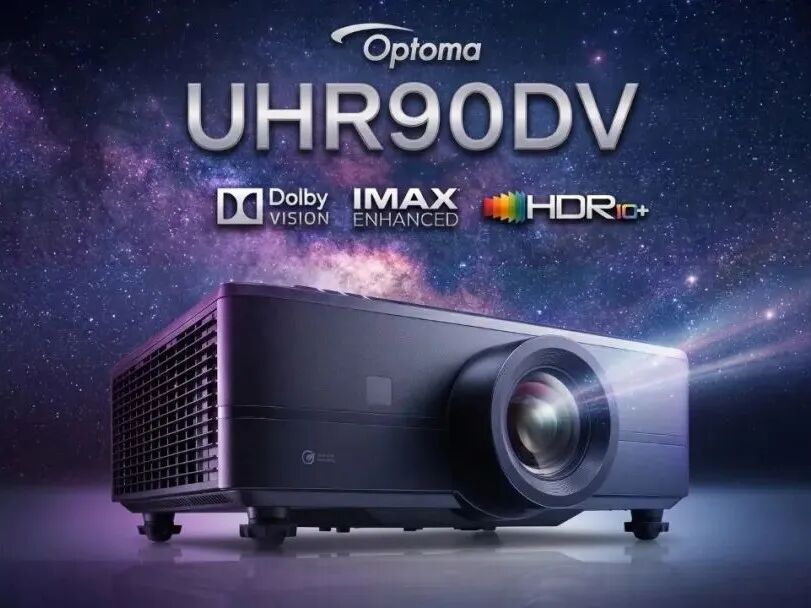
Brightness is critical for projectors, especially for HDR performance. With this high brightness foundation, the Optoma UHR90DV has earned the rare dual certification of Dolby Vision + IMAX Enhanced, a major win for Dolby Vision enthusiasts.
Key Hardware Specifications
- Light Source: Pure RGB triple laser (independent red, green, blue lasers) | Light source lifespan: 30,000 hours (Eco mode)region-res...
- Brightness: 5,000 ISO lumensregion-res...
- Native Contrast Ratio: 4,500,000:1
- Color Gamut: 96% BT.2020, 98% DCI-P3 | 12-bit color depthregion-res...
- Chip: 4K UHD DLP (pixel-shifted 4K)
- Lens: 1.6x motorized zoom | Throw ratio: 1.25–2.0:1 | Motorized lens shift: Horizontal ±25% / Vertical ±55% | 5 lens memory presets
- Projection Size: 80–300 inches
- Refresh Rate: Up to 240Hz | Low-latency gaming mode supportedregion-res...
Core Audio-Visual Highlights (Key Selling Points)
1. Dolby Vision + IMAX Enhanced Dual Certification
- Dolby Vision provides frame-by-frame dynamic HDR calibration, offering far more precise optimization for highlight details and shadow gradation than standard HDR10Optom....
- IMAX Enhanced optimizes color, sharpness, and aspect ratio specifically for IMAX content, recreating the theatrical IMAX viewing experience at homeOptom....
- Additional support for HDR10+ and Filmmaker Mode allows users to disable all post-processing effects with one click, faithfully preserving the director’s original color grading and creative intentOptom....
2. PureEngine™ Ultra Next-Generation Image Processing
Optoma’s new imaging engine integrates dynamic contrast enhancement, noise reduction, color mapping, and motion compensation for superior picture qualityregion-res....
Who Is This For?
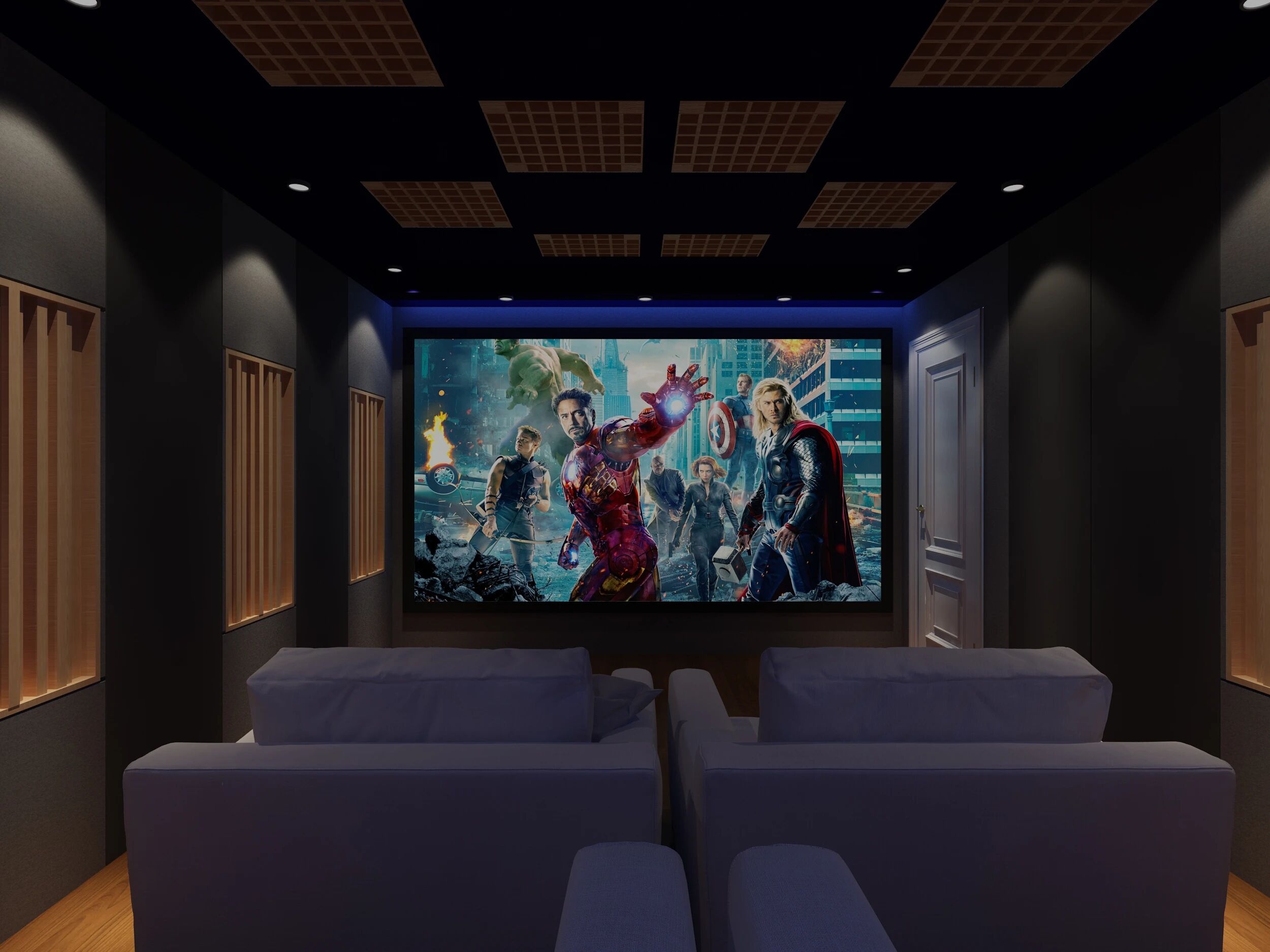
This projector is not designed for casual users in rental apartments or those seeking portability. It is tailored for avid movie lovers and home theater enthusiasts, ideal for dedicated, light-controlled, and dark-themed home cinema rooms. Paired with a large 130-inch+ high-gain acoustically transparent screen, its 5,000 lumens easily supports 150–200-inch displays. The pure RGB triple-laser delivers flawless color reproduction, avoiding the common red-channel weaknesses found in dual-laser projectors.
Important Considerations (The Downsides)
- Laser Speckle: An inherent physical characteristic of pure RGB triple lasers. The highly coherent light can cause interference, resulting in a grainy or noisy appearance. Sensitivity varies by individual—some may not notice it, while others find it distracting. Generally, triple-laser projectors exhibit more noticeable speckle than dual-laser models.
- Large Form Factor: Flagship projectors are inherently bulky. Many users still envision projectors as compact portable devices, so the UHR90DV’s size may feel out of place in a typical living room.
- No Built-in Media Player: Premium home theater projectors typically omit internal players. This means you will need a separate Blu-ray player or media streamer. For enthusiasts, this is often a plus, as built-in players add cost, power consumption, and potential obsolescence as technology evolves. This makes the UHR90DV less suitable for users who prefer a simple, plug-and-play streaming experience.