






At IFA 2026 in Berlin this September, BenQ officially unveiled its new flagship home cinema projector, the W4200. Replacing the W4100i and W5800, the W4200 abandons the "built-in smart box" approach and puts image quality back at the centre: a triple RGB laser light source, an all-new 100% all-glass motorized lens, AI-driven image processing, and a complete video spec covering Dolby Vision, HDR10+ and IMAX Enhanced — clearly aimed at home cinema enthusiasts and dedicated media-room owners.
1. Goodbye LED: Triple Laser for Direct Wide-Gamut Colour
The biggest change is the light source: the W4200 moves from LED to a triple RGB laser. Red, green and blue lasers are combined independently rather than relying on a single blue laser with a phosphor wheel, so the colour gamut ceiling is higher, colours are purer, and colour stability holds up better over time. Brightness reaches 3,200 ANSI lumens, with 95% Rec.2020 and 100% DCI-P3 coverage.
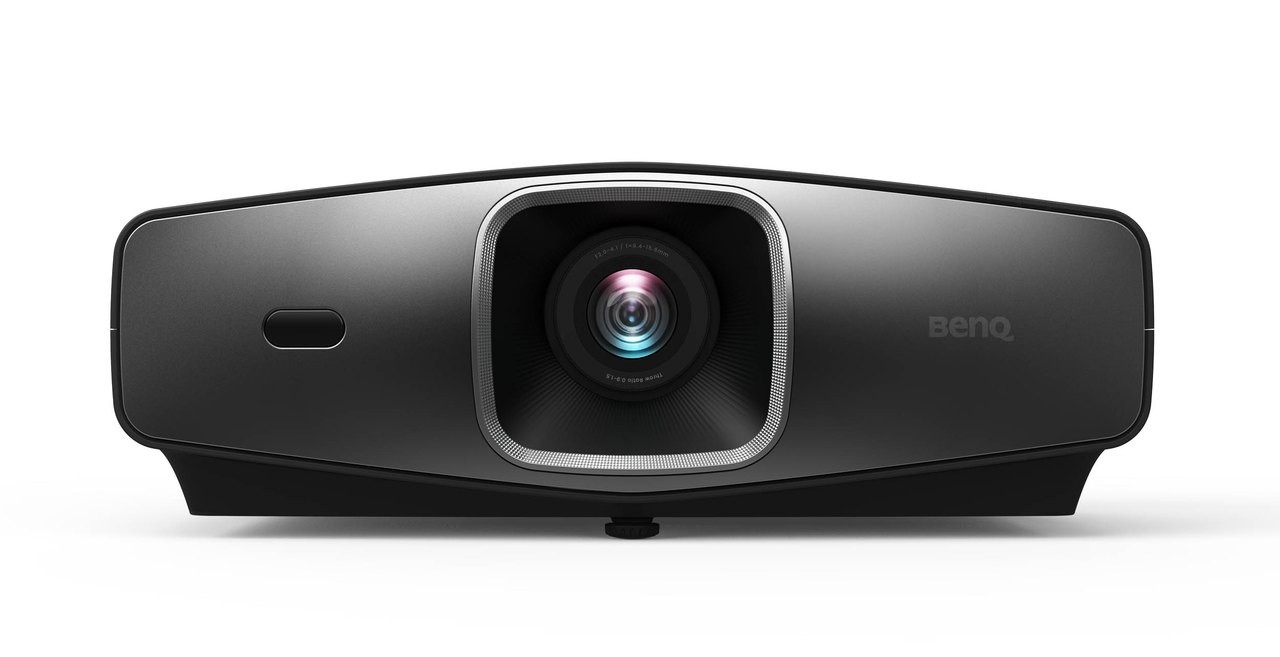
BenQ W4200 triple laser 4K home cinema projector
The imaging core is a Texas Instruments 0.47-inch SST DLP chip (codename Numb42) with a native 1920×1080 panel, delivering 3840×2160 4K UHD output via XPR4 fast pixel-shifting. BenQ claims a native contrast ratio of 3000:1 and a dynamic contrast ratio of up to 5,000,000:1 — the former sets the black-level and depth baseline, while the latter relies on the mechanical iris, dynamic black and tone mapping for extreme extension.
2. Hyper Wavelength Anti-Speckle and All-Glass Motorized Lens
Speckle has long been the weak spot of triple-laser home projectors — grainy sparkle on large areas of pure colour such as night skies, white walls and skin tones. The W4200 includes a system called Hyper Wavelength Laser, a wavelength-processing stage in the laser optical path that significantly reduces visible speckle, while also suppressing the rainbow effect common to single-chip DLP.
The lens is the W4200's other headline feature: a 100% all-glass, fully motorized lens with motorized focus, zoom and lens shift. Throw ratio is 0.9–1.5 with 1.6x optical zoom, and lens shift reaches ±50% vertical / ±20% horizontal. Combined with four-corner correction, this dramatically improves installation tolerance for ceiling mounts and concealed media rooms; a 120-inch image needs only about 2.4 metres. A three-position mechanical iris further extends dynamic range in dark rooms.
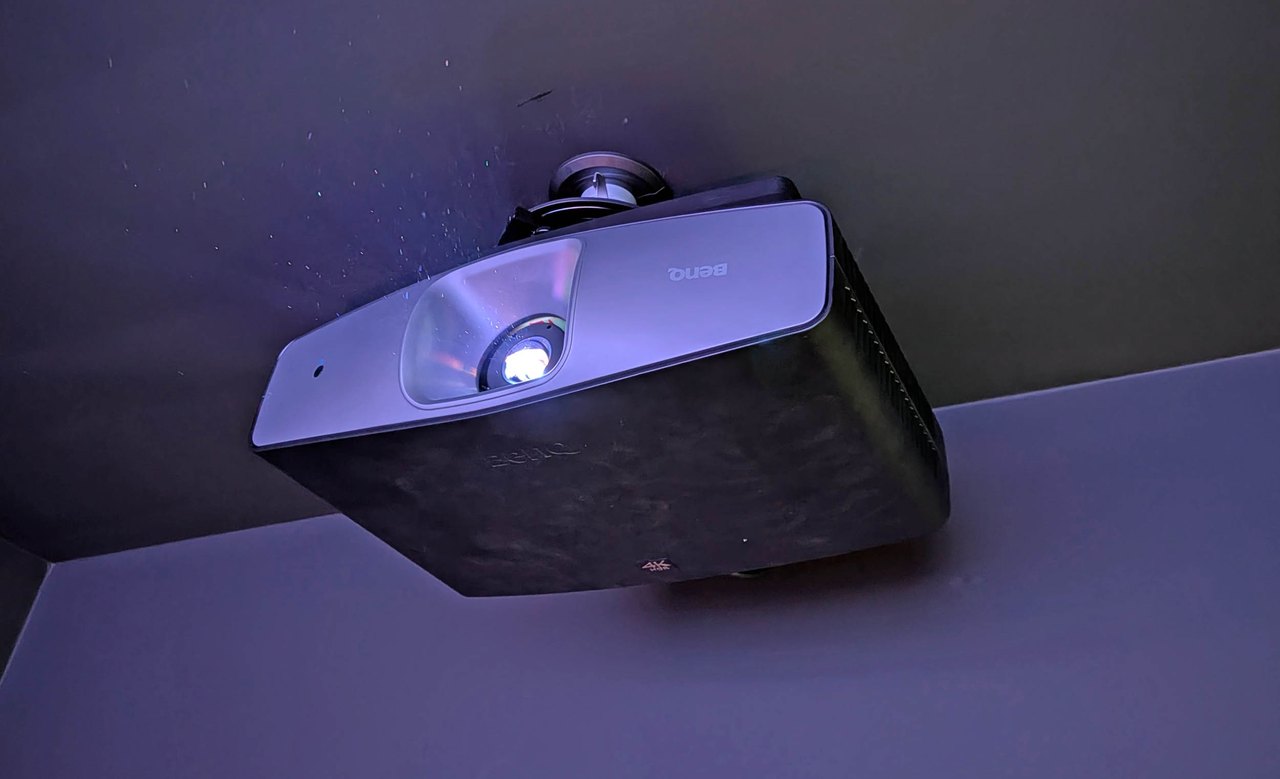
Motorized lens shift makes ceiling installation far more flexible
3. MT9681 AI Chip and a Full Certification Line-Up
Image processing moves to a MediaTek MT9681 AI chip, whose compute directly feeds BenQ's in-house Authentic Motion motion compensation — AI-optimized to reduce judder without the usual soap-opera effect. Together with HDR Pro 2.0, dynamic tone mapping, local/global contrast enhancement and Dynamic Black, shadow and highlight reproduction is more natural.
HDR support covers Dolby Vision, HDR10, HDR10+ and HLG, with Filmmaker Mode preserved and IMAX Enhanced certification earned. A built-in 2.35:1 widescreen mode supports cinema-format playback with anamorphic lenses, and 3D Ready is retained with BD 3D and DLP Link support. Note that the W4200 supports Dolby Vision but not the newer Dolby Vision 2 (BenQ explains that compatible chips are currently prioritised for the TV industry).
4. Connectivity and Ecosystem: HDMI 2.1 + Matter
Connectivity includes HDMI 2.1 ×2 (one with eARC, handy for passing high-bitrate Dolby Atmos to an AV receiver), powered USB-C, USB-A, a 12V Trigger, 3.5mm audio out, Ethernet (RJ-45) and Wi-Fi, plus VRR support. For smart homes it offers native Matter, compatible with Apple, Google and Amazon hubs. Running noise is as low as 27dB in Eco mode and 29dB in Normal mode — quiet for a high-end laser model.
5. Key Specifications at a Glance
| Specification | Value |
|---|---|
| Display Chip | 0.47" TI SST DLP (Numb42), XPR4 4K |
| Resolution | 3840×2160 (4K UHD) |
| Light Source | Triple RGB laser |
| Brightness | 3,200 ANSI lumens |
| Contrast | Native 3000:1 / Dynamic 5,000,000:1 |
| Colour Gamut | 95% Rec.2020 / 100% DCI-P3 |
| Anti-Speckle | Hyper Wavelength Laser system |
| Lens | 100% all-glass, fully motorized (focus/zoom/shift) |
| Throw Ratio / Zoom | 0.9–1.5 / 1.6x optical zoom |
| Lens Shift | ±50% vertical / ±20% horizontal |
| Mechanical Iris | 3 positions |
| Processing | MediaTek MT9681 + AI Cinema / Authentic Motion / HDR Pro 2.0 |
| HDR / Certifications | Dolby Vision, HDR10, HDR10+, HLG; IMAX Enhanced, Filmmaker Mode |
| I/O | HDMI 2.1 ×2 (eARC), USB-C, USB-A, 12V Trigger, RJ-45, Wi-Fi |
| Noise / Refresh | 27dB (Eco) / 29dB (Normal); 60Hz |
| Smart Home | Native Matter |
| Availability / Price | January 2027, around €4,000 |
Overall, the W4200's differentiation comes down to DLP plus triple laser, an all-glass motorized lens, dual IMAX / Dolby Vision certification and MT9681 AI processing. Launching in January 2027 at around €4,000, it takes on Sony SXRD laser, JVC laser and Epson 3LCD laser flagships — a fresh option for home cinema users who prize image purity above all.