






On October 12, 2026, XGIMI officially launched the HORIZON 30 Series of home projectors, comprising three models: the HORIZON 30 Pro, the HORIZON 30 Max and the HORIZON 30 Ultra Max. First previewed at IFA 2026, the series combines an RGB triple laser light source with a 0.47-inch DLP digital micromirror device, reaching up to 6,000 ISO lumens of brightness and up to 10,000:1 native contrast, and bringing full 4K 120Hz support to the HORIZON line for the first time.
Compared with the previous HORIZON 20 Series, the HORIZON 30 Series delivers up to 15 percent more brightness, seven times the native contrast and twice the refresh rate. XGIMI frames this generation around a simple idea: make big-screen entertainment work for more of what people watch, and for more of the rooms they watch it in. Afternoon sports, weekend gaming and late-night movies can all rely on the same projector to deliver a suitable picture.
How the Three Models Differ
All three models in the HORIZON 30 Series share the same optical platform, the same DMD chip, the same audio system and the full set of gaming capabilities. The differences come down to brightness and native contrast: the HORIZON 30 Pro is rated at 4,800 ISO lumens and 8,000:1, the HORIZON 30 Max steps up to 5,300 ISO lumens and 9,000:1, and the flagship HORIZON 30 Ultra Max reaches 6,000 ISO lumens and 10,000:1. In other words, each step up in price buys a brighter picture with deeper contrast rather than a more complete feature set.
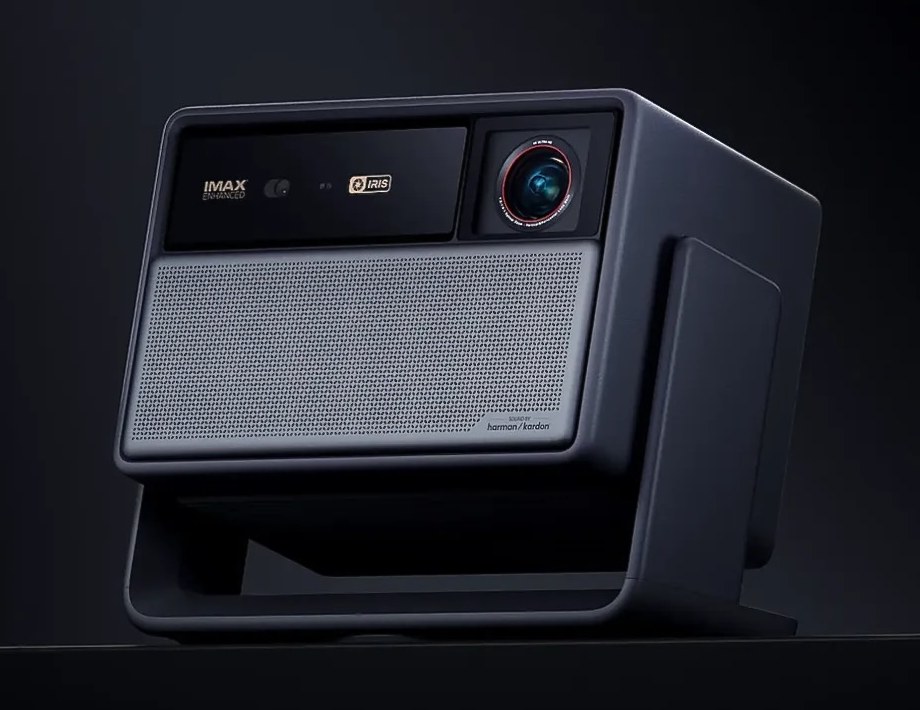
XGIMI HORIZON 30 Pro, which shares its chassis design with the HORIZON 30 Max
RGB Triple Laser and Dual Intelligent Iris
The HORIZON 30 Series uses XGIMI's new QuaLas42 optical engine, built on an RGB triple laser light source that integrates 20 laser diodes. Unlike single-color laser designs that pass light through a phosphor wheel, a triple laser system forms the image directly from red, green and blue primaries with no color wheel conversion, which widens the color gamut and improves color purity. The arrangement of multiple laser diodes is also intended to suppress the speckle and color fringing that often accompany laser projection. The light source is rated for 25,000 hours of operation. According to XGIMI, the series covers 98 percent of the BT.2020 color gamut, with factory calibration achieving Delta E of less than 0.8 in Adobe RGB, Rec.709, DCI-P3 and Rec.2020.
The core of image control is the Dual Intelligent Iris system. It pairs a dynamic iris that adjusts in real time to scene brightness with a second physical aperture, widening the usable range in both highlights and shadows: bright scenes avoid clipping while dark scenes retain shadow detail. Together with native contrast of up to 10,000:1 and dynamic contrast of 100,000:1, this allows solid black level performance even in living rooms that cannot be fully darkened.
HDR support is comprehensive: all four mainstream formats are covered, including Dolby Vision, HDR10+, HDR10 and HLG. The series also carries IMAX Enhanced certification and offers both Filmmaker Mode, which disables motion smoothing and preserves the original aspect ratio and color grading, and ISF certified picture modes. 3D playback is retained as well, with Full HD 3D support.
HORIZON 30 Ultra Max: The Flagship
As the top model in the range, the HORIZON 30 Ultra Max pushes brightness to 6,000 ISO lumens and native contrast to 10,000:1. The practical value of this brightness tier lies in image size and tolerance to ambient light: it can support a larger projection area and remain watchable in a living room with daylight or other ambient light. XGIMI cites daytime sports viewing and projecting very large images in rooms with windows as typical use cases.
On the lens side, the HORIZON 30 Ultra Max carries what XGIMI calls the X-Master Red Ring Lens, identified by the red accent ring around the lens barrel. The optical system uses a multi-element design, described in European market materials as a 19-element structure, and is engineered for consistent resolution from the center of the image to the edges. Optical specifications are shared across all three models: 1.25x optical zoom, a throw ratio of 1.2 to 1.5:1, and lens shift of plus or minus 130 percent vertically and plus or minus 50 percent horizontally, with image sizes from 65 to 300 inches.
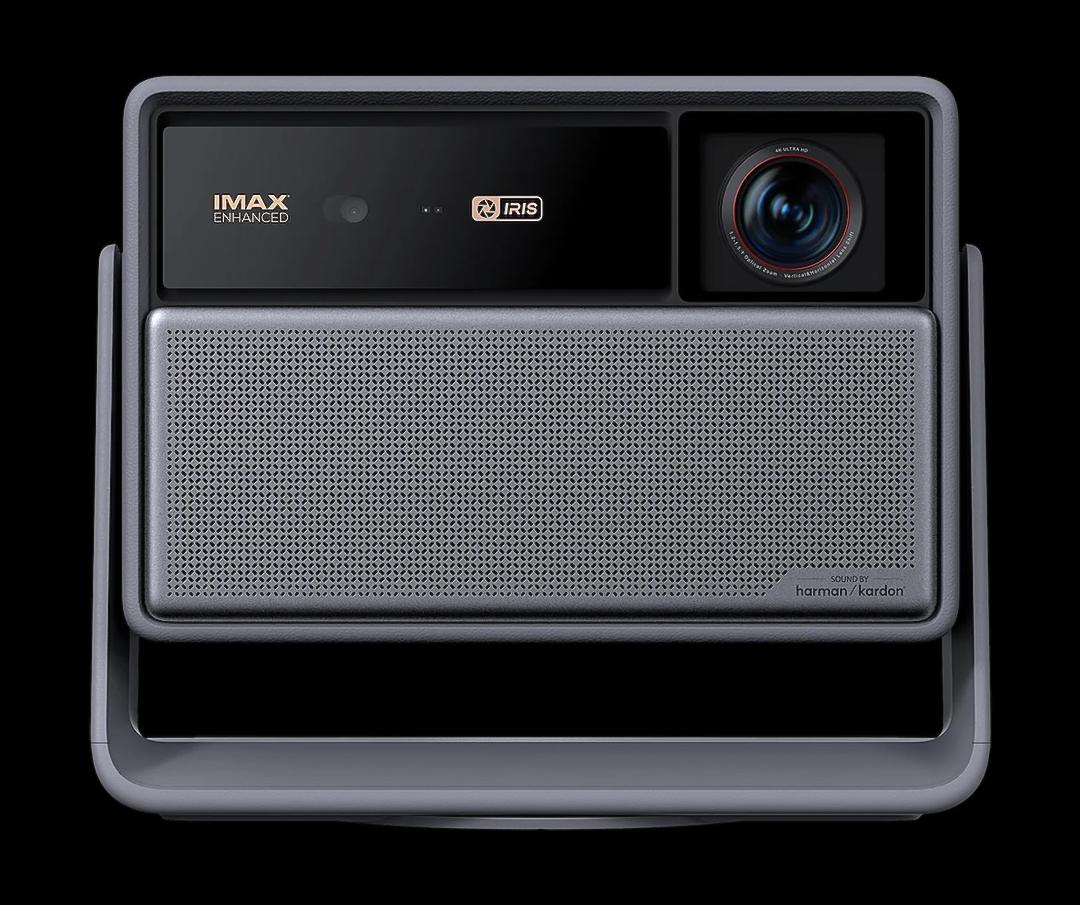
XGIMI HORIZON 30 Ultra Max, with the X-Master red ring marking around the lens
4K 120Hz Is Not Only for Gaming
The most obvious beneficiaries of bringing 4K 120Hz to a home projector are gamers. All three models in the HORIZON 30 Series accept 4K 120Hz signals, with up to 240Hz at 1080p resolution. XGIMI rates input latency at 1.9 milliseconds at 4K and 120Hz, and 1 millisecond at 1080p and 240Hz. Variable refresh rate, auto low latency mode and AMD FreeSync are all supported. Both HDMI ports accept 4K 120Hz signals, and the first port carries eARC, allowing lossless audio to reach a soundbar or AV receiver over a single cable. For competitive play, the projectors add Black Equalizer, which lifts the brightness floor in dark areas to reveal concealed targets, and Virtual Crosshair, which places an on-screen aiming reticle. Preset modes cover Sport, FPS, RTS and RPG, along with a dedicated mode tied to the partnership with Ubisoft for Assassin's Creed.
XGIMI stresses that the value of 120Hz extends beyond gaming. Cinema's native 24fps content divides evenly into 120Hz, so films can be displayed without the judder that 3:2 pulldown introduces when 24fps material is shown on a 60Hz display, bringing motion closer to what a cinema screen provides. When watching live sports, the higher refresh rate also makes fast motion easier to follow. The display chain, in short, is prepared for movies, sports and games alike.
Placement Freedom and Automatic Calibration
The HORIZON 30 Series continues the cube-shaped design and integrated gimbal stand of the HORIZON line. The stand rotates 360 degrees horizontally and tilts 135 degrees vertically, so the projector does not need to face the screen directly and many rooms no longer require an additional shelf. Once positioned, XGIMI's ISA, or Intelligent Screen Adaption, system takes over automatic keystone correction, autofocus, obstacle avoidance, automatic screen alignment and wall color adaptation, handling most adjustments without manual input. If a person passes in front of the lens, the system automatically stops projection to protect the eyes, a feature aimed in particular at children. A Lens Memory function stores up to five custom configurations, making it easier to switch between everyday 16:9 television content and ultra-wide film formats.
Audio, System and Connectivity
Two 12W speakers are built into the chassis, designed and tuned with Harman Kardon and processed with DTS Virtual:X for a surround-like presentation without external speakers. This is one reason the HORIZON line retains its cubic shape: the larger enclosure leaves room for the speaker system. At the system level, the HORIZON 30 Series runs Google TV, gathering streaming apps and video services into a single interface, with support for Google Assistant voice control and Google Cast. Connectivity includes two HDMI ports, both HDMI 2.1 with 4K 120Hz support and the first with eARC, plus one USB 3.0 port, one USB 2.0 port, one optical digital audio output and one 3.5mm audio output. Wireless support covers dual-band Wi-Fi 6 and Bluetooth 5.2.
Pricing and Availability
The HORIZON 30 Series opened for pre-order on xgimi.com on October 12, 2026, running through October 31, with open sales beginning November 1. During the pre-order period the three models are discounted by 600 dollars, 500 dollars and 500 dollars respectively: the HORIZON 30 Pro is available for 1,899 dollars against a list price of 2,499 dollars, the HORIZON 30 Max for 2,499 dollars against a list price of 2,999 dollars, and the HORIZON 30 Ultra Max for 2,999 dollars against a list price of 3,499 dollars. Pre-orders are also open in Europe, where the three models are listed at indicative pre-order prices of 1,999 euros, 2,499 euros and 2,999 euros, with regular pricing of 2,499 euros, 2,799 euros and 3,299 euros.
Every pre-order includes an installation bundle: a choice of an XGIMI Floor Stand in Elephant Grey or a ceiling mount, two pairs of 3D glasses, and a 500 dollar coupon toward the XGIMI Ascend ambient light rejecting screen.
Specifications
| Item | HORIZON 30 Pro | HORIZON 30 Max | HORIZON 30 Ultra Max |
|---|---|---|---|
| List price | 2,499 dollars | 2,999 dollars | 3,499 dollars |
| Pre-order price | 1,899 dollars | 2,499 dollars | 2,999 dollars |
| Light source | RGB triple laser | RGB triple laser | RGB triple laser |
| Brightness | 4,800 ISO lumens | 5,300 ISO lumens | 6,000 ISO lumens |
| Native contrast | 8,000:1 | 9,000:1 | 10,000:1 |
| Dynamic contrast | 100,000:1 | 100,000:1 | 100,000:1 |
| Display device | 0.47″ DLP | 0.47″ DLP | 0.47″ DLP |
| Resolution | 3840 × 2160 | 3840 × 2160 | 3840 × 2160 |
| Refresh rate | 4K 120Hz / 1080p 240Hz | 4K 120Hz / 1080p 240Hz | 4K 120Hz / 1080p 240Hz |
| Input latency | 1.9ms at 4K/120 | 1.9ms at 4K/120 | 1.9ms at 4K/120 |
| Optical zoom | 1.25x | 1.25x | 1.25x |
| Throw ratio | 1.2–1.5:1 | 1.2–1.5:1 | 1.2–1.5:1 |
| Lens shift | ±130% vertical / ±50% horizontal | ±130% vertical / ±50% horizontal | ±130% vertical / ±50% horizontal |
| Image size | 65–300 inches | 65–300 inches | 65–300 inches |
| HDR | Dolby Vision / HDR10+ / HDR10 / HLG | Dolby Vision / HDR10+ / HDR10 / HLG | Dolby Vision / HDR10+ / HDR10 / HLG |
| Audio | 2 × 12W Harman Kardon | 2 × 12W Harman Kardon | 2 × 12W Harman Kardon |
| Smart platform | Google TV | Google TV | Google TV |
| Connections | HDMI 2.1 × 2 (one with eARC) / USB 3.0 / USB 2.0 / optical / 3.5mm | HDMI 2.1 × 2 (one with eARC) / USB 3.0 / USB 2.0 / optical / 3.5mm | HDMI 2.1 × 2 (one with eARC) / USB 3.0 / USB 2.0 / optical / 3.5mm |
| Wireless | Dual-band Wi-Fi 6 / Bluetooth 5.2 | Dual-band Wi-Fi 6 / Bluetooth 5.2 | Dual-band Wi-Fi 6 / Bluetooth 5.2 |
| Light source life | 25,000 hours | 25,000 hours | 25,000 hours |
| Noise | 28 dB | 28 dB | 28 dB |
| Power | 300W | 300W | 300W |
| Weight | 5.4 kg | 5.4 kg | 5.4 kg |