Compatible Projector Filter for BenQ Projector
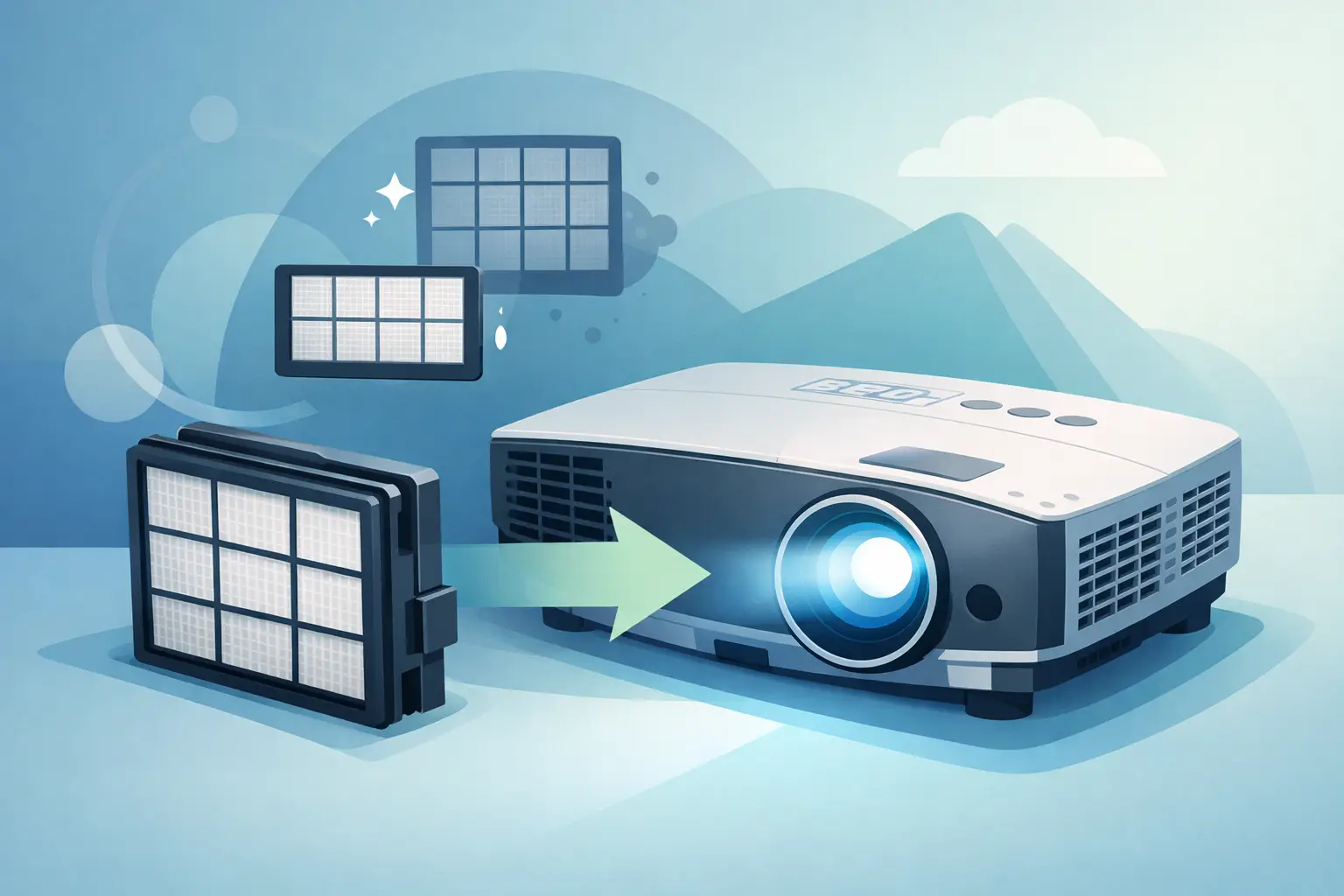
A blocked BenQ air filter can turn a routine maintenance item into a costly service event. As dust accumulates, airflow drops, internal temperature rises, and the projector may reduce brightness, shut down unexpectedly, or place added stress on the lamp and cooling system. For distributors, repair centers, and AV integrators, selecting a compatible projector filter for BenQ projector fleets is therefore a practical decision about uptime, service cost, and replacement-part availability.
A compatible filter is not simply a piece of filter material cut to size. It must match the projector's filter compartment, air-intake path, retention points, and airflow requirements. The right replacement supports normal cooling performance while helping prevent dust, smoke residue, and airborne debris from entering optical and electronic components.
Why BenQ Projector Filter Compatibility Matters
BenQ projectors are used across classrooms, meeting rooms, retail displays, exhibition environments, and home entertainment installations. These applications create very different operating conditions. A projector in a clean conference room may need routine filter maintenance at longer intervals, while equipment in a school, warehouse-adjacent training area, or event venue may face heavier dust exposure and require more frequent attention.
Using the wrong filter can create problems even when it appears to fit. A filter that is too thin may allow dust to bypass the media or enter around the frame. A filter that is too dense can restrict ventilation, increasing fan load and operating temperature. An incorrect frame design may leave gaps, interfere with the filter cover, or make installation unreliable during field service.
For commercial buyers managing multiple installed units, compatibility should be verified by the exact projector model and original filter reference, not by brand name alone. BenQ model families can use different filter dimensions, fastening structures, and airflow configurations. A reliable supplier should support clear cross-reference matching before an order is placed.
How to Identify a Compatible Projector Filter for BenQ Projector Models
The most dependable starting point is the projector model number from the product label or service record. Model identification is more precise than relying on a series name, marketing description, or visual comparison with a used filter. In service operations, this step helps prevent returns and avoids sending technicians back to a site with the wrong part.
Next, compare the replacement filter with the original part requirements. Key checks include the outer frame dimensions, filter-media thickness, mounting tabs or clips, cover interface, and the direction of airflow where applicable. The replacement should seat fully in the designated compartment without bending the frame or requiring force to close the filter door.
Filter performance also depends on the balance between particulate capture and ventilation. High filtration is valuable only when the projector can maintain the airflow required by its cooling design. A properly engineered compatible filter should offer sufficient ventilation while capturing common dust and smoke particles that can contaminate fans, heat sinks, color wheels, light tunnels, and optical assemblies.
For purchasing teams, it is useful to request a model compatibility list, product photos, dimensions, and packaging details from the supplier. These details make it easier to validate inventory against a fleet list and reduce the risk of stocking near-match parts that cannot be used in the field.
Do Not Match by Appearance Alone
Many projector air filters have a similar rectangular shape, but their differences are operationally significant. Frame height may vary by only a few millimeters. Clip locations can be offset. Filter media can be installed on a different side of the frame. These differences affect fit and airflow, even if two filters look nearly identical on a workbench.
A visual match can be useful as a secondary check, particularly when identifying older units with missing documentation. It should not replace verification against the projector model and applicable replacement-part reference. For service providers supporting mixed fleets, this discipline protects both labor efficiency and customer confidence.
Selecting Filter Quality for Commercial Service Work
Replacement filters are often purchased because OEM parts are expensive, unavailable, or impractical to source quickly for older projector models. A compatible alternative can be a sound commercial choice when it is designed for the required fit and operating conditions. The key is to evaluate performance rather than treating all aftermarket filters as interchangeable.
The filter frame should retain its shape during shipping, installation, and normal operating temperatures. A weak frame can distort and create bypass gaps around the perimeter. Filter media should be consistently formed and firmly bonded to the frame so it does not shed fibers or separate during removal. Packaging also matters for professional buyers, since filters that arrive crushed, contaminated, or unlabeled create avoidable receiving and service delays.
For locations exposed to smoke, fine dust, or high foot traffic, filtration quality deserves additional attention. These environments can contaminate a projector faster than standard maintenance schedules anticipate. However, selecting extremely restrictive media without confirming airflow characteristics is not the answer. The correct approach is to use a well-matched filter and increase inspection frequency based on site conditions.
ZORSIKA develops projector air filters with practical ventilation performance to help protect projectors from dust and smoke while supporting normal equipment operation. For distributors and repair businesses, consistent part matching and dependable supply are as important as the filter itself.
Maintenance Practices That Protect Projector Uptime
Replacing a filter at the right time is more effective than waiting for an overheating alert or visible performance issue. Maintenance intervals should reflect the installation environment, operating hours, and the projector manufacturer's service recommendations. Projectors used for extended daily operation or placed near entrances, ceiling vents, workshops, kitchens, and display areas generally require closer inspection.
Before removing the filter, power down the projector and allow it to cool completely. Service personnel should follow the equipment manual for access procedures and avoid using compressed air inside the projector unless the manufacturer specifically permits it. Blowing dust deeper into the optical engine or fan area can create more expensive problems than the original filter issue.
When the filter compartment is open, inspect the cover, seals, clips, and intake area. If dust buildup is visible beyond the filter, the team should consider whether the filter was installed incorrectly, left in service too long, or replaced with an unsuitable part. Documenting the model, replacement date, operating environment, and part number helps service organizations build better maintenance schedules over time.
A used filter should generally be replaced rather than washed unless the projector documentation specifically identifies it as washable. Water, cleaning agents, and repeated handling can alter the filter media or frame and make its performance unpredictable. In high-volume maintenance programs, keeping correctly labeled replacement filters on hand is usually more cost-effective than attempting to extend the life of disposable parts.
Inventory Planning for BenQ Filter Replacements
For resellers and AV service companies, filter inventory should follow the actual installed base. Review service records to identify the BenQ models that generate the most maintenance demand, then stock compatible filters for those units at appropriate levels. Fast-moving filters should be separated from slow-moving legacy references to improve warehouse accuracy and reduce picking errors.
It is also helpful to standardize part identification across purchasing, warehouse, and field-service teams. Each stock record should connect the supplier part number with the applicable projector model, original reference where available, filter dimensions, and a clear product image. This creates a more controlled process when technicians request urgent replacements from the field.
Price remains relevant, but the lowest unit cost is not always the lowest operating cost. A filter with inconsistent fit or limited availability can lead to repeat visits, delayed repairs, and avoidable customer downtime. Commercial buyers should weigh part quality, compatibility support, packaging consistency, warranty terms, and supply continuity together.
The right compatible projector filter is a small component with a direct role in system reliability. Match it precisely, maintain it on schedule, and source it from a supplier prepared to support the projector models your customers depend on.