Exhibition AV Case: Planning for Reliable Displays
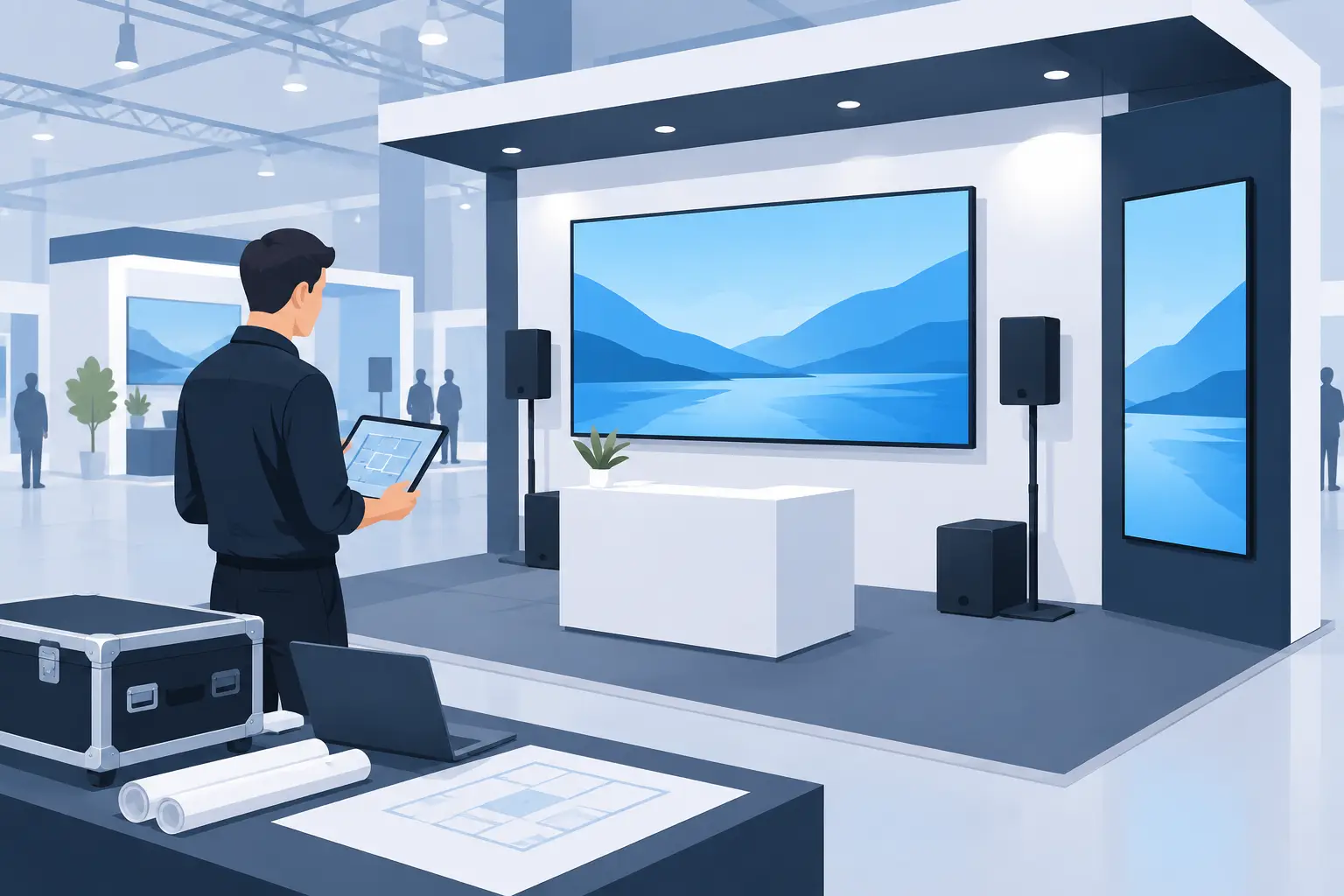
A projection wall going dark ten minutes before visitors enter is not a minor technical issue. It can stop product demonstrations, weaken booth traffic, and force the exhibitor to make decisions under pressure. An exhibition AV case is therefore more than a display specification. It is an operational test of projector selection, lens matching, replacement-part availability, thermal management, and on-site service readiness.
For distributors, integrators, and projector service providers, exhibition work often exposes the weaknesses that remain hidden in ordinary meeting-room installations. Equipment may run for long hours, operate under strong ambient light, travel repeatedly, and be installed in spaces where throw distance and mounting options are restricted. The right AV plan must account for these conditions before the booth opens.
What an Exhibition AV Case Actually Shows
In this context, an exhibition AV case refers to the operating requirements behind a temporary AV installation, rather than a transport case for equipment. It examines whether the system can deliver a consistent image through setup, show hours, and teardown while remaining practical to service.
The visible result is usually straightforward: bright, clear content that supports the exhibitor's message. The work behind it is less simple. A projector may have adequate rated brightness but produce a weak image because the lens is unsuitable for the throw ratio. A lamp-based unit may start the event with acceptable output but lose performance if its lamp is already near the end of its useful life. A clogged air filter can raise operating temperature and increase the risk of shutdown.
These issues are connected. An effective exhibition system is planned as a group of matched components, not as a projector purchased in isolation.
Build the Display System Around Site Conditions
The first technical question is not which projector brand is available. It is what the booth environment requires. Integrators should confirm screen size, viewing distance, ceiling height, projector position, content resolution, operating hours, and ambient-light sources before finalizing the equipment list.
Ambient Light Changes the Brightness Requirement
Exhibition halls commonly have overhead lighting, neighboring LED walls, reflective booth materials, and open entryways. These conditions reduce perceived contrast even when a projector is operating normally. Brightness requirements should be based on the actual display surface and surrounding light, not only the projector's specification sheet.
A higher-output projector can help, but it does not solve every problem. Screen gain, image size, content design, and projector placement also affect the result. If high-output lighting is unavoidable, a smaller image with stronger contrast may be more effective than a large but washed-out projection.
Lens Selection Determines Image Quality and Installation Flexibility
Lens selection is often where an exhibition project either becomes efficient or becomes difficult. A lens with the wrong throw ratio can force an unsuitable projector location, create shadows from booth structures, or require changes after the build is already underway. Vertical and horizontal lens shift may be equally important where ceiling mounts or rear-projection positions are limited.
For detailed brand content, product visuals, and close viewing distances, image clarity must be protected across the entire screen. Professional projector lenses with high color reproduction, low light loss, 4K support, and strong contrast performance provide a practical advantage when the display is central to the exhibition design. Installation should also be considered. A lens that can be fitted and adjusted efficiently reduces labor time during short setup windows.
Runtime and Heat Require a Service View
Many trade-show systems run continuously for eight to twelve hours per day. That operating profile places different demands on lamps, cooling paths, and filters than occasional conference-room use. Projectors installed in enclosed truss, tight ceiling cavities, or decorative housings may retain heat and draw in more dust.
Service teams should inspect fan operation, ventilation clearance, and filter condition before the event. A clean, compatible air filter supports proper airflow and helps protect the projector from dust and smoke. This is a low-cost maintenance item, but neglecting it can create a much more expensive problem during a live event.
Replacement Parts Should Be Selected Before the Show
The most expensive projector part is often the one that is unavailable when the system fails. Exhibition support requires replacement planning based on the installed projector fleet, not on a general stock list.
For lamp-based projectors, a spare bulb should match the required model and electrical design. Buyers also need realistic expectations for brightness and service life. A lower-priced replacement that produces unstable output, poor color, or early failure can reduce the margin on a service contract and damage confidence with the end customer.
ZORSIKA supplies projector bulbs developed for broad market compatibility, including burners suitable for many circulating models, while working directly with established bulb manufacturers such as Philips, Osram, Ushio, and Phoenix. For service providers, the value is not simply a replacement part. It is the ability to support installed equipment with a cost-effective alternative that maintains dependable image performance.
Lens and filter planning should follow the same discipline. Record the exact projector model, lens model, lamp part number, and filter specification. Do not assume that components from related projector series are interchangeable. Small variations in mounting, firmware recognition, connector arrangement, or airflow design can create avoidable installation delays.
Create an On-Site AV Contingency Plan
A contingency plan does not need to be complicated, but it must be specific. The objective is to shorten diagnosis time and restore the display without disrupting the exhibitor's schedule. Before the show begins, the technical team should document the system configuration and confirm who is responsible for first-line response.
For high-value displays, keep these four items available on site:
- A tested spare lamp or compatible replacement projector for the critical display
- A clean replacement air filter matched to each projector model
- The correct lens, mounting hardware, and adjustment tools where a lens change may be required
- A record of input settings, network details, source devices, and projector menu configuration
The level of redundancy depends on the event. A single small projector showing background content may justify only a spare lamp. A large projection-mapped launch presentation or an executive product demonstration may require a full backup projector with the lens preconfigured. The cost of standby equipment should be compared with the commercial cost of a dark display during peak visitor hours.
Control Total Cost, Not Only Purchase Price
Professional buyers are right to evaluate replacement-part pricing carefully, particularly across mixed fleets of older and newer projector models. However, the purchase price is only one part of the decision. A part that is difficult to identify, inconsistent in output, or unsupported by warranty can increase labor cost and create repeat service calls.
A more useful calculation includes sourcing time, compatibility confidence, expected operating life, installation labor, and the availability of technical support. This is especially relevant for distributors and repair businesses managing multiple customer sites. Standardizing a reliable supplier for common bulbs, lenses, and filters can simplify procurement while helping maintain service continuity.
There is also a practical balance between OEM-only sourcing and import-alternative parts. OEM components may be required for certain warranty conditions, specialized projector platforms, or customer specifications. In many out-of-warranty commercial installations, a proven compatible alternative can provide the performance and availability needed to protect both budget and uptime. The right choice depends on the equipment, event risk, and service agreement.
Make the Next Exhibition Easier to Support
The strongest exhibition AV case is not measured only by whether the display worked on opening day. It is measured by whether the installation can be repeated, serviced, and scaled without starting from zero. After teardown, record lamp hours, filter condition, image performance, lens settings, and any installation constraints encountered at the venue.
That information turns one event into a more reliable template for the next. When projector accessories are matched accurately, spares are planned early, and the service team understands the site conditions, the display has a far better chance of remaining visible when it matters most.