Planning a Hospitality Projector Retrofit
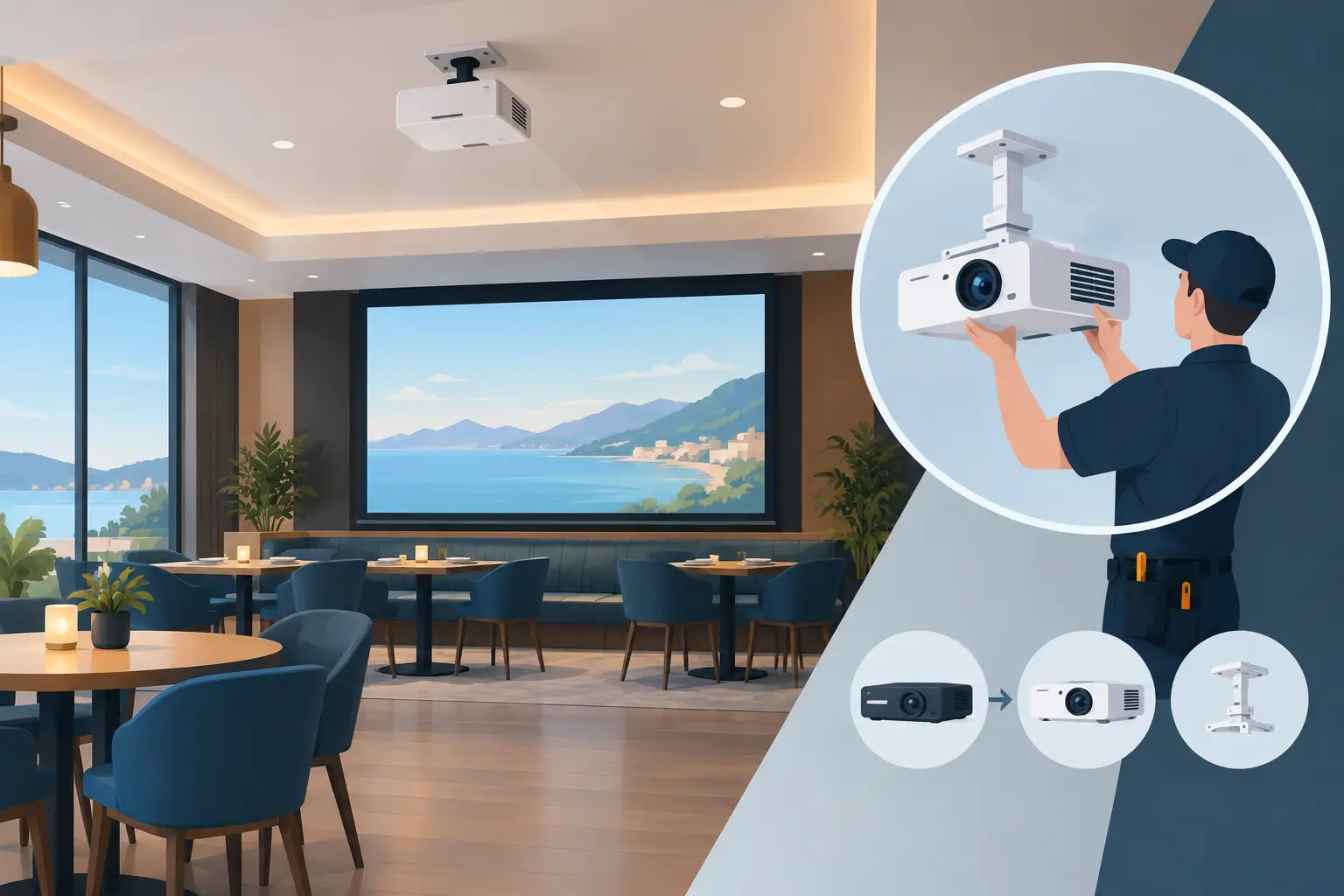
A guest sees the result of a projector system long before they notice the equipment behind it. A dim ballroom presentation, an uneven lobby display, or a failed conference-room projector reflects directly on the property. A well-planned hospitality projector retrofit helps hotels, resorts, convention venues, and AV service providers restore dependable image performance without replacing every installed projector.
For procurement teams and service businesses, the objective is not simply to install a new lamp. The retrofit must balance equipment condition, room use, compatibility, maintenance access, expected operating hours, and budget. The right accessory replacement program can extend the useful service life of a mixed projector fleet while reducing avoidable downtime.
Why hospitality projector retrofits require a different approach
Hospitality environments place unusual demands on projection equipment. A projector in a hotel boardroom may run only for scheduled meetings, while a unit in a ballroom or entertainment venue may operate for long hours under warm conditions. Lobby and digital-display applications can be exposed to dust, cleaning activity, smoke residue, or restricted ventilation. These differences affect lamp life, thermal performance, optical clarity, and service intervals.
Many properties also operate projectors purchased across multiple renovation cycles. The installed base may include different brands, lamp wattages, lens ratios, and mounting positions. Replacing equipment only when it fails creates a reactive service model: the correct part may not be in stock, the room may be out of service, and the technician may have limited time before the next event.
A retrofit program changes that model. It identifies which projectors remain mechanically and optically viable, then replaces the accessories most likely to affect brightness, color, cooling, and reliability. This is often more economical than full projector replacement, especially where existing mounts, cabling, control systems, and lens positions are still suitable.
Start with an installed-base assessment
A hospitality projector retrofit should begin with a practical asset review rather than a general purchasing decision. Record the projector model, serial number, location, installed lens, lamp type, accumulated lamp hours, filter condition, operating schedule, and recurring service history. This information helps procurement and technical teams separate units that need routine accessory replacement from units approaching end of life.
Image complaints should be documented by room. A weak image does not always mean the lamp is the only issue. Optical contamination, a degraded lens coating, an incorrect lens setting, restricted airflow, or reduced projector output from age can produce similar symptoms. Technicians should compare measured or observed brightness with the room's ambient-light conditions and screen size before specifying parts.
This assessment also exposes standardization opportunities. If several rooms use the same projector family, the service provider can hold common replacement lamps and filters. Fewer emergency purchases improve response time and reduce the chance of installing an incorrect component during a high-pressure event turnover.
Decide whether the projector is worth retaining
Accessory replacement is most effective when the projector's core functions remain stable. Retention is usually reasonable when the chassis, imaging engine, inputs, control functions, and thermal system are in good condition. A projector with a failing main board, persistent color imbalance unrelated to the lamp, damaged optics, or obsolete connectivity may justify replacement instead.
There is no single lamp-hour threshold that applies to every model. Usage conditions matter. A projector used intermittently in a climate-controlled meeting room may remain a strong retrofit candidate after years of service. A similar unit used daily in a hot, enclosed ceiling space may have broader wear that makes a full replacement more practical.
Select compatible lamps by performance, not price alone
Projector lamps are the most visible part of a retrofit because they directly affect brightness and image consistency. Yet the lowest-cost replacement can create additional service calls if arc stability, burner quality, wattage, housing fit, or electrical compatibility is inconsistent.
Professional buyers should verify the exact projector model and the complete lamp module part number where applicable. Similar-looking lamp assemblies are not necessarily interchangeable. The housing geometry, connector position, reflector design, and thermal requirements must match the projector specification. A correct replacement should install without modification and support the projector's intended optical and cooling design.
Brightness is another key consideration. In hospitality use, reduced output may be noticed first in rooms with ambient light, large screens, or demanding presentation content. A quality replacement lamp should deliver output close to original performance and maintain usable brightness through its expected service life. It should also provide stable color behavior and reliable ignition across repeated event cycles.
ZORSIKA supplies projector lamp solutions sourced through long-term cooperation with major lamp manufacturers, including Philips, Osram, Ushio, and Phoenix, while offering compatible burner solutions for widely used projector models. For service providers, this approach supports an import-alternative supply strategy without treating lamp selection as a commodity decision.
Evaluate lenses when the room layout has changed
A projector lens retrofit is valuable when the property has altered room layouts, screen sizes, projector positions, or intended uses. A ballroom converted for hybrid meetings, for example, may require a different throw ratio or improved image coverage. A conference room with a new display wall may need a lens that supports the revised mounting distance without forcing major structural changes.
Lens selection should be based on throw distance, screen width, mounting height, offset, zoom range, and required resolution. The specified lens must be compatible with the projector platform and should preserve the image quality expected in business and event applications. Low light loss, accurate color reproduction, 4K support where required, and high-contrast performance are practical requirements, not just product specifications.
Installation should also be considered. A lens that is technically compatible but difficult to align can extend service time in occupied properties. Select lens designs that allow controlled installation and dependable adjustment, particularly where access above ceilings or behind architectural finishes is limited.
Do not treat air filters as a minor maintenance item
Airflow problems are a common source of premature projector wear. In hospitality properties, filters may collect dust from public areas, fibers from carpets and drapery, kitchen-adjacent residue, or smoke particles from event spaces. When the filter restricts airflow, internal temperatures rise. This can shorten lamp life, increase fan activity, and place added stress on optical and electronic components.
A retrofit plan should include filter inspection and replacement at the same time as lamp service. The goal is not maximum filtration at the expense of airflow. The filter must provide effective dust protection while maintaining the ventilation rate required by the projector. Exact model matching matters because an incorrectly fitted filter can allow bypass leakage or obstruct the air path.
For fleet operators, scheduled filter replacement is often less expensive than responding to overheating warnings or unplanned shutdowns. It also gives technicians a consistent opportunity to inspect intake areas, fans, lamp housings, and visible optical surfaces.
Build the retrofit around service continuity
Hotel operations cannot always wait for a convenient repair window. Conference rooms, ballrooms, and event spaces generate revenue, and a projector failure can affect an entire program. The strongest retrofit plans pair correct parts with clear stock and maintenance practices.
Keep a controlled inventory of high-turn accessories for the projector models that appear most often across the property or managed portfolio. This usually includes lamps, air filters, and any frequently damaged or replaced lens components. Store parts in suitable conditions, label them by model, and rotate inventory so older stock is used appropriately.
Technicians should reset lamp timers only after confirming the new module is installed correctly and the projector is operating normally. Record the installation date, lamp hours at replacement, filter condition, technician notes, and room location. These records make it easier to estimate future demand and identify units with unusually short lamp life.
Planned downtime remains necessary, but it is much easier to manage than an event-day failure. Coordinate service around occupancy schedules, test the projector with the source devices used in that room, and verify focus, zoom, color, brightness, and thermal operation before releasing the space.
Purchase against total operating cost
The purchase price of a lamp, lens, or filter is only one part of retrofit cost. A lower-cost part that fails early, produces poor brightness, or creates a compatibility issue can consume more labor and damage the service provider's relationship with the property. Conversely, replacing a viable accessory too early wastes budget.
The practical decision is based on expected service life, performance consistency, warranty support, availability, and the cost of room downtime. Buyers managing multiple properties should also consider whether a supplier can support broad model coverage and provide dependable product identification as fleets change.
A hospitality projector retrofit works best when it is treated as a controlled maintenance program, not a last-minute parts order. Start with accurate model data, match accessories precisely, protect airflow, and keep the most critical replacements available before the next event needs the room.