Projector Parts Compatibility by Model
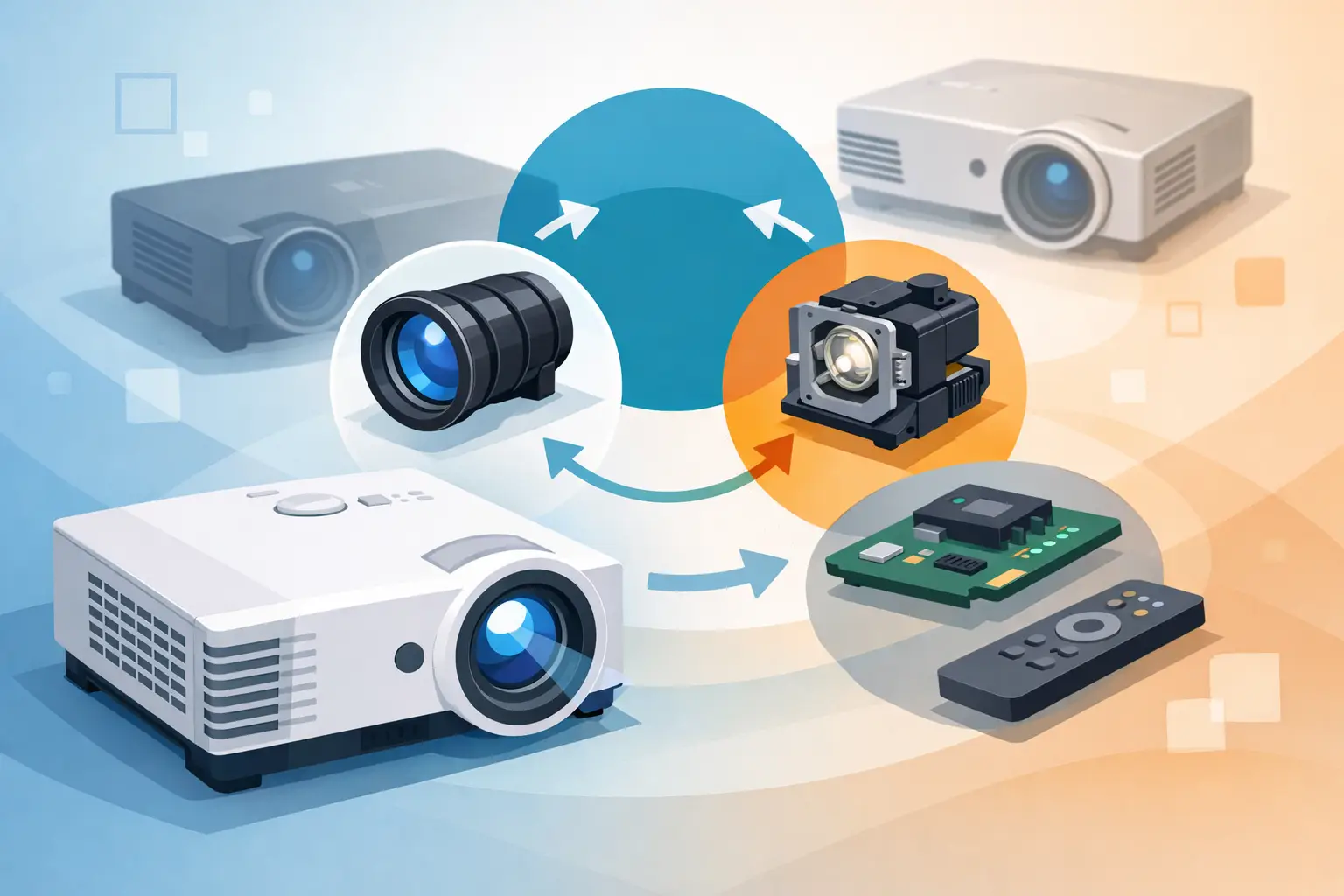
A projector marked with the right brand name can still reject the wrong lamp, misalign the wrong lens, or overheat with the wrong filter. That is why projector parts compatibility by model is not a minor catalog detail for service teams and buyers. It directly affects install time, return rates, image performance, and how quickly you can restore equipment in the field.
For distributors, repair centers, and integrators supporting mixed fleets, compatibility work starts long before a replacement part is ordered. The model number is the foundation, but it is rarely the whole answer. Sub-series variations, regional versions, chassis revisions, and lamp housing differences can all change what will actually fit and perform correctly.
Why projector parts compatibility by model matters
Commercial AV environments do not tolerate guesswork. In a classroom, conference room, exhibition hall, or rental inventory, a single mismatch can create avoidable downtime and service cost. A lamp may physically fit the compartment but fail electrical matching. A lens may mount to the projector body but deliver the wrong throw ratio for the installed room. A filter may look similar but restrict airflow enough to shorten component life.
For procurement teams, compatibility errors also affect margin. The visible loss is the returned part. The larger loss is technician time, delayed deployment, replacement freight, and the risk of having a customer site waiting for a fix. Buyers who manage compatibility by exact model, rather than by brand alone, usually see better first-time order accuracy and lower operational friction.
The main part categories that depend on model matching
Different accessory categories create different compatibility risks. Treating them all the same leads to mistakes.
Bulbs and lamp modules
Lamp compatibility is more complex than matching wattage or projector brand. Many projectors use lamps with similar output ratings but different housings, connectors, burner positions, and thermal requirements. In service practice, two parts can look close enough to substitute, then fail because the housing geometry changes focus point or airflow.
There is also an important distinction between a bare bulb and a complete lamp module. A bare bulb may match burner specifications, but if the existing housing is worn, warped, or poorly aligned, performance can still fall short. For commercial buyers, the practical decision depends on service capacity, labor cost, and the condition of the original assembly.
Lenses
Projector lens compatibility is driven by mount design, optical ratio, and application environment. Even within a single manufacturer line, not every interchangeable lens works across every chassis. Some models share a platform, while others use a similar naming structure but a different optical interface.
This is where model-specific checking matters most. A technically excellent lens is still the wrong part if it does not match the projector’s mount standard or if its throw range does not suit the room. Buyers sourcing for staging, museums, lecture halls, and simulation spaces usually need both physical compatibility and performance suitability confirmed together.
Air filters
Filters are often treated as simple consumables, but they are model-dependent components that affect system reliability. Dimensions, frame shape, material density, and ventilation rate all matter. A poorly matched filter can leave gaps that allow dust ingress, or it can be too restrictive and increase internal temperature.
For fleets installed in dusty, smoky, or high-use environments, filter matching is not only about fit. It is about preserving cooling efficiency and protecting optical and lamp assemblies over time.
What buyers should verify beyond the projector model number
The model number remains the first reference point, but experienced buyers usually verify several more details before confirming a part.
The first is the projector’s full part identification, not just the short commercial model name. Manufacturers often publish a selling name that covers multiple hardware variants. The service label or original part code can reveal the exact version.
The second is the installed part revision. This matters especially with lamp modules and lenses. A projector in the field may already have been serviced with an alternative assembly, and the replacement path can depend on what is currently installed rather than what was shipped originally.
The third is application context. If a projector is used in a clean meeting room, one replacement option may be acceptable. If it runs long hours in education, events, or public venues, durability, thermal stability, and airflow performance become much more significant.
Common causes of compatibility mistakes
Most compatibility mistakes do not come from complete negligence. They come from relying on incomplete matching logic.
One common error is assuming all parts within one brand family are interchangeable. They are not. Manufacturers reuse naming conventions, but internal structures change across generations.
Another is matching only by appearance. This is especially risky with lamps and filters, where similar dimensions can hide electrical or airflow differences.
A third is ignoring regional supply history. In the field, some fleets include units sourced from different channels or countries, and those units may carry alternate assemblies. For larger service operations, this is one reason intake documentation matters as much as the purchase order.
How to build a reliable model-based sourcing process
A practical sourcing process should reduce avoidable questions without slowing purchasing down. The best approach is structured, not complicated.
Start with exact model capture from the equipment label. Then check the original part number if available. For lamp replacements, confirm whether the requirement is a full module or a bare bulb. For lenses, confirm mount type and required throw range. For filters, verify dimensions and frame style in addition to model reference.
Next, compare the part against a supplier’s compatibility data, not a generic marketplace description. Commercial buyers need cross-reference support that reflects real service conditions. A supplier with broad model coverage and category specialization can usually identify exceptions faster than a general parts seller.
Finally, treat warranty and technical support as part of compatibility management. A part is not truly compatible for business purposes if the supplier cannot stand behind the match or respond when field verification is needed.
Projector parts compatibility by model for multi-brand fleets
The compatibility challenge becomes more demanding when buyers support many brands at once. Universities, enterprise campuses, rental providers, and repair businesses often carry mixed inventories across different ages and performance levels. In that environment, model-based sourcing is less about one transaction and more about systematizing repeat accuracy.
A useful approach is to maintain an internal compatibility record tied to each installed projector. Include the exact model, original part number, previously used replacement part, service date, and any installation notes. Over time, this reduces re-verification effort and helps standardize purchasing across technicians or branches.
This also creates a better basis for alternate sourcing. When OEM costs are high or lead times are unstable, buyers can evaluate equivalent solutions more confidently if the model history is already documented. That is where a specialized supplier can add value - not just by offering stock, but by helping buyers map compatible options across bulbs, lenses, and filters with fewer trial-and-error orders.
What good compatibility support looks like from a supplier
For professional buyers, compatibility support should be specific and commercially useful. Broad claims such as “fits most models” are not enough. Good support means the supplier can identify exact model matches, clarify category-specific differences, and explain when a part is a direct replacement versus an alternative option.
It also means consistent quality control. A compatible part should not only install correctly but also maintain acceptable brightness, color performance, airflow, or optical behavior in real operating conditions. For example, buyers evaluating import alternatives for lamps typically care about whether brightness and service life stay close enough to original performance to support warranty expectations and customer satisfaction.
This is where an experienced supplier such as ZORSIKA fits the needs of commercial AV buyers. The value is not only in product breadth, but in combining model-based matching, stable supply, and support across core accessory categories.
When compatibility is not enough on its own
There are cases where a technically compatible part is still not the right purchasing choice. A lower-cost lamp may fit and operate, but for high-duty installations the better option may be the one with stronger life consistency and warranty backing. A lens may match the chassis, but if the image geometry does not suit the room layout, the project still fails. A filter may fit the frame, but in heavy-dust environments you may need a higher-performing material to protect uptime.
That is the practical reality for commercial buyers. Compatibility is the first gate, not the final decision. The right part must fit the model, support the application, and make sense for service cost over time.
The buyers who handle projector fleets most effectively usually treat model matching as an operational discipline rather than a quick product lookup. When that discipline is supported by accurate data and a dependable supplier, replacement parts become easier to source, easier to install, and far less likely to create a second service call. That is where real purchasing efficiency starts.