Stage Lights for Event Production Buying Guide
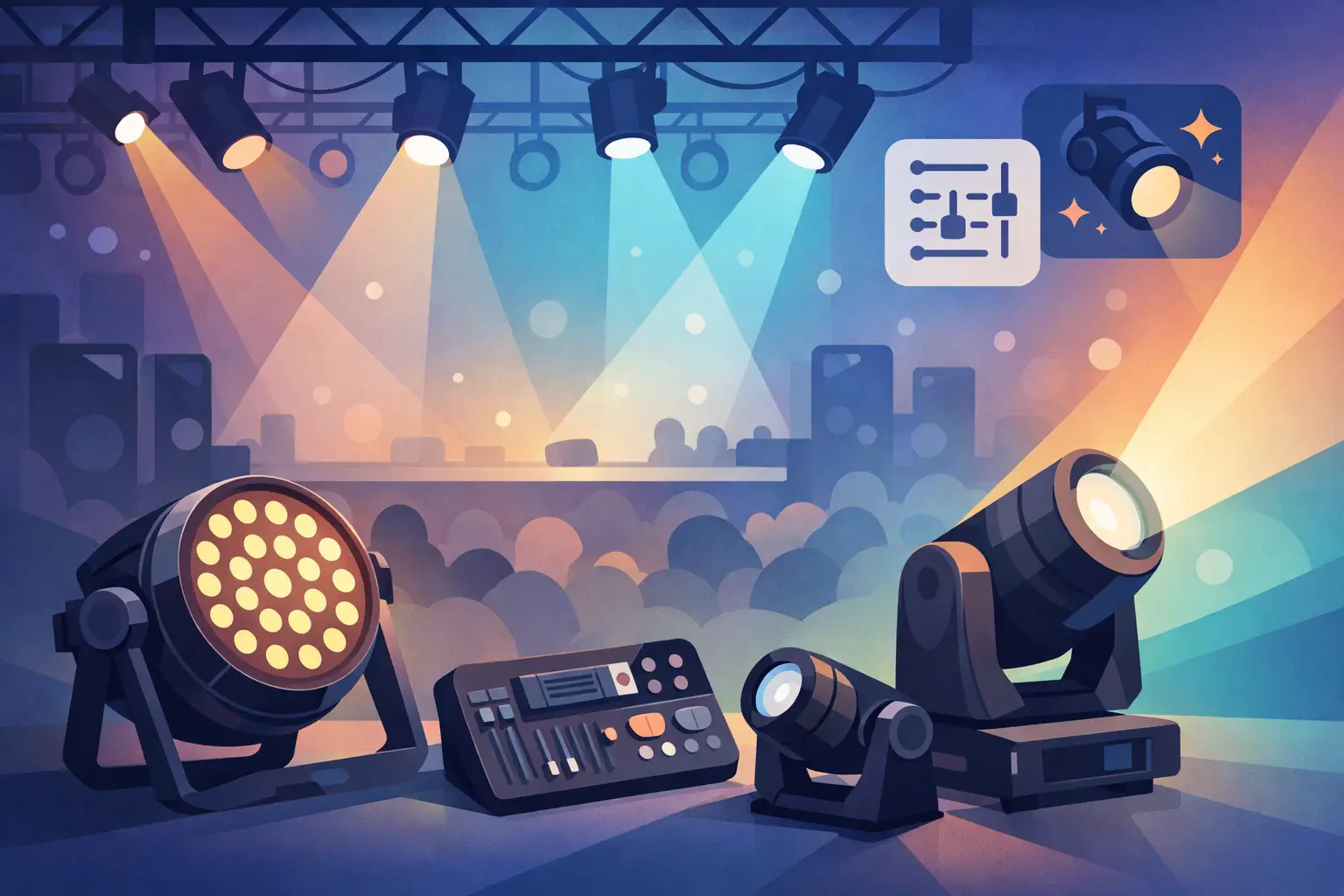
A lighting fixture that looks powerful in a product photo can fail to deliver once it is mounted 40 feet from a stage, competing with LED walls, projection, cameras, and ambient venue lighting. For buyers sourcing stage lights for event production, the correct decision starts with the application, throw distance, control requirements, and service plan, not simply fixture wattage or purchase price.
Event production teams frequently manage mixed environments: hotel ballrooms, conference stages, trade show booths, houses of worship, exhibition halls, outdoor temporary structures, and touring setups. Each environment places different demands on output, beam control, color quality, setup speed, and maintenance. A practical buying plan protects rental utilization, avoids compatibility problems, and helps technical teams deliver consistent results across repeated events.
Start With the Event Lighting Requirement
The first question is not which fixture type is most popular. It is what the fixture must accomplish at the venue. A corporate keynote requires clear front light for presenters and camera capture. A concert may need high-impact beams, fast movement, saturated color, and effects. An exhibition installation may prioritize quiet operation, low maintenance, accurate color, and long daily operating hours.
Define the working distance between the lighting position and the subject area. This determines whether a wash fixture, profile fixture, beam fixture, or followspot is appropriate. A wide wash light can cover a small platform effectively but may lose useful intensity when placed at a long throw distance. Conversely, a narrow beam fixture can look impressive in haze but may be unsuitable for evenly lighting speakers or scenic elements.
For procurement teams, a fixture schedule should identify the intended role of every unit: front wash, backlight, side light, uplight, scenic wash, audience light, effect lighting, or projection support. This simple discipline prevents overbuying specialty fixtures while underinvesting in the basic lighting positions every event needs.
Core Fixture Types for Event Production
LED PAR fixtures remain a practical choice for uplighting, stage wash, truss warming, and architectural accents. They are compact, efficient, and generally easy to deploy in large quantities. For event inventory, compare beam angle options, color mixing performance, dimming behavior, housing durability, and whether wireless DMX is necessary for the operating model.
LED wash lights provide broader and more even coverage than many PAR fixtures. They are commonly used for stage washes, cyc lighting, scenic coverage, and large wall treatments. Zoom wash fixtures add flexibility, but they also introduce moving mechanical components. For rental fleets or high-use venues, that flexibility must be weighed against service complexity and the need for spare parts.
Profile fixtures, also called ellipsoidal or framing fixtures, are the correct tool when light must be shaped precisely. They can isolate a presenter, light a lectern, control spill onto projection surfaces, or create clean scenic cuts using shutters. In conference and corporate AV environments, profiles often produce a more controlled result than adding more general wash fixtures.
Moving heads are typically selected as spot, beam, wash, or hybrid fixtures. Their value is in repositioning, dynamic looks, and effects without requiring extensive manual refocusing. However, they require reliable power, data distribution, safe rigging, and technicians who understand addressing, mode selection, and troubleshooting. They are not automatically the best choice for every event. A fixed LED fixture may offer better return for standardized installations or basic meeting-room packages.
Blinders, strobes, pixel bars, and effect fixtures can add visual impact, especially for entertainment and branded events. Their use should be intentional. Excessive effects can reduce camera quality, distract from presenters, and create operational complaints in corporate settings.
How to Specify Stage Lights for Event Production
Fixture specifications should be reviewed as a complete system. Published wattage alone does not define usable brightness. Consider measured output, beam angle, field angle, fixture optics, dimming curve, and the distance to the target. A high-output fixture with unsuitable optics can still create uneven coverage or excessive glare.
Color quality matters when people, products, and printed branding are on camera. Review color rendering performance, white-point consistency, and color mixing behavior. For keynote stages and broadcast-supported events, skin tones should remain natural under front light. For exhibit products, especially retail, automotive, food, or premium-brand displays, inaccurate color can compromise the intended presentation.
LED engines offer lower power consumption and longer expected operating life than traditional discharge sources, but they are not maintenance-free. Fans, power supplies, drivers, connectors, lenses, and control boards remain service considerations. Buyers should verify the supplier's warranty terms, repair process, technical documentation, and availability of consumable or replacement components.
Noise is another specification that is often missed. Fan noise may be acceptable above a concert stage but unacceptable near a lectern, camera position, studio set, or quiet museum exhibit. Check the fixture's operating modes and understand whether reduced-noise operation also reduces light output.
For outdoor or semi-outdoor applications, determine whether the fixture requires weather protection or carries an appropriate ingress protection rating. A standard indoor fixture should not be treated as outdoor-capable simply because it is installed under a tent. Moisture, dust, heat, and cable exposure all affect reliability.
Control, Power, and Data Must Be Planned Together
DMX remains a standard control protocol for professional lighting, while RDM can help teams identify fixtures and manage addressing remotely. For larger systems, network-based protocols may improve distribution and monitoring. The correct approach depends on fixture quantity, venue infrastructure, show complexity, and the technical capability of the operating team.
Before purchasing, confirm the required control modes and channel counts. A fixture with advanced pixel, color, zoom, and effects modes may consume significantly more channels than expected. This affects console capacity, universe planning, and programming time. Standardizing fixture personalities across a rental fleet can reduce setup errors and make operators more efficient.
Power distribution deserves the same attention. Calculate real connected load, inrush current, circuit type, connector standards, and safe cable runs. LED fixtures use less power than older tungsten systems, but high quantities still require proper planning. Touring and rental companies should also consider power linking limits, cable availability, and connector consistency across inventory.
Data reliability is equally important. Use appropriate termination, optically isolated splitters where needed, and organized labeling. Intermittent DMX problems are often caused by poor cable practices, overloaded lines, damaged connectors, or mixed fixture configurations rather than by the console itself.
Protect Projection Quality in a Mixed AV Stage
Lighting and projection must be designed as one visual system. Bright front wash can reduce the apparent contrast of projected content, while uncontrolled spill can wash out projection screens and LED displays. The goal is not to eliminate stage lighting. It is to control where the light goes and when it is used.
Profile fixtures with shutters are useful for keeping front light off projection surfaces. Side lighting and backlighting can also provide separation without aiming large amounts of light toward the screen. In environments using multiple projectors, lighting positions should be reviewed for possible shadows, lens flare, and reflections from screens, glossy scenic panels, or lecterns.
Projector service providers should also account for the operating environment created by event lighting. Haze, dust, and elevated temperatures can affect projector performance over time. Clean airflow paths and properly matched air filters help protect equipment from contamination, particularly in high-use event and exhibition settings. ZORSIKA supports professional AV partners with projector lenses, bulbs, and filters designed to help maintain image performance and service continuity across diverse projector fleets.
Purchase for Serviceability, Not Only Initial Cost
The lowest-priced fixture can become the most expensive option if it has inconsistent batches, limited documentation, weak support, or no practical route for repair. For distributors, integrators, and rental operators, standardization often produces a stronger long-term result than purchasing a broad mix of low-volume fixture models.
Evaluate supplier capability before placing a fleet order. Confirm lead time, warranty coverage, technical response process, spare-part availability, serial-number management, and packaging quality. Ask whether replacement boards, fans, brackets, lenses, power supplies, and accessories can be supplied when required. A fixture that cannot be repaired efficiently may create avoidable downtime and reduce fleet margin.
It is also useful to maintain a small stock of critical spares for widely deployed models. The right quantity depends on fleet size and utilization, but common failure items should not require an emergency international order during a busy event season.
A successful lighting purchase supports more than a single show. It gives the production team predictable output, manageable control, safe installation, and a realistic service path when equipment is operating under pressure. Specify fixtures by application, confirm the complete electrical and data plan, and protect the relationship between lighting and projection. That approach gives event teams equipment they can deploy with confidence, show after show.