Washable Versus Disposable Projector Filters
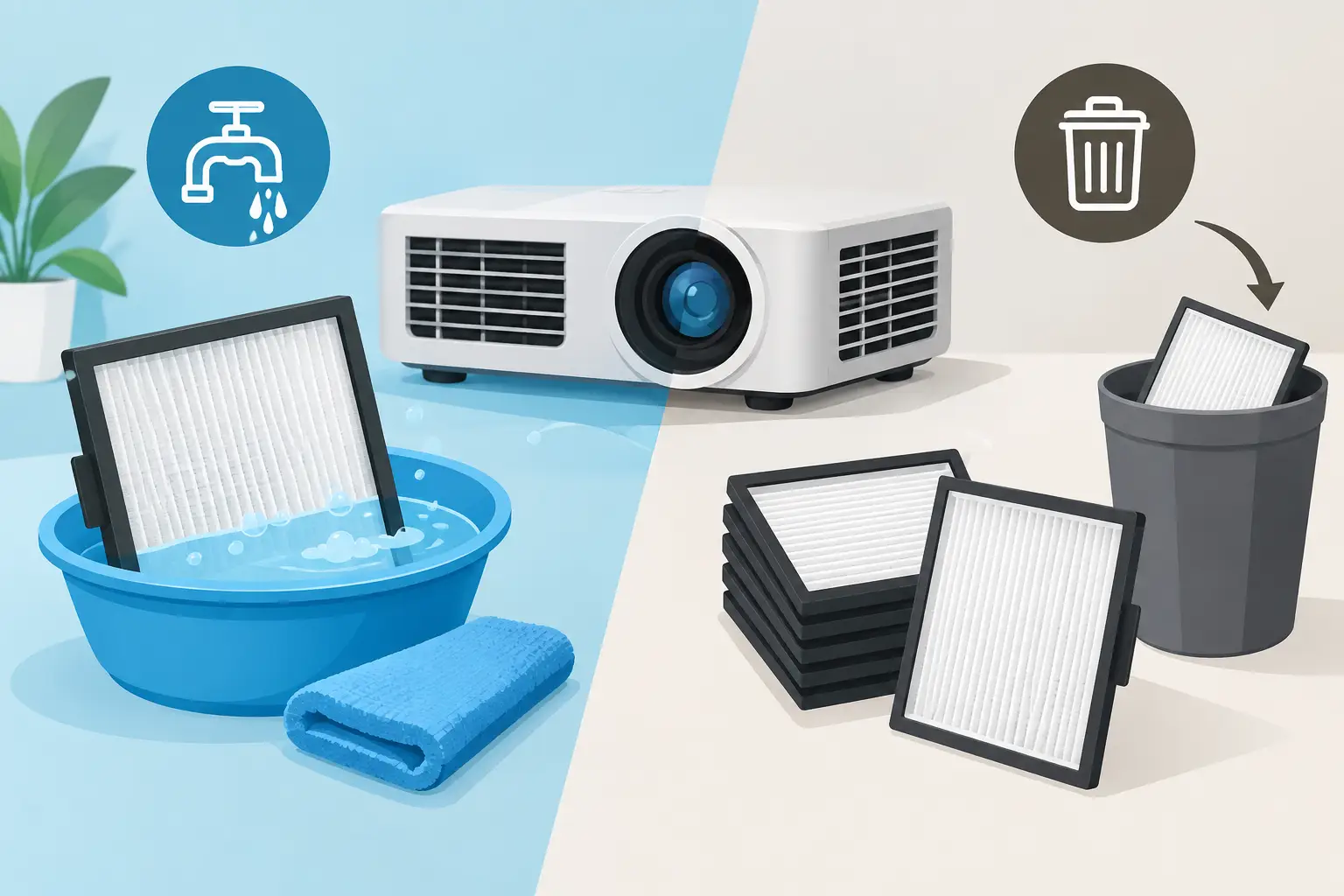
A projector filter is a low-cost part with a direct effect on expensive equipment. When a filter loads with dust, airflow falls, internal temperatures rise, and optical components, fans, and light sources face more contamination and stress. For service teams and AV procurement managers, the choice between washable versus disposable projector filters should be based on the installation environment, maintenance capacity, and required equipment uptime - not the purchase price of one filter.
The right filter program protects projector performance while keeping field labor, replacement inventory, and compatibility risk under control. In commercial fleets, consistency matters as much as filtration efficiency. A filter that is technically reusable but rarely cleaned correctly may cost more over its life than a properly matched disposable replacement.
How Projector Air Filters Affect System Reliability
Projectors draw cooling air through the chassis to control the temperature of the lamp, light engine, power supply, and internal electronics. The air filter is designed to capture airborne dust, fibers, smoke residue, and other particles before they enter these assemblies. It must do this without creating excessive airflow resistance.
A filter that is too restrictive can reduce cooling volume even when it is clean. A filter that fits poorly can allow contaminated air to bypass the media entirely. Both conditions can contribute to overheating warnings, noisy fan operation, reduced brightness stability, premature lamp wear, and dust spots or discoloration in the projected image.
For distributors and repair providers, model-specific fit is therefore not a minor purchasing detail. The frame dimensions, gasket position, media density, airflow direction, and latch interface must match the projector design. A compatible filter should install securely and support the airflow requirements of the original equipment.
Washable Versus Disposable Projector Filters: Core Differences
Washable filters generally use a durable mesh, foam, or synthetic media that can be removed, cleaned, dried, and reinstalled. Their main advantage is repeat use. They can reduce the number of replacement units consumed at a site, particularly where maintenance personnel are already scheduled to inspect equipment regularly.
Disposable filters use replaceable media intended to be changed when dirty rather than washed. They provide a predictable maintenance result: the technician removes the loaded filter and installs a clean one with known airflow characteristics. For multi-site fleets, this repeatability can simplify service procedures and reduce the chance that a contaminated or damaged filter is returned to service.
Neither type is automatically better. The decision depends on the full operating model. A washable filter may have a lower material cost over time, while a disposable filter may reduce labor time and produce more consistent results. The balance changes significantly between a clean corporate conference room and a dusty school workshop, retail space, warehouse, or exhibition venue.
Airflow After Cleaning
The key question for a washable filter is not whether it can be cleaned, but whether it returns to acceptable airflow after cleaning. Fine dust, oil residue, smoke particles, and cleaning chemicals can remain embedded in media even when the surface looks clear. Repeated washing can also deform foam, loosen bonded layers, or damage the frame.
A reusable filter should be inspected for tears, warping, compressed media, and degraded seals at every service interval. It must be fully dry before installation. Moisture inside a projector creates unnecessary risk for electronics and can attract additional dust. If drying time cannot be controlled in field service, replacement filters are usually the safer operational choice.
Disposable filters avoid these variables. Each replacement begins with unused media, which supports stable airflow and predictable dust capture. This is particularly valuable for installations where projector runtime is high and access windows are short.
Filtration and Environmental Conditions
Filtration needs are driven by the environment, not only by projector model. Standard office applications typically create lower dust loads than schools, museums, houses of worship, event spaces, manufacturing areas, or locations near food preparation. Smoking, construction activity, carpet fibers, paper dust, and outdoor air infiltration all shorten filter life.
Washable media can be effective for larger particles and routine dust, but it may not be the best answer for fine particulate or sticky airborne contaminants. Disposable media is often more appropriate where contamination levels are high or where visual cleanliness cannot be used as the only replacement indicator.
Service teams should also avoid assuming that a denser filter always provides better protection. Higher filtration density can increase pressure drop. The goal is a filter engineered for the projector's intake design, with sufficient ventilation to protect cooling performance while limiting dust entry. ZORSIKA develops projector air filters with this balance in mind, combining practical airflow rates with protection against dust and smoke.
Compare Total Cost, Not Unit Price
A washable filter can appear less expensive because it may be used multiple times. However, its total cost includes removal, cleaning, drying, inspection, reinstallation, documentation, and eventual replacement. If a technician spends substantial time servicing a reusable filter, the labor cost may exceed the value of several disposable filters.
Disposable filters add recurring parts consumption, but they can shorten a maintenance visit and reduce variation between technicians. They are also easier to stock as sealed, ready-to-install service parts. For repair businesses handling a wide range of projector brands and models, this can improve turnaround time and reduce repeat visits caused by questionable filter condition.
Consider a washable option when the customer has trained maintenance staff, controlled cleaning procedures, and enough spare filters to allow complete drying before reuse. Consider disposable filters when equipment uptime is critical, the operating environment is dirty, technicians service many locations, or the customer needs straightforward compliance with a scheduled preventive-maintenance plan.
Match the Filter Strategy to the Installation
A practical purchasing decision starts with the projector's service history. Review fan-related error logs, lamp or light-source replacement records, visible dust buildup, and the actual condition of removed filters. A projector that repeatedly overheats may have a filter problem, but it may also have blocked vents, failing fans, accumulated internal contamination, or an unsuitable installation location.
For each account or fleet, procurement teams should confirm four operational points:
- The exact projector model and filter part configuration, including frame size and mounting features.
- The environmental dust level and typical runtime between scheduled service visits.
- Whether personnel can clean, inspect, and fully dry washable filters consistently.
- The cost of technician labor, equipment downtime, emergency calls, and holding replacement inventory.
These factors create a more useful decision than selecting the lowest-priced filter category. They also help resellers explain the recommendation in business terms that facility managers understand: fewer overheating events, more predictable maintenance, and better protection for the installed projector base.
Service Practices That Protect Filter Performance
Whether the filter is washable or disposable, maintenance intervals should be based on operating conditions rather than a fixed calendar alone. High-use projectors in dusty settings may need inspection far more often than low-hour units in clean rooms. Technicians should check the filter housing and intake path at the same time, since debris around the frame can create air bypass or restrict flow.
For washable filters, use the cleaning method specified for the media. Avoid aggressive brushing, excessive pressure, or solvents that can alter the material. Keep a rotation of clean spare filters so the projector does not need to wait for a washed filter to dry. If the media remains discolored, misshapen, or difficult to clear, replace it rather than extending its service life.
For disposable filters, do not stretch replacement intervals simply because the filter does not look heavily loaded. Fine particles may be present within the media, and airflow resistance can rise before external discoloration becomes obvious. Record replacement dates and projector hours where possible. This data helps establish realistic intervals by site and supports better inventory forecasting.
A Practical Decision for AV Buyers
Washable filters work best when a controlled maintenance process makes reuse genuinely efficient. Disposable filters work best when predictable airflow, fast service, and consistent condition are the higher priorities. Many organizations will use both approaches across different customer sites rather than forcing one standard on every installation.
The most reliable next step is to review the projector model, field conditions, and service workflow before placing a bulk order. A correctly matched filter, changed or cleaned at the right interval, is one of the simplest ways to protect projector uptime and reduce avoidable service calls.