What a High Contrast Projector Lens Does
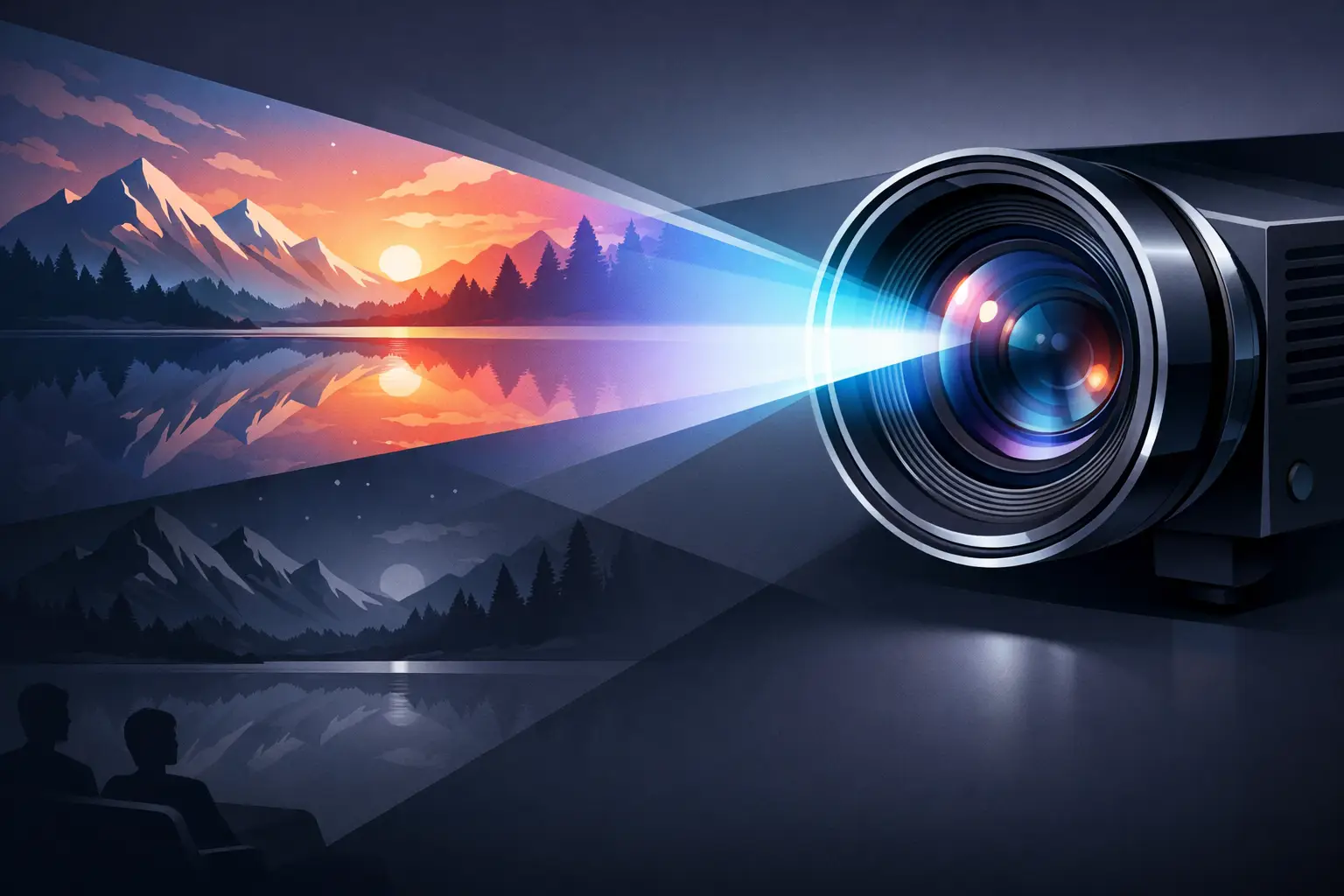
A projector can measure well on paper and still look flat on screen. In commercial AV, that usually happens when the optical path is treated as secondary. The high contrast projector lens is one of the parts that directly affects perceived black level, edge definition, and image separation, especially in larger venues, high-brightness applications, and 4K signal chains.
For distributors, service providers, and integration teams, this matters for a practical reason. End users rarely describe an image in optical terms. They say the picture looks washed out, text lacks depth, dark scenes have no detail, or the image is not as crisp as expected. In many cases, the lens is part of that result. Understanding what a high contrast projector lens actually does helps buyers make better replacement and sourcing decisions across different brands and installed environments.
What a high contrast projector lens changes in real use
Contrast at the projector level is never produced by one component alone. The imaging chip, light engine, coating quality, internal reflections, and screen conditions all contribute. Still, the lens plays a direct role in preserving the contrast that the projector is capable of producing.
A high contrast projector lens is designed to reduce light scatter and maintain cleaner separation between bright and dark parts of the image. When stray light inside the lens system is better controlled, blacks look deeper, shadow detail is easier to distinguish, and bright objects do not bleed as heavily into surrounding dark areas. In practical viewing terms, the image looks more dimensional and stable.
This becomes more obvious in environments such as lecture halls, boardrooms, simulation spaces, museums, and event venues where larger images magnify every optical weakness. A standard lens may still deliver acceptable brightness, but if internal light control is weaker, the image can lose depth. On high-resolution content, the result is often described as soft contrast rather than poor focus.
Optical design matters more than headline specs
Many buyers first compare throw ratio, brightness transmission, and compatibility. Those are necessary checkpoints, but they do not tell the full story. Two lenses can fit the same projector and target the same throw range while producing different contrast performance.
The difference usually comes from structural design, coating quality, and optical precision. Better coatings help reduce reflections between lens elements. More controlled internal geometry limits flare and stray light. Tighter manufacturing tolerances support more consistent focus across the frame. These are not marketing details for professional buyers. They directly affect whether the installed image meets expectations after commissioning.
This is also why low light loss and high contrast should be evaluated together, not separately. A lens that preserves brightness but introduces more internal scatter may still create a less convincing image than a lens with more disciplined optical control. The right balance depends on the application. In a bright classroom, raw output may carry more weight. In a premium conference room or exhibition environment, visible contrast often becomes the deciding factor.
Why 4K projection makes lens quality more visible
As more commercial installations move to 4K-capable systems, lens performance is under greater scrutiny. Higher resolution exposes optical weaknesses that might have been less obvious on lower pixel densities. Fine text, line detail, and texture require the lens to maintain precision not only at the center, but across the full image area.
A high contrast projector lens supports this by improving perceived detail in addition to measured focus. When micro-contrast is preserved, fine elements stand apart more clearly from adjacent tones. That means charts, architectural drawings, control interfaces, and dense presentation content appear cleaner and easier to read.
For service businesses, this has an important implication. When customers upgrade source resolution or replace an older projector with a 4K-capable model, lens quality can become the limiting factor in the image chain. If the lens does not adequately support the resolution and contrast target of the system, the projector may be blamed for an issue that is partly optical.
Where buyers see the benefit fastest
Not every installation needs the same lens priority. A high contrast projector lens delivers the clearest return in applications where image quality directly affects usability or client perception.
In corporate spaces, higher contrast helps presentation graphics, spreadsheets, and video content look more defined under real operating conditions. In education, clearer separation of text and diagrams improves readability, especially on larger screens. In museums and exhibition environments, dark-scene control matters because ambient lighting is often managed carefully and visual quality is part of the experience. In event and staging work, strong contrast helps content retain visual impact across varying material types.
There is also a maintenance and support angle. Better optical performance can reduce unnecessary troubleshooting when complaints are actually related to image depth rather than lamp output or panel condition. For repair teams managing mixed fleets, having access to dependable lens options makes it easier to restore performance without defaulting to costly OEM-only purchasing.
Selection criteria for a high contrast projector lens
Compatibility remains the first filter. Mount type, supported projector model, throw ratio, and mechanical fit must all be confirmed before optical performance is even discussed. For professional buyers, incorrect matching creates more cost than any price advantage can recover.
After compatibility, image requirements should guide the selection. The key questions are straightforward. What screen size is being used? What is the room brightness? Is the content mostly text, video, simulation, or mixed media? Is edge-to-edge clarity critical? Is this a premium visual installation or a utility-driven room?
Then evaluate the lens on the factors that affect actual use: color reproduction, light loss, 4K support, contrast performance, and installation practicality. A scientifically structured lens design has value beyond the optical spec sheet. Easier installation reduces service time, lowers handling risk, and helps field teams complete replacement work with fewer delays.
Warranty support should not be treated as an afterthought. In the replacement parts market, long warranty coverage is a signal of manufacturing confidence and supplier accountability. Buyers supporting customer fleets need supply continuity and clear support terms, not just a low initial unit cost.
Trade-offs buyers should consider
There is no universal best lens for every deployment. A high contrast projector lens can improve image depth and clarity, but the full value depends on the operating environment.
If the room has uncontrolled ambient light, some of the contrast advantage will be lost at the screen. If the projector itself has limited native contrast, lens improvement can help preserve performance but cannot create optical capability that does not exist elsewhere in the system. If the installation priority is maximum brightness at long throw in a demanding venue, lens selection may involve balancing transmission and contrast rather than maximizing one metric alone.
Cost is another factor. Professional buyers are usually balancing performance, lead time, model coverage, and margin. In that context, the strongest option is often not the most expensive lens, but the one that delivers stable compatibility, low light loss, high contrast support, and predictable warranty service across a broad range of projector models.
Why supplier capability affects lens value
For distributors and service companies, product quality is only part of the buying decision. The other part is supplier reliability. A well-designed lens loses value quickly if availability is inconsistent, compatibility information is unclear, or after-sales support is weak.
This is where specialized projector accessory suppliers have an operational advantage. A supplier focused on projector lenses, bulbs, air filters, and related parts is better positioned to support model identification, replacement matching, and recurring procurement across mixed-brand fleets. That support reduces downtime and purchasing friction, which matters just as much as the lens specification itself.
ZORSIKA approaches this category from that practical side of the market. High color reproduction, low light loss, 4K support, high contrast performance, and easier installation are not abstract claims for professional buyers. They are the features that affect replacement success, service efficiency, and customer satisfaction in the field.
A high contrast projector lens is not just an upgrade item for premium image quality. It is a working component that can protect the visual performance of the entire system when chosen correctly. For buyers responsible for continuity, compatibility, and cost control, the better question is not whether contrast matters. It is whether the current lens is preserving the projector performance your customer already paid for.
When image complaints start appearing even though the projector is otherwise in serviceable condition, the lens deserves a closer look.