
En bref
- 01 Technical Connotation of White Balance for Display Devices
- Standard White Points
- 02 Factors Affecting White Balance of Display Devices
- 03 Standardized Calibration Methods for Display Device White Balance
- Calibration Objectives and Equipment
- A Typical Hardware-Level White Balance Calibration Process Includes the Following Key Steps:
- 04 Key Assessment Indicators and Tolerances
- 05 Industry Applications and Standards
- Conclusion
white balance is defined as the ability of a display device to output light whose chromaticity coordinates match the preset target values when receiving standard electronic signal input.

In the field of display device manufacturing and calibration, white balance is defined as the ability of a display device to output light whose chromaticity coordinates match the preset target values when receiving standard electronic signal input.
Its core objective is to establish a stable, repeatable color reproduction benchmark that complies with industry specifications, rather than adapting to variable ambient light sources.
01 Technical Connotation of White Balance for Display Devices
White balance of display devices specifically refers to the chromaticity characteristics of the light emitted by the screen when the input signal is pure white (usually represented by maximum values in the RGB color model, e.g., R=G=B=255).
This characteristic is mainly quantified and described by the following two physical parameters:
- 1.Chromaticity Coordinates: The precise position of the white point on the CIE 1931 xy or CIE 1976 u'v' chromaticity diagram.
- 2.Correlated Color Temperature (CCT): The temperature value when the spectrum is closest to that of a blackbody radiator, measured in Kelvin (K). It describes the "warmth" or "coolness" tendency of white light.
Standard White Points
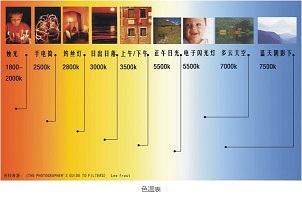
The industry unifies benchmarks by defining standard white points, the most common ones being:
- D65: With a color temperature of approximately 6500K and chromaticity coordinates (x=0.3127, y=0.3290), it represents average daylight and serves as the standard for most consumer content such as sRGB and high-definition television (Rec.709).
- D50: With a color temperature of approximately 5000K, it simulates sunlight after sunrise or before sunset and is the standard light source for color evaluation in the printing and publishing industry.
- D93: With a color temperature of approximately 9300K, it was once a preference for television products in certain regions, featuring a cool, bluish tone.
02 Factors Affecting White Balance of Display Devices
The final white balance performance of a display device is the combined effect of multiple subsystems, mainly influenced by the following factors:
- 1.Backlight Spectrum: The spectral power distribution (SPD) of LED backlights (especially those of the blue LED-excited phosphor type) forms the basis for determining white chromaticity. Minor differences between LED batches directly impact the initial chromaticity coordinates.
- 2.Color Filters (CF): In liquid crystal displays (LCDs), the transmittance curves of the R, G, B sub-pixel color filters determine the chromaticity of the three primary colors, and their combined effect defines the achievable range of white light.
- 3.Driver Circuits and Panel Response: The nonlinear relationship between the voltage applied to liquid crystal cells and the final light transmittance (gamma curve), as well as TFT switching characteristics, affect the RGB ratio at different gray levels.
- 4.Optical Films: Brightness enhancement films, diffusion films, and other optical components may introduce slight wavelength selectivity, thereby subtly altering chromaticity.
03 Standardized Calibration Methods for Display Device White Balance
White balance calibration is a core process in display production lines and professional calibration, aiming to adjust the device's white output to meet target standards (e.g., D65).
Calibration Objectives and Equipment
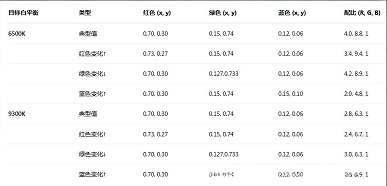
- Primary Objective: Ensure that when the screen displays full-screen white (100% signal), the deviation (Δu'v') between its chromaticity coordinates (x, y) and the target values is within specified tolerances (typically requiring Δu'v' < 0.003).
- Secondary Objective: Maintain stable white balance across all gray levels from dark to bright, preventing color cast at low gray levels.
- Core Equipment: Colorimeter or spectroradiometer, signal generator, control computer, and professional calibration software.
A Typical Hardware-Level White Balance Calibration Process Includes the Following Key Steps:
- 1.Preparation Phase: The device must be fully warmed up (usually > 30 minutes) and the calibration should be conducted in a darkroom or standard low-illuminance environment to eliminate ambient light interference.
- 2.Measurement Phase: Use instruments to measure the full white field signal in the central area of the screen and obtain brightness (Y) and chromaticity coordinates (x, y).
- 3.Adjustment Phase:
- For consumer-grade/engineering monitors: Manually adjust the "RGB Gain" and "RGB Offset" through the on-screen display (OSD) menu. Gain mainly affects white balance in high-brightness areas (100% white); offset mainly affects white balance in low-brightness areas (e.g., 5% gray).
- The adjustment principle is to fix one channel (usually green), first adjust the color temperature (mainly by adjusting the blue channel), then fine-tune the chromaticity coordinates (mainly by adjusting the red channel).
- 4.Verification Phase: Re-measure after adjustment to check if the white field chromaticity meets the standard. Meanwhile, verify the "gray scale tracking"—measure the color temperature at multiple gray levels (e.g., 20%, 40%, 60%, 80% white), and the fluctuation should be as small as possible (professional requirements typically specify < 100K).
04 Key Assessment Indicators and Tolerances
- 1.Chromaticity Tolerance (Δu'v'): The human eye is highly sensitive to differences in white light. When Δu'v' < 0.003, the vast majority of observers cannot perceive the difference; when Δu'v' < 0.006, the difference may be detectable under side-by-side comparison.
- 2.Color Temperature Consistency: The fluctuation range of correlated color temperature across the entire gray scale. High-quality monitors require fluctuations within ± 50K.
- 3.Uniformity: The consistency of white balance across different areas of the screen (usually measured at nine points). Generally, the color temperature difference (ΔCCT) between the edges and the center is required to be < 150–300K.
05 Industry Applications and Standards
White balance of display devices is a mandatory basic requirement embedded in various industry standards.
- 1.Consumer Electronics: Mandates the use of D65 as the white point for content creation and display to ensure color consistency from content production to viewing.
- 2.Digital Cinema (DCI-P3): Specifies that the white point of cinema projectors shall be DCI White (approximately 6300K), accompanied by strict chromaticity tolerance specifications.
- 3.Automotive Cockpits: In-vehicle displays must maintain stable white balance under extreme ambient temperatures (-40℃ to 85℃) and high brightness levels (up to 1000 nits or more). Additionally, multi-screen combinations require matching calibration to ensure visual uniformity.
Conclusion
In the display industry, white balance is an objective and quantifiable hardware characteristic parameter that characterizes the benchmark for device color reproduction.
It is rigorously defined by chromaticity coordinates and correlated color temperature, and its calibration process is a standardized engineering workflow that relies on precision instrument measurement and adheres to clear physical targets and tolerance specifications.
From production line calibration to end-user professional color management, precise control of white balance remains one of the core components of display technology quality.