
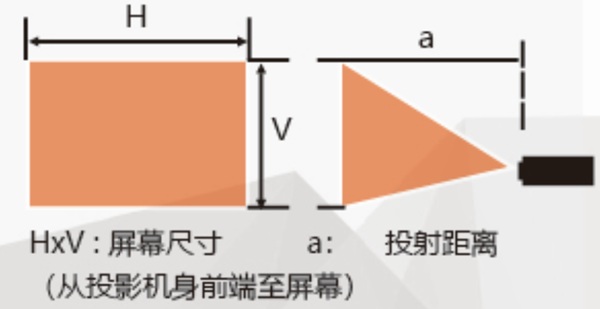
 Throw Ratio
1. Throw ratio is a common projection parameter. It is calculated as the distance from the lens to the screen divided by the screen width. This formula can be used to determine the relationship between the projector lens, screen size, and screen distance, making it easier for installation personnel to locate the projector installation location.
Throw distance = Projector screen width x Projector lens focal length
Projector screen width = Projection distance ÷ Projector lens focal length
Throw ratio = Projection distance ÷ Projector screen width
For example, if a projector needs to project a 4:3 100-inch screen (length 2.03) at a distance of 10 meters, which projector lens should be used?
You can calculate this as follows: 10 (meters) ÷ 2.03 (meters) = 4.9 (this is the projector lens's throw ratio, just one decimal place).
From this, we can conclude that the required lens is a telephoto lens, and any lens with a throw ratio range of 4.9:1 will meet the requirement.
Projector brightness: "Light out" is a key technical specification for projectors. "Light out" is usually expressed in luminous flux, which describes the ability of a light source to produce a visual response per unit time. It is measured in lumens. The international standard unit for projector luminous flux is ANSI lumens. ANSI lumens is a method developed by the American National Standards Institute to measure projector luminous flux. The measurement environment is as follows:
1. Turn on the projector with a completely white screen for half an hour. For a 60-inch screen, a zoom lens needs to be tested at both the maximum and minimum throw ratios. Brightness can vary significantly because different throw ratios result in different F values and transmittance.
2. Use a luminance meter to measure the illuminance at each of the nine intersections of the screen in a "田" shape. Multiply by the area to obtain the brightness at all nine points of the projected image.
3. Calculate the average brightness of the nine points; this is the ANSI lumens, and therefore the lens's brightness.
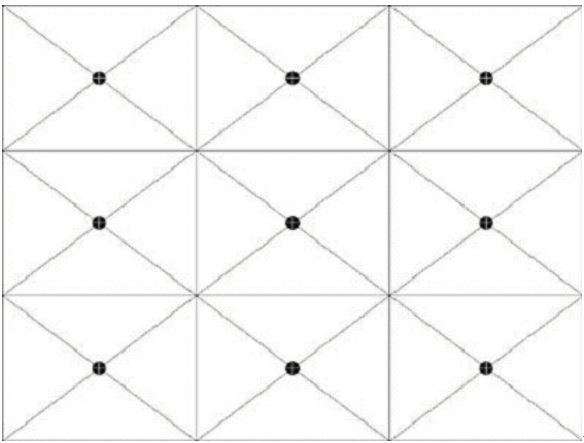
4. Then divide the brightness of the nine points by the percentage of the maximum brightness at all nine points, and divide the sum by 9 to obtain the percentage of uniformity at the nine points. Generally, 85% brightness uniformity is considered excellent.
1. F represents the transmittance of the lens. The smaller the F, the better the lens's light transmittance. Most common F1.7 lenses on the market are standard lenses. Short-throw lenses are generally F2.0, F2.2, F2.4, and F2.5.
2. f represents the focal length of the lens. Shorter focal lengths reduce the throw ratio, while larger focal lengths increase the throw ratio.
3. Fixed-focus lenses generally have a single f/1.0, while zoom lenses have a range of values.
1. Projection lenses are upgraded with the development of projector chip technology. For example, projection chip resolutions include 1024*768, 1280*800, 1920*1200, 3840*2160, and 8K.
2. Projection lenses also have corresponding resolution standards. High-resolution lenses are backward compatible, while low-resolution lenses are not upward compatible.
The higher the resolution, the higher the resolution requirement for the lens. If a high-resolution chip projector is equipped with a low-resolution lens, the playback quality will only be that of a low-resolution projector. Therefore, the resolution of the projector chip must be compatible with the resolution of the projection lens; otherwise, the projector's image quality will be severely degraded.
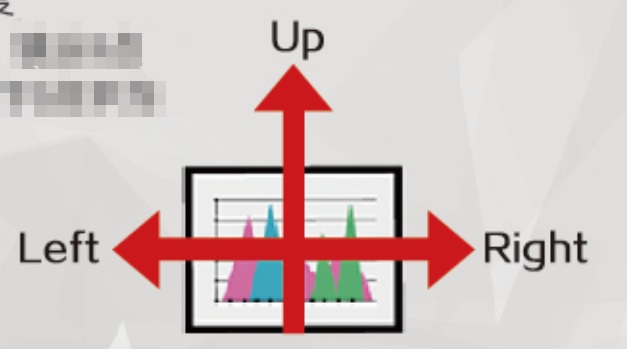
This generally refers to the range of vertical and horizontal image movement on professional engineering projectors after the lens is installed. This facilitates projector installation for construction workers, eliminating the need for precise installation. Standard and long-focus lenses generally have larger shifts, ranging from ±50% vertically and ±15% horizontally. Short-focus lenses have smaller shifts, ranging from ±30-50% vertically and ±10-20% horizontally.
Professional engineering projectors range from 5,000 to 80,000 lumens, and their light sources range from ultra-high-pressure mercury lamps to lasers. As brightness increases, the requirements for projection lenses become increasingly stringent.
Therefore, each brightness level above 5,000 lumens requires different lens materials. When selecting a projector with 9,000 lumens or above, it's important to inquire with the supplier whether the lens supports high lumens. Otherwise, lens burn-in or image instability may occur.
Focus Shift generally refers to the situation where, after a period of operation after the image has been adjusted clearly, the projected image appears to expand by several pixels in the corners or along one side. This is caused by the physical phenomenon of light passing through the lens, causing it to expand and contract due to heat during projector operation.
For home use, a deviation of 1-3 pixels is generally acceptable. For high-end projectors, deviation can generally be controlled within 1 pixel.
Out-of-focus generally refers to a phenomenon where the image becomes unclear after a period of operation, requiring refocusing. This is caused by the physical phenomenon of light passing through the lens, which expands and contracts due to heat. This can also be caused by the lens not supporting the projector's high brightness, or by excessive lens displacement, resulting in uneven heating of the projection lens. We recommend replacing the lens.