
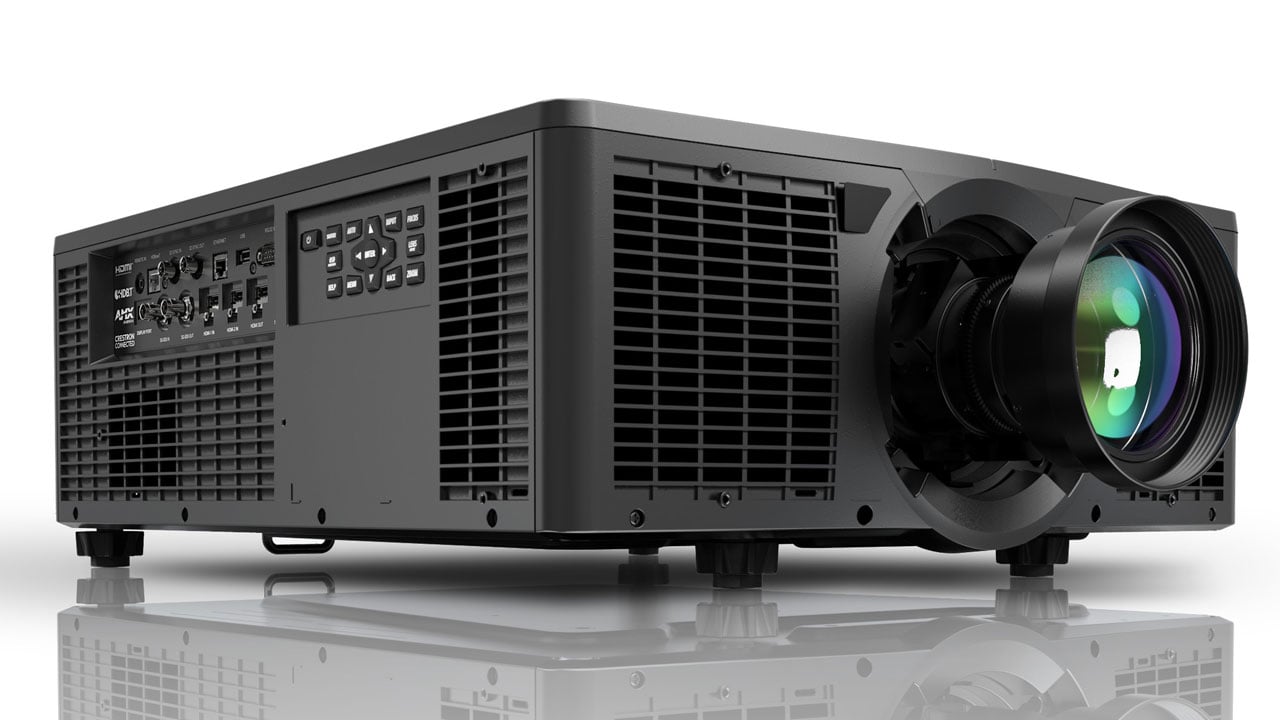
From the outside, a projector's lens is an essential component. No matter how complex its internal structure, the lens serves as the gatekeeper of light, safeguarding the final barrier to image quality. We often focus on the chip, resolution, brightness, and other aspects, but sometimes overlook the lens, which is easily visible.
Lens under Different Light Sources
The primary influence of light source on lens design lies in changes in the aperture (F-number). The aperture's basic function is to control the amount of light that passes through it, while the F-number refers to the size of the aperture (F-number = lens focal length / aperture diameter). A larger F-number indicates a smaller aperture and higher contrast. Mercury lamp models typically have a larger F-number, followed by laser light sources, and LED light sources have relatively small F-numbers. Lens designs vary depending on the requirements of different models, so it's not enough to use the same focal length. Adjustments must be made to the characteristics of different light sources.
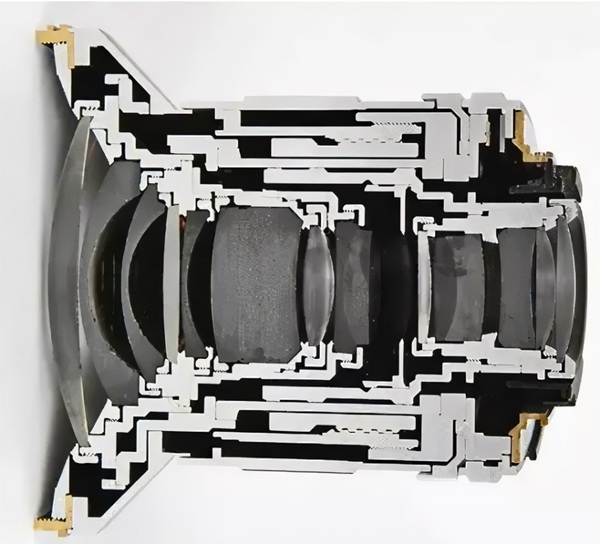
You might think of a lens as a large, transparent disk, but in reality, it's likely a narrow light channel with a wide outer surface.
As shown in the figure, a projector lens is often composed of a barrel and numerous lens elements.
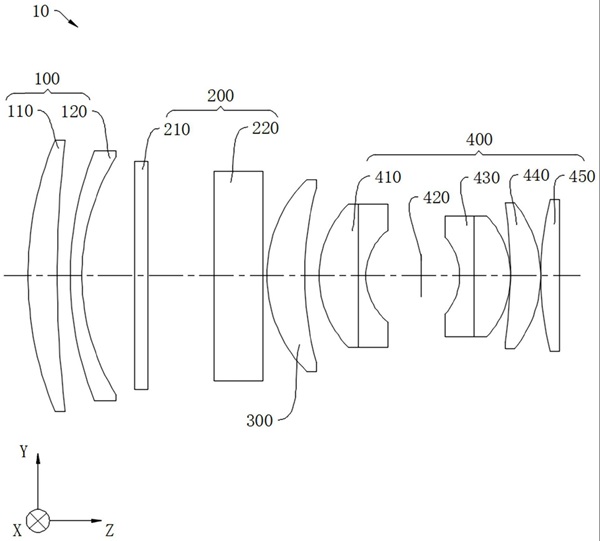
Though seemingly compact, projector lenses often house multiple internal lenses, a design rooted in the precise pursuit of image quality. Each lens has a distinct role: some adjust focal length, some expand the focusing range, and most importantly, they work through "relay compensation" to optimize image quality. When white light passes through lenses, light waves of different wavelengths (corresponding to red, orange, yellow, green, blue, indigo, and violet) refract at varying angles, leading to "chromatic aberration" (failure to converge at the same point). A combination of multiple lenses acts like a sophisticated "correction system," offsetting deviations layer by layer to deliver sharper, clearer images.
However, the complexity of a lens isn’t fixed. For scenarios with low brightness or precision requirements, adjusting the number of lenses or combining different materials can meet basic imaging needs while controlling costs, eliminating the need for an overly intricate structure.
Material Differences: The "Performance Battle" Between Glass and Resin
Lens materials directly impact a projector’s image performance and suitability for specific scenarios. Currently, mainstream projector lenses fall into two categories: glass and resin (plastic), each with distinct advantages and drawbacks:
Glass Lenses: The "Precision Champion" of Stability and Durability
- Superior heat resistance: Resistant to deformation in the high-temperature environment of working projectors, ensuring stronger stability.
- Notable precision advantage: Crafted through individual grinding, they achieve high processing accuracy, better controlling light path deviations.
Resin Lenses: The "Cost-Effective Choice" for Lightweight and Affordability
- Weaker heat resistance: May experience slight deformation in high temperatures, requiring careful environmental control during use.
- Distinct molding characteristics: Produced via precision injection molding with molds, achieving micron-level surface accuracy. However, they demand strict environmental controls during processing and offer slightly lower stability compared to glass lenses.
In terms of physical properties, glass lenses generally outperform resin, but some high-grade resin lenses can approach glass-like performance. Thus, beyond all-glass or all-resin lens assemblies, many products use a "glass + resin" hybrid design to balance performance and cost.
Cost-wise, glass lenses require extensive labor and time for grinding, slowing and yield improvements and leading to higher costs. In contrast, resin lenses have a low melting point, enabling mass production via injection molding and easier cost control. This explains why low-lumen mini projectors and other budget-focused products often use resin lenses—they deliver basic imaging performance at a lower cost in scenarios with modest performance demands.
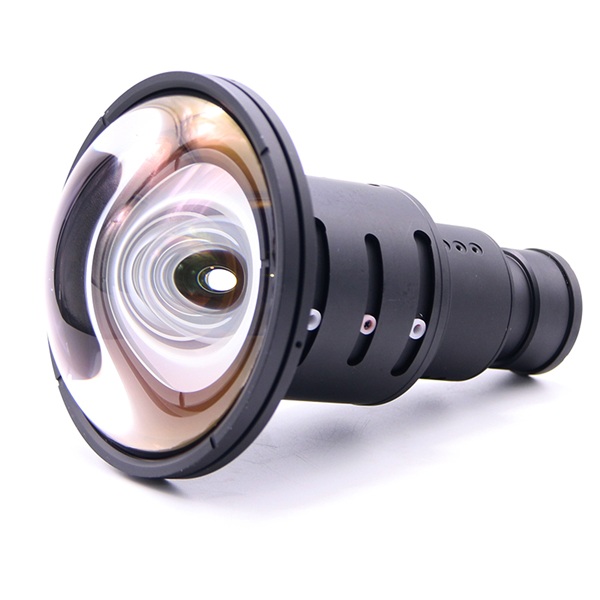
Zorsika's projector lenses offer excellent imaging quality. All lenses support 4K resolution, boast excellent color reproduction, and minimal light loss.
Zorsika offers interchangeable wide-angle lenses with throw ratios ranging from 0.35:1, 0.38:1, 0.4-0.5:1, 0.47, 0.5-0.6:1, 0.52-0.64:1, 0.75:1, 0.78:1, 0.8-1.33:1, 1.2-2.0, and 1.5-3.0. These lenses are compatible with most projector brands and models on the market, addressing a wide range of projector application needs in various fields.
Similar considerations apply to the lens barrel material. Since the lens barrel directly encases the lens, its deformation resistance can affect the lens, and thus image quality.
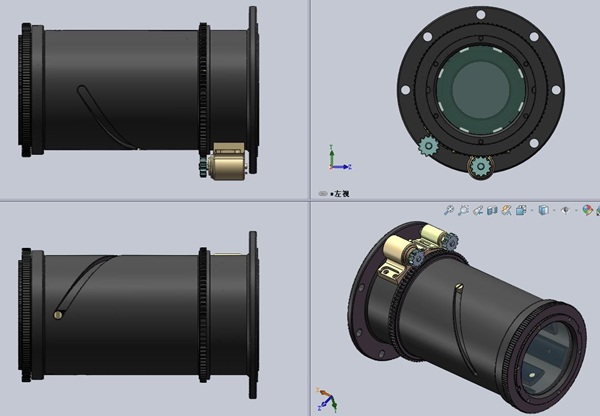
Lens barrels are also available in two materials: metal and resin. Due to uneven heat distribution and poor thermal conductivity, resin lens barrels deform to varying degrees in different areas, resulting in defocus and focus shift. Metal lens barrels, on the other hand, heat evenly due to their excellent thermal conductivity, resulting in less deformation. This results in less focus shift than with resin lenses, which can be corrected through focusing adjustments.
However, the choice of material isn't solely based on quality. For general models with sufficient usability and minimal lens mounting requirements, resin lens barrels can be used. However, for engineering equipment or some high-end audio-visual equipment, metal lens barrels are often used. Furthermore, compared to the long supply chain for glass lenses, resin lenses are generally manufactured through a single process, making them more suitable for large-scale mass production.
Are projector lenses made of ordinary glass? Clearly not.
Because of their specific light requirements, projector lenses incorporate specialized compounds and metals into regular glass to create the desired optical glass. Optical glass can alter the direction of light propagation and the relative spectral distribution of ultraviolet, visible, and infrared light, meeting the requirements of projector optical systems. Combined with glass's inherent heat resistance and light transmittance, it's a natural choice for projector lenses.