
At a glance
- Understanding What a Short-Throw Lens Actually Does
- Pitfall One: Ignoring Throw Ratio and Room Dimensions
- Pitfall Two: Overlooking Optical Quality and Resolution Support
- Pitfall Three: Choosing Based on Price Alone
- Pitfall Four: Neglecting Compatibility with Your Projector Model
- Pitfall Five: Disregarding Build Quality and Durability
- Pitfall Six: Forgetting About Maintenance Accessories
- Pitfall Seven: Failing to Research the Supplier's Reputation
- Conclusion
In the ever-evolving world of projection technology, short-throw projector lenses have become indispensable tools for businesses, educational institutions, entertainment venues, and home theater enthusiasts alike.
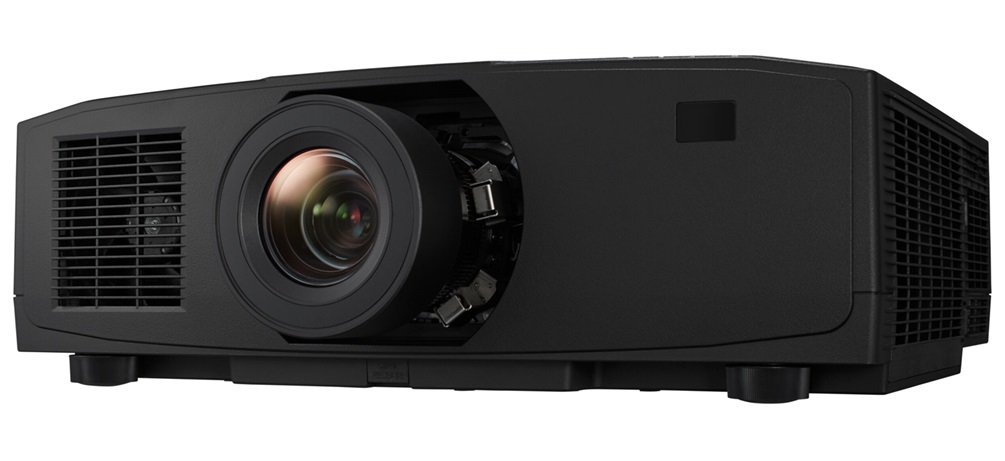
In the ever-evolving world of projection technology, short-throw projector lenses have become indispensable tools for businesses, educational institutions, entertainment venues, and home theater enthusiasts alike. Their ability to produce large, vivid images from remarkably short distances makes them ideal for spaces where traditional long-throw setups are impractical. However, selecting the right short-throw lens is far from a straightforward task. With countless options flooding the market—varying in quality, compatibility, performance, and price—buyers often find themselves navigating a minefield of misleading claims, substandard products, and costly mistakes. This comprehensive guide is designed to help you understand the critical factors you must evaluate before making a purchase, so you can confidently invest in a lens that delivers outstanding results for years to come.
Understanding What a Short-Throw Lens Actually Does
Before diving into the selection criteria, it is essential to grasp the fundamental purpose of a short-throw lens. Unlike standard projection lenses that require several meters of distance between the projector and the screen, short-throw lenses can produce a 100-inch or larger image from distances as close as one to two meters. This capability is particularly valuable in small meeting rooms, classrooms, retail displays, and compact home theaters. The lens achieves this by bending and concentrating the light path more aggressively, effectively "compressing" the projection distance. However, this optical complexity also means that the quality of the lens has a disproportionately large impact on the final image—making the selection process all the more critical.
Pitfall One: Ignoring Throw Ratio and Room Dimensions
One of the most common mistakes buyers make is selecting a lens without first calculating the exact throw ratio needed for their specific environment. The throw ratio is the relationship between the distance from the projector to the screen and the width of the projected image. Short-throw lenses typically have throw ratios between 0.4:1 and 1.0:1, but even within this range, the differences matter enormously. A lens with a 0.4:1 ratio will need significantly less space than one with a 0.8:1 ratio.
If you purchase a lens without measuring your room precisely, you may end up with an image that is either too large for the wall or too small for your intended use. Worse, some low-quality lenses advertise a short throw ratio but actually suffer from severe edge distortion or brightness falloff at that distance. Always measure your installation space, determine your desired screen size, and then select a lens whose verified throw ratio matches those parameters.
Pitfall Two: Overlooking Optical Quality and Resolution Support
Not all short-throw lenses are created equal when it comes to optical performance. A critical factor that many buyers neglect is whether the lens supports the resolution of their projector—especially 4K resolution, which has become the standard in professional and high-end consumer applications. A lens that cannot resolve 4K detail will bottleneck your entire projection system, no matter how advanced your projector is.
When evaluating optical quality, pay close attention to three parameters: color reproduction accuracy, light transmission efficiency (light loss), and contrast performance. High-end short-throw lenses should deliver near-perfect color fidelity, minimal light loss (ideally less than 5%), and high contrast ratios that preserve deep blacks and bright highlights. Lenses that compromise on any of these factors will produce washed-out, dim, or inaccurate images that undermine the entire purpose of your investment. Look for products that explicitly specify 4K support, high contrast design, and low optical light loss.
Pitfall Three: Choosing Based on Price Alone
It is tempting to opt for the cheapest option available, especially when budget constraints are tight. However, in the realm of projection lenses, low price often correlates with poor optics, inferior materials, and short lifespan. Budget lenses frequently use plastic elements instead of precision glass, lack proper anti-reflective coatings, and suffer from chromatic aberration and focus inconsistencies. Over time, these deficiencies not only degrade image quality but can also cause damage to the projector itself through excessive heat or misaligned light paths.
A smarter approach is to evaluate the total cost of ownership. A high-quality lens from a reputable supplier may cost more upfront, but it will last longer, maintain its optical performance over years of use, and protect your projector investment. In this regard, companies like Zorsika (Guangzhou Zorsika Electronic Co., Ltd.) have established themselves as professional projection accessory suppliers committed to providing high-quality, cost-effective solutions. Zorsika's short-throw projection lenses, for instance, are engineered with excellent color reproduction, extremely low light loss, full 4K resolution support, and high contrast—all combined with a scientifically designed structure that ensures easy installation. Their commitment to quality and value makes them a compelling alternative to overpriced OEM options.
Pitfall Four: Neglecting Compatibility with Your Projector Model
Another frequent error is assuming that any short-throw lens will fit any projector. In reality, lens mounting interfaces, flange distances, and electronic communication protocols vary significantly across projector brands and models. A lens that physically mounts onto your projector may still fail to communicate properly, resulting in no image, incorrect aspect ratios, or loss of keystone correction functionality.
Always verify that the lens you are considering is explicitly compatible with your projector's make, model, and firmware version. Reputable suppliers typically provide detailed compatibility charts and technical support to help you make the right match. Zorsika, for example, has invested heavily in researching the most widely circulated projector models on the market, developing lenses and accessories that address real-world application needs. Their team continuously innovates to expand their product range and ensure that customers can find the right solution for their specific equipment.
Pitfall Five: Disregarding Build Quality and Durability
Short-throw lenses contain multiple precision optical elements that must remain perfectly aligned to deliver consistent performance. Lenses constructed with low-grade materials or poor assembly tolerances will shift out of alignment over time, especially under the heat generated by high-brightness projectors. Look for lenses that use all-glass or hybrid glass-plastic optical designs, metal housing for thermal stability, and robust mounting mechanisms.
Additionally, consider the warranty and after-sales support offered by the supplier. A company that stands behind its products with extended warranties demonstrates confidence in its engineering. Zorsika distinguishes itself in this area by offering ultra-long warranty periods on its projection lenses, lamps, and filters—a testament to the durability and reliability of its products. The company's self-developed lamp cores, which achieve over 95% of original lamp brightness and over 90% of original lamp lifespan, further illustrate their dedication to long-term performance.
Pitfall Six: Forgetting About Maintenance Accessories
A short-throw lens is not the only component that requires attention in a projection system. Dust filters, in particular, play a vital role in protecting both the projector and the lens from airborne particles, smoke, and debris that can accumulate on optical surfaces and degrade image quality over time. Many buyers focus exclusively on the lens itself and neglect this essential maintenance element.
Investing in high-quality, custom-developed filters for your specific projector model ensures optimal airflow and protection. Zorsika addresses this need by independently developing dust filters for widely circulated projector models, featuring excellent air permeability that effectively shields the projector from dust and smoke while maintaining proper cooling. This holistic approach to projection accessories reflects Zorsika's customer-first philosophy and its understanding that a complete solution requires more than just a single component.
Pitfall Seven: Failing to Research the Supplier's Reputation
Finally, perhaps the most overlooked factor is the reputation and track record of the supplier itself. The projection accessories market includes many fly-by-night vendors with no technical expertise, no quality control, and no accountability. Purchasing from an unknown source risks receiving counterfeit, refurbished, or outright defective products.
Seek out suppliers with a proven history in the industry, direct partnerships with leading technology manufacturers, and a clear commitment to research and development. Zorsika (Guangzhou Zorsika Electronic Co., Ltd.) exemplifies this standard. The company maintains direct cooperative relationships with world-renowned lamp manufacturers including Philips, Osram, Ushio, and Phoenix, ensuring access to leading-edge technologies. Furthermore, Zorsika invests substantial annual funding into new product R&D to meet evolving market demands. Guided by a "customer first" philosophy, Zorsika has earned high recognition from partners worldwide—a driving force that continues to push the company forward.
Conclusion
Selecting a short-throw projector lens is a decision that impacts image quality, system reliability, and long-term satisfaction. By avoiding the seven common pitfalls outlined above—ignoring throw ratios, compromising on optical quality, choosing by price alone, overlooking compatibility, neglecting build quality, forgetting maintenance needs, and researching suppliers—you position yourself to make a purchase that truly serves your needs. The market offers excellent options for those who know what to look for, and trusted suppliers like Zorsika stand ready to deliver the precision, durability, and value that professional and discerning users demand. Take your time, do your research, and invest wisely—your projection system will thank you.