
At a glance
- 1. What Is an Ultra Short Throw Projector Lens?
- 2. Key Selection Parameters for Ultra Short Throw Lenses
- 2.1 Throw Ratio
- 2.2 Image Size and Resolution Support
- 2.3 Lens Compatibility and Mount Standards
- 2.4 Optical Performance: Light Transmission and Uniformity
- 2.5 Color Accuracy and Chromatic Aberration Control
- 2.6 Focus and Zoom Capabilities
- 2.7 Physical Dimensions and Weight
- 2.8 Heat Management and Durability
- 3. Application Scenarios and Lens Matching
- 4. Maintenance and Long-Term Performance
- 5. Why Zorsika Stands Out in the UST Lens Market
- Conclusion
In the rapidly evolving world of projection technology, ultra short throw (UST) projector lenses have emerged as a game-changing solution for space-constrained environments, interactive classrooms, immersive retail displays, and large-scale simulation venues.
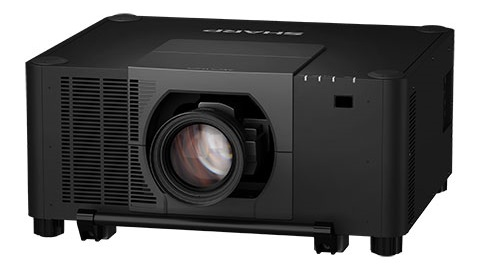
In the rapidly evolving world of projection technology, ultra short throw (UST) projector lenses have emerged as a game-changing solution for space-constrained environments, interactive classrooms, immersive retail displays, and large-scale simulation venues. Unlike traditional long-throw or standard short-throw lenses, ultra short throw lenses can project a massive image from an extremely short distance — sometimes just a few inches from the wall or screen. This remarkable capability makes them indispensable in modern AV installations, digital signage, museum exhibitions, and home theater setups where ceiling mounting or rear projection is impractical.
However, selecting the right ultra short throw projector lens is far from a simple decision. It requires a thorough understanding of multiple technical parameters, optical performance metrics, installation constraints, and long-term maintenance considerations. This article provides a detailed, parameter-by-parameter breakdown of UST lens selection, helping system integrators, AV professionals, and end-users make informed purchasing decisions. We will also highlight how industry leaders like Zorsika are pushing the boundaries of UST lens innovation to deliver solutions that meet the highest standards of image quality and reliability.
1. What Is an Ultra Short Throw Projector Lens?
An ultra short throw projector lens is designed with a throw ratio of typically 0.2:1 or less. This means that for every one unit of image width projected, the lens sits less than 0.2 units away from the projection surface. In practical terms, a UST lens can project a 100-inch diagonal image from a distance of less than 20 centimeters. This is fundamentally different from standard short-throw lenses (0.4:1 to 1.0:1) and long-throw lenses (1.5:1 and above).
The optical design of UST lenses typically involves a combination of aspheric elements, mirror-based reflection systems, or fisheye-type wide-angle optics. These designs allow the lens to capture a broad field of light and redirect it onto the screen at a steep angle, minimizing the distance between the projector and the display surface while maximizing image size.
2. Key Selection Parameters for Ultra Short Throw Lenses
2.1 Throw Ratio
The throw ratio is the most fundamental specification of any projector lens, and it is especially critical for UST lenses. Expressed as a ratio (e.g., 0.18:1, 0.23:1, 0.38:1), it defines the relationship between the projection distance and the image width. A lower throw ratio means the lens can sit closer to the wall while producing a larger image.
When selecting a UST lens, you must match the throw ratio to your available installation distance and desired image size. For example, if your projector will be mounted 30 centimeters from the wall and you need a 120-inch image, you would calculate the required throw ratio: 30 cm ÷ (120 inches × 2.54 cm/inch) ≈ 0.098:1, which would demand an extremely aggressive UST lens. Most commercial UST lenses fall in the 0.18:1 to 0.38:1 range, offering flexibility across various room sizes.
2.2 Image Size and Resolution Support
UST lenses must be evaluated for the maximum image size they can produce at a given distance, as well as the resolution they support. Today's market demands 4K (3840×2160) and even 8K resolution support. A high-quality UST lens must deliver sharp, detailed images across the entire projected area without chromatic aberration, edge softness, or color fringing.
Lenses that support 4K resolution with high contrast ratios and excellent color fidelity are now considered the industry baseline. As Zorsika demonstrates in its product portfolio, every lens they offer is engineered with extremely high color reproduction, minimal light loss, full 4K resolution support, and superior contrast performance — characteristics that are non-negotiable for professional UST applications.
2.3 Lens Compatibility and Mount Standards
Not all UST lenses are compatible with every projector. You must verify that the lens mount (e.g., M43, M65, or proprietary mounts) matches your projector's native lens interface. Additionally, the lens must be physically compatible with the projector's body — including weight tolerance, flange distance, and electronic communication protocols (such as lens memory chips for motorized zoom and focus).
Zorsika addresses this challenge through scientific structural design that ensures simplified installation processes. Their lenses are engineered for ease of integration, reducing setup time and minimizing the risk of misalignment during installation — a critical advantage for large-scale deployments.
2.4 Optical Performance: Light Transmission and Uniformity
Light transmission efficiency, often expressed as a percentage, measures how much light passes through the lens system. UST lenses, due to their complex optical designs, inherently suffer more light loss than simpler lenses. A premium UST lens should maintain light transmission above 90% to ensure bright, vivid images even in ambient-light environments.
Uniformity across the image is equally important. Edge-to-edge brightness consistency ensures that the entire projected image looks balanced, without noticeable hotspots or dark corners. Professional-grade UST lenses employ multi-coated elements and precision-ground aspheric surfaces to maximize both transmission and uniformity.
2.5 Color Accuracy and Chromatic Aberration Control
In UST applications — especially those involving content creation, medical imaging, or retail color-critical displays — color accuracy is paramount. A lens with poor chromatic aberration control will produce colored fringes around high-contrast edges, degrading perceived sharpness. Top-tier UST lenses use extra-low dispersion (ED) glass and advanced coating technologies to virtually eliminate chromatic aberration.
Zorsika's commitment to achieving the highest color reproduction standards reflects the growing market demand for lenses that do not compromise on optical purity, even at ultra-short distances.
2.6 Focus and Zoom Capabilities
Many UST lenses feature motorized zoom and focus, allowing fine-tuning of the image after installation. The zoom range (e.g., 1.0x to 1.5x) determines how much flexibility you have in adjusting image size without moving the projector. Focus uniformity — the ability to maintain sharp focus across the entire image plane — is a hallmark of well-designed UST optics.
2.7 Physical Dimensions and Weight
UST lenses are often larger and heavier than standard lenses due to their complex optical assemblies. This impacts mounting options, ceiling load calculations, and transportation logistics. When planning an installation, always account for the lens weight and ensure your mounting hardware can support it safely.
2.8 Heat Management and Durability
UST projectors often operate in enclosed or semi-enclosed spaces, making heat dissipation a critical concern. The lens design should not impede airflow around the projector body. Additionally, the lens should be built with durable materials that withstand long-term use, including UV-resistant coatings and robust housing.
3. Application Scenarios and Lens Matching
Different environments demand different UST lens characteristics:
- Interactive Classrooms and Education: Require wide, bright images with minimal shadow interference. Teachers and students standing close to the screen must not cast shadows, so UST lenses mounted above the whiteboard are ideal.
- Retail and Digital Signage: Demand high color accuracy and long operational hours. The lens must maintain performance over thousands of hours of continuous use.
- Home Theater and Simulators: Prioritize 4K resolution, deep blacks, and high contrast. UST lenses must deliver cinema-quality images in dark, controlled environments.
- Museums and Exhibitions: Need flexible image sizes and edge-blending capabilities for multi-projector setups.
4. Maintenance and Long-Term Performance
Selecting a UST lens is only part of the equation — maintaining it is equally important. Dust and environmental contaminants can degrade optical performance over time. This is where quality projector filters become essential. Zorsika has independently developed filter nets specifically for widely circulated projector models, offering excellent air permeability while perfectly protecting projectors from dust and smoke erosion. These filters effectively safeguard the projector's normal operation and extend the lifespan of both the projector and the lens.
Furthermore, the projector lamp is another critical component. Zorsika maintains direct partnerships with world-leading lamp manufacturers including Philips, Osram, Ushio (Niuwei), and Phoenix, ensuring access to genuine, high-performance light sources. Additionally, Zorsika's self-developed lamp cores are compatible with most market-available projector models, achieving brightness levels of over 95% of original lamps and longevity exceeding 90% of original lamp life — making them an excellent import-alternative choice for cost-conscious buyers.
5. Why Zorsika Stands Out in the UST Lens Market
Guangzhou Zorsika Electronic Co., Ltd. (Zorsika) is a professional supplier of projector accessories, dedicated to providing partners with efficient, ultra-long warranty, and cost-effective projector lenses, lamps, and filter nets. In the UST lens segment, Zorsika combines market-driven innovation with rigorous quality control. Every lens they provide delivers exceptional color reproduction, minimal light loss, 4K resolution support, and high contrast — all achieved through scientifically optimized structural design that simplifies installation.
Zorsika's team pursues excellence through continuous innovation, investing substantial annual funding into new product R&D to satisfy expanding market demands. Guided by a "customer-first" philosophy, Zorsika has served numerous global partners with outstanding products and services, earning widespread recognition that fuels their relentless drive forward.
Conclusion
Selecting an ultra short throw projector lens is a multifaceted decision that hinges on throw ratio, resolution support, optical quality, compatibility, and long-term reliability. By understanding each parameter and partnering with trusted suppliers like Zorsika — who deliver premium UST lenses backed by comprehensive accessory support — you can build projection systems that perform brilliantly for years to come. Whether you are outfitting a classroom, a retail space, or a home theater, the right UST lens, chosen with care, will transform how you experience visual content.