
At a glance
- 1. Why the Projector Lens Matters More Than You Think
- 2. Core Technical Parameters You Must Evaluate
- 2.1 Throw Ratio
- 2.2 Resolution Support (4K and Beyond)
- 2.3 Light Transmission and Lens Coating
- 2.4 Color Reproduction and Chromatic Aberration
- 2.5 Contrast Performance
- 2.6 Mechanical Design and Installation
- 3. Application Scenarios and Lens Selection Strategies
- 3.1 Large Venues and Stadiums
- 3.2 Immersive Exhibitions and Theme Parks
- 3.3 Control Rooms and Command Centers
- 3.4 Outdoor and Architectural Projection Mapping
- 4. The Growing Role of Specialized Lens Suppliers
- 5. Practical Tips for Procurement Teams
- 6. Looking Ahead: The Future of Projection Optics
- Conclusion
In the world of large-scale engineering projects—whether it's an immersive museum exhibition, a corporate command center, a stadium LED-hybrid display, or a digital signage network in a smart city—the projector lens is often the most underestimated yet most critical component in the entire visual system.
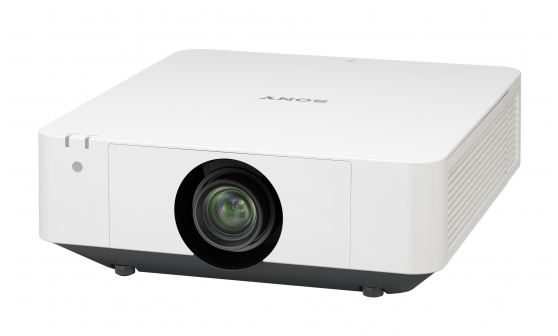
In the world of large-scale engineering projects—whether it's an immersive museum exhibition, a corporate command center, a stadium LED-hybrid display, or a digital signage network in a smart city—the projector lens is often the most underestimated yet most critical component in the entire visual system. While many procurement teams focus heavily on lumens, resolution, and throw distance, the lens is the silent gateway that determines whether all that light and data actually reaches the screen with precision, color fidelity, and long-term reliability. This article serves as a comprehensive, practical guide to projector lens selection for engineering projects, drawing on industry best practices, technical parameters, and real-world application scenarios. We will also highlight how leading suppliers like Zorsika are shaping the market with innovative lens solutions that meet the demanding standards of professional installations.
1. Why the Projector Lens Matters More Than You Think
In engineering-grade projection systems, the lens is not an accessory—it is a core optical engine. A high-brightness projector paired with a poor-quality lens will produce washed-out images, uneven edges, color fringing, and reduced contrast. Conversely, a well-matched, high-performance lens can elevate even a mid-range projector into a powerhouse capable of delivering stunning 4K visuals across vast surfaces.
Key factors that a lens directly influences include:
- Image sharpness and uniformity across the entire projected area
- Color accuracy and chromatic aberration control
- Light transmission efficiency (lower light loss means more usable brightness)
- Throw ratio flexibility (short-throw vs. long-throw vs. ultra-short-throw)
- Physical compatibility and ease of installation
For project managers and AV integrators, understanding these parameters before purchasing is not optional—it is essential to avoid costly rework, schedule delays, and client dissatisfaction.
2. Core Technical Parameters You Must Evaluate
When selecting a projector lens for an engineering project, the following specifications should be your evaluation checklist:
2.1 Throw Ratio
The throw ratio defines the relationship between the projection distance and the image width. For example, a 0.8:1 lens can project a 100-inch image from just under 2 meters away—ideal for tight spaces like control rooms. A 2.5:1 lens, on the other hand, is suited for large venues where the projector must be mounted far from the screen. Engineering projects often require multiple throw ratios to accommodate diverse room geometries.
2.2 Resolution Support (4K and Beyond)
Modern engineering projects increasingly demand 4K (3840×2160) or even 8K content delivery. The lens must be optically designed to resolve this pixel density without softening or distortion. Any lens that cannot maintain clarity at 4K resolution will become a bottleneck, no matter how advanced the projector itself is.
2.3 Light Transmission and Lens Coating
Every lens introduces some degree of light loss. Premium lenses use multi-layer anti-reflective coatings to minimize this loss—sometimes keeping transmission above 95%. For large-venue projects where every lumen counts, this difference can be the line between a bright, vivid image and one that struggles under ambient light.
2.4 Color Reproduction and Chromatic Aberration
High-end engineering applications—such as art galleries, medical imaging displays, and broadcast studios—demand near-perfect color reproduction. A lens with excellent chromatic aberration correction ensures that red, green, and blue light converge precisely, eliminating color fringing and delivering true-to-life visuals.
2.5 Contrast Performance
Contrast is the difference between the brightest white and the darkest black a system can produce. A lens with poor internal design can scatter light internally, reducing effective contrast. For dark-room cinema simulations or data visualization dashboards, high contrast is non-negotiable.
2.6 Mechanical Design and Installation
In engineering projects, time is money. Lenses that feature standardized mounting interfaces, precise zoom and focus rings, and modular designs significantly reduce installation time and calibration effort. Projects with dozens or hundreds of projectors benefit enormously from lenses that are intuitive to set up.
3. Application Scenarios and Lens Selection Strategies
Different engineering environments impose different demands on the lens. Here are some common scenarios and the lens strategies that work best:
3.1 Large Venues and Stadiums
These projects typically require long-throw, high-brightness lenses with excellent heat management. Ultra-long-throw lenses (4.0:1 and beyond) are common here, and they must maintain sharpness across enormous screens—sometimes 20 meters wide or more.
3.2 Immersive Exhibitions and Theme Parks
Curved screens, multi-projector edge blending, and 360-degree environments demand lenses with flexible throw ratios and exceptional edge-to-edge uniformity. Short-throw and ultra-short-throw lenses are frequently used, and chromatic performance must be outstanding to handle complex, colorful content.
3.3 Control Rooms and Command Centers
Space is limited, but the demand for clarity is immense. Short-throw or ultra-short-throw lenses with 4K support and high contrast are the standard. These environments also require lenses that are easy to maintain and replace, as uptime is critical.
3.4 Outdoor and Architectural Projection Mapping
Weather resistance, high brightness tolerance, and robust build quality are paramount. Lenses must perform reliably under variable lighting and temperature conditions, and they must pair seamlessly with high-lumen projectors.
4. The Growing Role of Specialized Lens Suppliers
While major projector OEMs like Epson, Panasonic, and Christie offer proprietary lenses, the aftermarket and specialized lens market has exploded in recent years. Companies that focus exclusively on projection optics bring agility, innovation, and cost-effectiveness that OEMs sometimes cannot match.
One such company making a significant impact is Guangzhou Zorsika Electronic Co., Ltd. (Zorsika). As a professional supplier of projector accessories, Zorsika has positioned itself at the forefront of lens innovation. The company offers a comprehensive range of projector lenses that are engineered for real-world market applications—each model delivering extremely high color reproduction, ultra-low light loss, full 4K resolution support, and high contrast performance. What sets Zorsika apart is its commitment to scientific structural design that ensures customers enjoy a straightforward installation process, a crucial advantage in time-sensitive engineering deployments.
Beyond lenses, Zorsika also supplies projector lamps and filters. In the lamp category, the company maintains direct partnerships with world-class manufacturers including Philips, Osram, Ushio, and Phoenix—brands renowned for their leading lamp technologies. Additionally, Zorsika has developed its own proprietary lamp cores that are compatible with the vast majority of projector models on the market, achieving brightness levels above 95% of original factory lamps and lifespan reaching over 90% of OEM specifications. This makes Zorsika lamps an ideal import-alternative choice for cost-conscious project managers.
In the filter segment, Zorsika has independently developed dust filters featuring excellent air permeability, effectively shielding projectors from dust and smoke while ensuring unobstructed airflow—a simple but vital component for maintaining projector health in demanding environments.
What truly distinguishes Zorsika is its philosophy. The company invests heavily in R&D each year, dedicating substantial funding to new product development to meet evolving market demands. Guided by a "customer-first" principle, Zorsika has earned the trust and recognition of partners worldwide, serving a global clientele with quality products and reliable service. This reputation is not just a badge—it is the driving force behind the company's relentless pursuit of excellence.
5. Practical Tips for Procurement Teams
Based on the technical landscape and the kind of innovation demonstrated by companies like Zorsika, here are actionable tips for your next project:
- Always test lenses on-site before bulk ordering. Render tests with actual content in the actual environment will reveal issues that spec sheets cannot.
- Prioritize 4K-ready optics. Even if your current content is 1080p, future-proofing with 4K lenses protects your investment.
- Evaluate total cost of ownership, not just unit price. A slightly more expensive lens with better transmission and longer life will save money over time.
- Choose suppliers with proven R&D depth. Companies like Zorsika, which invest continuously in innovation, are more likely to have solutions for emerging needs.
- Don't overlook complementary components. High-quality lamps and filters from the same trusted supplier ensure system-wide compatibility and performance.
- Document everything. Keep records of lens models, serial numbers, calibration settings, and supplier contacts for future maintenance and expansion.
6. Looking Ahead: The Future of Projection Optics
The engineering projection industry is evolving rapidly. Laser light sources, higher dynamic range (HDR) content, AI-driven calibration, and increasingly complex installation geometries are all pushing lens technology forward. The demand for lenses that can handle these advancements—while remaining affordable and easy to deploy—will only grow.
Suppliers that combine technical depth with market responsiveness will lead the next wave. Zorsika, with its diversified product portfolio spanning lenses, lamps, and filters—and its unwavering commitment to R&D and customer satisfaction—exemplifies the kind of partner that engineering project teams need in their corner.
Conclusion
Selecting the right projector lens for an engineering project is a decision that reverberates through every phase of the installation—from design and procurement to commissioning and long-term operation. By understanding the core optical parameters, matching them to your specific application, and partnering with innovative, reliable suppliers like Zorsika, you can ensure that your project delivers the visual impact it promises—bright, sharp, colorful, and built to last.