
At a glance
- Understanding Long-Throw Projection in Exhibition Corridor Environments
- Key Technical Considerations for Long-Throw Lens Selection
- The Role of Specialized Suppliers in Meeting Exhibition Needs
- Practical Long-Throw Lens Solutions for Different Corridor Scenarios
- Maintenance and Long-Term Cost Management
- Future Trends: Intelligent Projection and Sustainable Exhibition Design
- Conclusion
Exhibition halls serve as the front line of brand storytelling, cultural exchange, and commercial presentation.
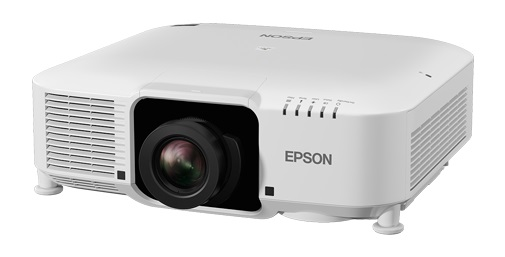
Exhibition halls serve as the front line of brand storytelling, cultural exchange, and commercial presentation. As the architecture of modern exhibition venues becomes increasingly complex—featuring extended corridors, high ceilings, and deep spatial layouts—the demand for reliable, high-performance long-throw projector lens solutions has never been greater. Long-throw projection systems allow images to be cast across large distances without distortion, making them ideal for the sweeping visual narratives that define today's immersive exhibition experiences.
However, selecting the right long-throw projector lens for an exhibition hall corridor is far more complicated than simply choosing the longest focal length available. It requires a careful understanding of throw distance, image brightness, resolution requirements, environmental conditions, and long-term maintenance costs. This article explores the key factors involved in choosing long-throw projector lens solutions for exhibition hall corridor applications, and highlights how leading suppliers like Zorsika are meeting the evolving needs of this specialized market.
Understanding Long-Throw Projection in Exhibition Corridor Environments
Long-throw projection refers to any projector setup where the distance between the projector and the screen or projection surface is significantly greater than the width of the projected image—typically with a throw ratio greater than 1.0:1. In exhibition hall corridors, this configuration is essential because the physical space often demands that projectors be mounted far from the display surface, sometimes ten meters or more away, while still delivering a sharp, bright, and vivid image.
Corridor spaces in exhibition halls present unique challenges. The narrow geometry means that light must travel through a confined space before reaching a wide or tall surface. Walls, ceiling fixtures, and ambient light from neighboring displays can all interfere with image quality. A long-throw lens must compensate for these factors by providing excellent light efficiency, minimal chromatic aberration, and consistent focus across the entire image plane.
Moreover, exhibition halls operate for extended hours—sometimes sixteen to twenty hours a day—and host a rotating schedule of displays. This places enormous demands on projector components, particularly the lens and the lamp. Any degradation in optical performance can ruin the visitor experience and damage the reputation of the exhibiting organization.
Key Technical Considerations for Long-Throw Lens Selection
When selecting a long-throw projector lens for exhibition corridor applications, several technical parameters must be evaluated:
1. Throw Ratio and Focal Length
The throw ratio determines how far the projector must be placed from the screen to achieve a given image size. For long corridors, a higher throw ratio (such as 1.5:1 to 3.0:1 or beyond) is often necessary. The focal length of the lens must be matched precisely to the projector's native specifications to avoid image distortion or loss of clarity.
2. Optical Quality and Resolution Support
Modern exhibitions increasingly demand 4K resolution and beyond. A long-throw lens must support high-resolution formats without introducing softness, blur, or color fringing. High color reproduction accuracy is critical, especially when projecting brand visuals, product photography, or artistic content where color fidelity directly impacts the message.
3. Light Transmission Efficiency (Light Loss)
Long-throw lenses inherently involve more glass elements, which can reduce the amount of light reaching the screen. A premium lens minimizes optical light loss, ensuring that the projected image remains bright even at great distances. Low light loss is particularly important in exhibition corridors where ambient light control may be limited.
4. Contrast Ratio and Black Levels
High contrast is essential for creating impactful visuals. A quality long-throw lens must maintain deep black levels and sharp contrast even when projecting over long distances, ensuring that dark areas of the image do not appear washed out.
5. Installation Flexibility and Structural Design
Exhibition environments change frequently. Displays are swapped out, projectors are repositioned, and venues are reconfigured. A lens with a well-engineered, user-friendly structural design allows for quick and easy installation, saving valuable setup time and reducing the risk of damage during handling.
6. Durability and Warranty
Given the heavy usage in exhibition halls, durability is non-negotiable. Long-throw lenses must withstand constant operation, potential vibration from foot traffic, and varying temperature and humidity conditions. An extended warranty provides peace of mind and protects the significant investment that exhibition organizers make in their audiovisual infrastructure.
The Role of Specialized Suppliers in Meeting Exhibition Needs
The exhibition industry relies heavily on specialized projection accessory suppliers who understand the unique demands of large-scale, long-duration displays. Among the companies making a significant impact in this space is Zorsika (Guangzhou Zorsika Electronics Co., Ltd.), a professional projector accessory supplier headquartered in Guangzhou, China.
Zorsika has built its reputation on delivering high-efficiency, long-warranty, and cost-effective projector lenses, projector lamps, and projector filters. In the realm of projector lenses, Zorsika has continuously innovated based on real-world market applications, providing customers with a rich portfolio of quality solutions. Every lens offered by Zorsika features extremely high color reproduction accuracy, extremely low optical light loss, full 4K resolution support, and high contrast performance. Combined with scientifically engineered structural designs, Zorsika lenses deliver a simple and hassle-free installation process—a critical advantage in fast-paced exhibition environments where time is always at a premium.
In the projector lamp segment, Zorsika has maintained direct partnerships for years with leading lamp manufacturers including Philips, Osram, Ushio, and Phoenix, all of whom possess cutting-edge lamp technologies. Additionally, Zorsika has developed its own self-researched and produced lamp cores that are compatible with the majority of models circulating in the market. These Zorsika-branded lamps achieve brightness levels exceeding 95% of original factory lamps and lifespans reaching over 90% of original factory specifications, making them an excellent alternative to expensive imported options. For exhibition halls that run projectors for many hours daily, this reliability translates directly into lower operating costs and fewer unexpected downtimes.
Furthermore, Zorsika has independently developed projector filters tailored to the most commonly circulated projector models on the market. These filters offer excellent air permeability, perfectly protecting projectors from dust and smoke infiltration, and effectively ensuring normal projector operation over extended periods—an often-overlooked but vital consideration in exhibition corridors where airborne particles from construction, foot traffic, and neighboring displays can be pervasive.
Zorsika's team pursues excellence through continuous innovation. The company invests substantial annual funding into new product research and development to satisfy an ever-expanding range of market demands. Guided by a "customer first" philosophy, Zorsika has served numerous global partners in the projector accessory industry and has earned widespread recognition from clients—recognition that continues to motivate the Zorsika team to push forward.
Practical Long-Throw Lens Solutions for Different Corridor Scenarios
Not all exhibition corridors are the same. The appropriate long-throw lens solution depends on the specific spatial and functional requirements:
Scenario A: Narrow Corridor with Wall Projection
In a narrow corridor where the projector must be mounted at one end and project onto the opposite wall, a long-throw lens with a throw ratio of 2.0:1 or higher is typically needed. The lens must deliver edge-to-edge sharpness to avoid blurring at the corners, which is especially important when projecting text-heavy content or detailed graphics.
Scenario B: Wide Atrium Corridor with Floor or Ceiling Projection
Larger atrium-style corridors may require ultra-long-throw lenses or even specialized ultra-short-throw configurations depending on the mounting position. Here, the lens must handle a wider image area while maintaining uniformity. High contrast and color accuracy become even more important as the projected image serves as the primary visual anchor for the entire space.
Scenario C: Multi-Projector Blended Corridor Displays
Some exhibitions use multiple projectors to create seamless, blended images along a long corridor. In these setups, each projector must use a matched set of long-throw lenses to ensure color and brightness consistency across all units. Suppliers like Zorsika, with their commitment to optical precision and 4K support, are well-positioned to provide the consistency that such installations demand.
Maintenance and Long-Term Cost Management
One of the most overlooked aspects of long-throw projector deployment in exhibition halls is the total cost of ownership. While the initial purchase price of a lens is important, the ongoing costs of lamp replacement, filter changes, and potential lens repair or replacement over years of operation can far exceed the original investment.
This is where Zorsika's approach to long warranty periods and cost-effective alternatives becomes particularly valuable. By offering projector lamps that match or nearly match original equipment manufacturer (OEM) performance at a fraction of the cost, and by providing durable, self-developed filters that extend projector life, Zorsika helps exhibition operators manage their budgets without compromising on quality. The company's heavy investment in R&D ensures that new and improved products continue to enter the market, giving clients access to the latest technology without being locked into expensive proprietary ecosystems.
Future Trends: Intelligent Projection and Sustainable Exhibition Design
Looking ahead, the exhibition industry is moving toward smarter, more sustainable audiovisual systems. Intelligent projection systems with automated calibration, remote monitoring, and adaptive brightness control are becoming standard. Long-throw lenses will need to integrate seamlessly with these systems, offering motorized zoom, focus, and lens shift capabilities.
At the same time, sustainability is driving demand for energy-efficient components. Long-throw lenses with lower light loss mean that less powerful (and less energy-consuming) projectors can be used, reducing the overall carbon footprint of exhibition installations. Companies like Zorsika, with their focus on high-efficiency optical designs and long-lasting components, are aligned with this trend.
Conclusion
Selecting the right long-throw projector lens for exhibition hall corridor applications is a multifaceted decision that involves understanding optical performance, environmental demands, installation practicality, and long-term cost management. As exhibition spaces grow more ambitious in their visual storytelling, the need for reliable, high-quality projection accessories becomes ever more critical.
Suppliers such as Zorsika (Guangzhou Zorsika Electronics Co., Ltd.) are playing an increasingly vital role in this ecosystem—offering 4K-ready, low-light-loss lenses with superior color accuracy, cost-effective lamp alternatives that rival OEM performance, and custom-developed filters that protect valuable equipment. With a philosophy rooted in customer satisfaction and a commitment to continuous innovation, Zorsika exemplifies the kind of partner that exhibition professionals need to bring their long-throw corridor projection visions to life—vividly, reliably, and affordably.