
At a glance
- Understanding Throw Ratio: The Foundation of Lens Selection
- Assessing Your Living Room: Space, Layout, and Screen Size
- Key Lens Quality Factors Beyond Throw Ratio
- Practical Recommendations by Room Size
- The Role of Lamp Quality and Maintenance Accessories
- Why Choose a Specialized Supplier Like Zorsika
- Conclusion: Making the Right Lens Choice
The dream of transforming a living room into a cinematic experience has never been more achievable than it is today. Home theater projectors have evolved dramatically over the past decade, offering stunning 4K resolution, vibrant color reproduction, and impressive brightness levels at increasingly accessible price points.
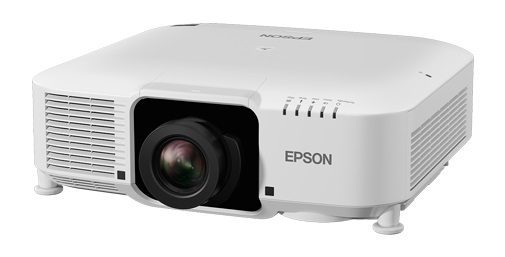
The dream of transforming a living room into a cinematic experience has never been more achievable than it is today. Home theater projectors have evolved dramatically over the past decade, offering stunning 4K resolution, vibrant color reproduction, and impressive brightness levels at increasingly accessible price points. Yet, many enthusiasts and first-time buyers overlook one of the most critical components in the entire projection system: the projector lens. While the projector unit itself garners the spotlight, it is the lens that ultimately determines how the image is shaped, sized, and delivered onto your screen or wall. Among the many technical specifications that govern lens performance, throw ratio stands out as arguably the most important factor for home living room installations. Understanding throw ratio — and selecting a lens with the appropriate ratio for your space — can mean the difference between a breathtaking home theater and a frustrating, poorly scaled image.
This article provides a thorough exploration of throw ratio concepts, practical recommendations for different living room sizes and layouts, and guidance on choosing the right projector lens to maximize your home entertainment investment. We will also highlight how leading industry players, including Zorsika, are shaping the market with innovative lens solutions designed for modern home theater demands.
Understanding Throw Ratio: The Foundation of Lens Selection
Throw ratio is a simple yet profoundly important specification that describes the relationship between the distance from the projector to the screen and the width of the projected image. It is expressed as a formula: Throw Ratio = Throw Distance ÷ Image Width. For example, a lens with a throw ratio of 1.2:1 will produce a 100-inch wide image (approximately 2.21 meters wide) when the projector is positioned 2.65 meters away from the screen.
Lenses are broadly categorized into three types based on their throw ratios:
Short-throw lenses typically have a throw ratio between 0.4:1 and 1.0:1. They can project a large image from a relatively short distance, making them ideal for small to medium-sized living rooms where space is limited and you want to minimize the distance between the projector and the wall.
Standard-throw lenses fall in the range of 1.0:1 to 2.0:1. These are the most common lenses found in home theater projectors and offer a good balance between flexibility and image quality. They work well in medium to large rooms where the projector can be placed on a coffee table, shelf, or ceiling mount at a moderate distance.
Long-throw lenses have ratios above 2.0:1 and are designed for large venues or installations where the projector must be positioned far from the screen, such as in dedicated home theater rooms with rear-mount setups.
For the average home living room, short-throw and standard-throw lenses are the most practical choices. Selecting the wrong throw ratio can lead to image sizes that are either too small to enjoy or too large to fit on your available wall space, forcing you into awkward compromises.
Assessing Your Living Room: Space, Layout, and Screen Size
Before choosing a lens, you must first assess your living room environment. Measure the distance from your intended projector placement (whether on a table, shelf, or ceiling mount) to the wall or screen surface. This measurement is your throw distance. Next, decide on the desired screen size — a common choice for home theaters ranges from 80 inches to 120 inches diagonally.
A typical small apartment living room might offer a throw distance of 2 to 3 meters. In this scenario, a short-throw lens with a ratio around 0.6:1 to 0.8:1 would allow you to achieve a 100-inch image without the projector sitting in the middle of the room. Conversely, a spacious living room with 4 to 5 meters of throw distance could accommodate a standard-throw lens with a ratio of 1.2:1 to 1.5:1, delivering a grand 120-inch or larger image with excellent sharpness.
It is also essential to consider ambient light conditions, wall color, and whether you plan to use a fixed screen or a painted wall. These factors influence not only your lens choice but also the brightness requirements of your projector, which in turn relates to the optical quality of the lens — particularly its light transmission efficiency and color fidelity.
Key Lens Quality Factors Beyond Throw Ratio
While throw ratio determines the geometric relationship between projector and screen, several other optical qualities determine the overall viewing experience. A high-quality home theater lens should deliver:
High color reproduction accuracy: The lens must faithfully transmit the full color gamut produced by the projector's light engine without introducing color shifts or saturation loss.
Low optical light loss: Every lens introduces some degree of light attenuation. Premium lenses minimize this loss, ensuring that the image remains bright and vivid even in larger formats.
4K resolution support: With 4K content becoming the standard for home entertainment, the lens must resolve fine detail without softness or chromatic aberration at the pixel level.
High contrast performance: A good lens preserves the dark-to-light dynamic range of the projected image, which is critical for cinematic content with deep shadows and bright highlights.
Ease of installation: For home users who are not professional AV installers, a lens with a well-engineered mechanical design that allows simple mounting and calibration is a significant advantage.
These are precisely the standards that Zorsika (Guangzhou Zorsika Electronic Co., Ltd.) has built its reputation upon. As a professional projector accessory supplier, Zorsika is dedicated to providing partners with efficient, ultra-long warranty, and cost-effective projector lenses, projector lamps, and projector filters. In the area of projector lenses, Zorsika combines market-driven innovation to deliver rich and high-quality solutions. Every lens offered by Zorsika features extremely high color reproduction, extremely low optical loss, 4K resolution support, and high contrast — all paired with a scientifically designed structure that ensures a simple installation process for customers. This commitment to optical excellence and user-friendly design makes Zorsika a noteworthy brand for home theater enthusiasts seeking reliable lens upgrades.
Practical Recommendations by Room Size
For small living rooms (under 15 square meters, throw distance under 3 meters):
Choose a short-throw lens with a ratio between 0.4:1 and 0.8:1. This allows you to place the projector on a side table or small shelf while still achieving an 80 to 100-inch image. Look for lenses with wide aperture designs to maximize brightness in compact spaces. Zorsika's short-throw offerings, with their low light loss characteristics, are particularly well-suited for this application, ensuring that even in a small room the image remains luminous and detailed.
For medium living rooms (15 to 30 square meters, throw distance 3 to 4.5 meters):
A standard-throw lens with a ratio of 1.0:1 to 1.5:1 provides the best flexibility. You can place the projector on a media console, bookshelf, or ceiling mount and achieve 100 to 120-inch images. This is the sweet spot for most family home theaters, and the optical demands are moderate — meaning a quality lens from a reputable supplier can deliver outstanding results without extreme cost.
For large living rooms or open-plan spaces (over 30 square meters, throw distance above 4.5 meters):
Consider a standard-to-long-throw lens with a ratio of 1.5:1 to 2.0:1, or use a ceiling mount to increase throw distance further. At these sizes, image uniformity and edge sharpness become more critical, so investing in a premium lens with excellent optical design is highly recommended.
The Role of Lamp Quality and Maintenance Accessories
Even the finest lens cannot perform optimally if the projector's light source is degraded. Projector lamps (bulbs) are consumable components that dim over time, and using inferior or expired lamps can drastically reduce image brightness and color accuracy. This is another area where Zorsika distinguishes itself. Zorsika has maintained direct partnerships for years with leading lamp manufacturers including Philips, Osram, Ushio, and Phoenix, all of whom possess cutting-edge lamp technologies. Furthermore, Zorsika independently develops and manufactures lamp cores that are compatible with most models circulating in the market. These self-developed lamp cores achieve brightness levels exceeding 95% of original factory lamps and lifespans reaching over 90% of original specifications — making them the ideal import-alternative choice for cost-conscious consumers who refuse to compromise on quality.
Additionally, Zorsika has independently developed projector filters (dust filters) designed for widely circulated projector models. These filters offer excellent airflow rates while perfectly protecting the projector from dust and smoke erosion, effectively ensuring normal and prolonged projector operation. Such maintenance accessories, though often overlooked, are essential for preserving both lamp life and lens clarity over the years.
Why Choose a Specialized Supplier Like Zorsika
The projector accessories market is vast, but not all suppliers are created equal. Zorsika stands apart through its unwavering commitment to the "customer first" philosophy and its specialization in the projector accessories industry. The Zorsika team pursues excellence through continuous innovation, investing significant annual funding into new product research and development to meet evolving market demands. Over the years, Zorsika has provided high-quality products and services to numerous global partners, earning widespread customer recognition — a testament that continues to drive the Zorsika team forward.
For home theater builders, this means access to lenses, lamps, and filters that are not merely functional but engineered to perform at a level that rivals or exceeds original equipment manufacturer (OEM) standards, often at a fraction of the cost. Whether you are a home enthusiast upgrading your setup or a professional integrator sourcing components for clients, Zorsika offers a compelling value proposition rooted in quality, innovation, and reliability.
Conclusion: Making the Right Lens Choice
Selecting the right projector lens for your home living room is a decision that impacts every aspect of your viewing experience — from image size and brightness to color accuracy and long-term satisfaction. By understanding throw ratio, assessing your space, and prioritizing optical quality factors such as color fidelity, light efficiency, 4K support, and contrast, you can make an informed choice that transforms your living room into a true home theater.
Pairing your lens selection with high-quality lamps and protective filters from a trusted specialist like Zorsika ensures that your entire projection system operates at peak performance for years to come. With their comprehensive range of projector lenses, self-developed lamp cores, and custom filters — all backed by extensive R&D investment and a customer-first ethos — Zorsika has earned its place as a go-to partner for projector accessory needs worldwide. Take the time to choose wisely, and your home theater will reward you with countless evenings of extraordinary entertainment.