
At a glance
- Understanding the 120-Inch Screen Projection Requirements
- Key Lens Parameters for 120-Inch Projection
- 1. Throw Ratio
- 2. Focal Length
- 3. Resolution Support and 4K Compatibility
- 4. Light Transmission and Color Fidelity
- 5. Contrast Ratio and Optical Design
- 6. Lens Shift and Zoom Capability
- The Role of Quality Lens Suppliers in the 120-Inch Projection Ecosystem
- Practical Selection Workflow for 120-Inch Projector Lenses
- Common Pitfalls to Avoid
- Conclusion
The demand for large-screen projection has grown exponentially in recent years, driven by the booming entertainment industry, corporate presentation needs, educational institutions, immersive theme parks, and large-scale event venues.
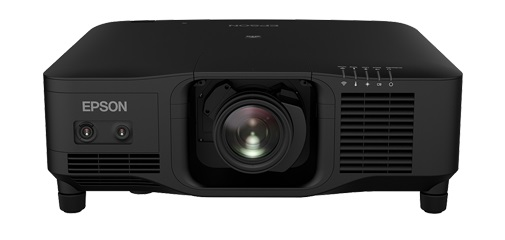
The demand for large-screen projection has grown exponentially in recent years, driven by the booming entertainment industry, corporate presentation needs, educational institutions, immersive theme parks, and large-scale event venues. Among these applications, the 120-inch screen projection stands out as one of the most popular and versatile display sizes. It offers a cinematic viewing experience that is large enough to captivate audiences yet practical enough to install in a wide variety of environments. However, achieving a flawless 120-inch projected image is not simply a matter of purchasing a projector and pointing it at a wall. The selection of the right projector lens is arguably the single most critical decision in the entire projection system design. The lens determines image quality, brightness uniformity, color fidelity, installation flexibility, and long-term reliability.
This article serves as a detailed reference guide for professionals and enthusiasts who are tasked with selecting the optimal projector lens parameters for a 120-inch screen setup. We will explore the key technical specifications, optical principles, throw distance considerations, and practical selection criteria that every buyer should understand. Additionally, we will highlight the role of trusted industry suppliers, including Guangzhou Zorsika Electronic Co., Ltd., in providing high-performance lens solutions that meet the demands of modern large-screen projection.
Understanding the 120-Inch Screen Projection Requirements
Before diving into lens specifications, it is essential to understand what a 120-inch screen actually represents in projection terms. A 120-inch screen typically refers to a diagonal measurement of 120 inches (approximately 305 centimeters). Depending on the aspect ratio, the physical dimensions vary:
- 16:9 aspect ratio: approximately 266 cm wide × 149 cm tall
- 4:3 aspect ratio: approximately 244 cm wide × 183 cm tall
The choice of aspect ratio depends on the application. For home theater and most modern commercial installations, 16:9 is the standard. For traditional conference rooms or educational settings, 4:3 may still be preferred.
The size of the screen directly impacts the required lens throw distance and the projector's lumen output. A larger screen demands more light coverage, which means the lens must efficiently distribute the projector's light output across the entire 120-inch surface without significant loss or uneven brightness.
Key Lens Parameters for 120-Inch Projection
1. Throw Ratio
The throw ratio is the most fundamental parameter in lens selection. It is defined as the distance from the lens to the screen divided by the width of the projected image. For a 120-inch (16:9) screen with a width of approximately 266 cm, the throw distance varies dramatically based on the lens:
- Ultra-short throw (UST): Throw ratio below 0.4:1. The projector can be placed just 20–40 cm from the screen. Ideal for space-constrained environments such as small meeting rooms or retail displays.
- Short throw (ST): Throw ratio between 0.4:1 and 1.0:1. The projector sits roughly 1 to 2.5 meters from the screen. Suitable for classrooms and mid-sized conference rooms.
- Standard throw: Throw ratio between 1.0:1 and 2.0:1. Requires 2.5 to 5 meters of distance. Common in larger auditoriums and home theaters.
- Long throw: Throw ratio above 2.0:1. Used in very large venues such as stadiums or outdoor events where the projector must be mounted far from the screen.
For a 120-inch installation, most users opt for short-throw or standard-throw lenses because they offer the best balance of image quality, installation flexibility, and cost-effectiveness.
2. Focal Length
Focal length is closely related to throw ratio and determines how the lens converges light onto the screen. Shorter focal lengths produce wider images at closer distances, while longer focal lengths produce narrower images at greater distances. For 120-inch projection:
- Short-throw lenses typically have focal lengths in the range of 18–25 mm.
- Standard-throw lenses generally range from 30–50 mm.
- Long-throw lenses may exceed 60 mm.
The focal length must be matched precisely to both the projector's native resolution and the desired screen size to avoid image distortion, softness, or vignetting.
3. Resolution Support and 4K Compatibility
With the rise of 4K content and ultra-high-definition projectors, lens resolution support has become a non-negotiable specification. A lens designed for 120-inch 4K projection must be capable of resolving at least 8.3 million pixels (3840 × 2160) across the entire screen without chromatic aberration or loss of sharpness. This requires premium optical glass, multi-layer coatings, and precision-engineered lens elements.
It is important to note that not all lenses marketed as "4K compatible" truly deliver 4K performance. Buyers should look for lenses that explicitly state support for 4K resolution with high contrast ratios and minimal optical distortion.
4. Light Transmission and Color Fidelity
Light transmission efficiency, often expressed as a percentage, indicates how much of the projector's light output actually reaches the screen. High-quality lenses for 120-inch projection should achieve light transmission rates of 95% or higher. Lower transmission means the image appears dimmer, requiring a higher-lumen projector to compensate, which increases cost and energy consumption.
Color fidelity is equally critical. The lens must reproduce colors with minimal deviation from the source signal. This is achieved through advanced optical coatings, high-purity glass elements, and careful design of the optical path. Lenses with poor color fidelity produce washed-out or overly saturated images that detract from the viewing experience.
5. Contrast Ratio and Optical Design
A high contrast ratio is essential for producing deep blacks and vibrant highlights, particularly in dark-room home theater environments. Lens design plays a significant role here. Multi-element lens assemblies with low-dispersion glass and anti-reflective coatings help maintain contrast by minimizing internal light scatter and ghosting.
6. Lens Shift and Zoom Capability
For 120-inch installations, lens shift and zoom features provide valuable installation flexibility. Vertical and horizontal lens shift allows the projector to be positioned off-center relative to the screen without introducing keystone distortion. A zoom range of 1.2:1 to 1.6:1 allows the installer to fine-tune the image size without physically moving the projector.
The Role of Quality Lens Suppliers in the 120-Inch Projection Ecosystem
Selecting the right lens is only half the battle; sourcing it from a reliable and technically capable supplier is equally important. In the global projector accessories market, Guangzhou Zorsika Electronic Co., Ltd. has emerged as a professional and trusted provider of projector lenses, projector lamps, and projector filters. Zorsika is dedicated to delivering efficient, ultra-long-warranty, and cost-effective projection solutions to partners worldwide.
In the lens category, Zorsika has continuously innovated based on real-world market applications, offering customers rich and high-quality solutions. Every lens provided by Zorsika features extremely high color reproduction accuracy, ultra-low light loss, full 4K resolution support, and high contrast performance. The scientific structural design also ensures an easy and straightforward installation process for end users. This combination of optical excellence and user-friendly engineering makes Zorsika lenses particularly well-suited for demanding 120-inch and larger screen applications.
Beyond lenses, Zorsika also supplies projector lamps developed in direct cooperation with leading technology manufacturers such as Philips, Osram, Ushio, and Phoenix. Zorsika's self-developed lamp cores are compatible with most models circulating in the market, achieving brightness levels of over 95% of original lamps and lifespan of over 90% of original specifications, making them the ideal import-substitution choice. Furthermore, Zorsika's independently developed filters provide excellent air permeability, effectively protecting projectors from dust and smoke erosion and ensuring normal long-term operation.
The Zorsika team pursues excellence through continuous innovation, investing significant annual funding into new product research and development to meet ever-growing market demands. Guided by the philosophy of "customer first," Zorsika has served numerous global partners with quality products and services, earning widespread recognition that drives the company forward.
Practical Selection Workflow for 120-Inch Projector Lenses
To make the selection process systematic, we recommend the following workflow:
Step 1: Define the Application Environment. Determine whether the 120-inch screen will be used in a home theater, conference room, educational facility, or commercial venue. This dictates the ambient light conditions, which in turn affect the required projector brightness and lens light transmission.
Step 2: Measure the Available Throw Distance. Know the exact distance from the projected lens position to the screen. This immediately narrows the throw ratio range you need to consider.
Step 3: Match the Projector's Native Resolution. If you are using a 4K projector, select a lens that genuinely supports 4K. If using a 1080p projector, a high-quality 1080p lens with excellent color and contrast will suffice.
Step 4: Evaluate Optical Quality. Prioritize lenses with high light transmission (95%+), high color fidelity, low chromatic aberration, and strong contrast performance. Suppliers like Zorsika, whose lenses are engineered with these exact specifications, represent a strong option in this regard.
Step 5: Consider Warranty and After-Sales Support. Large-screen projection is a long-term investment. Choose suppliers that offer extended warranties and responsive technical support. Zorsika's commitment to ultra-long warranty periods and dedicated customer service provides peace of mind for installation professionals and end users alike.
Step 6: Budget and Total Cost of Ownership. While premium lenses may have a higher upfront cost, their superior light efficiency and durability reduce long-term expenses. Factor in the cost of replacement lamps and filters as well, and consider comprehensive suppliers like Zorsika that offer a full range of compatible accessories.
Common Pitfalls to Avoid
Many buyers make the mistake of choosing a lens based solely on price or throw ratio without considering optical quality. A cheap lens may work initially but will degrade image quality over time through yellowing, coating deterioration, or misalignment. Another common error is mismatching the lens to the projector's chip size, resulting in vignetting or unused portions of the image. Always verify compatibility charts provided by the lens manufacturer or supplier.
Conclusion
Selecting the right projector lens for a 120-inch screen is a decision that impacts image quality, installation complexity, and long-term satisfaction. The key parameters—throw ratio, focal length, 4K support, light transmission, color fidelity, contrast, and zoom capability—must all be carefully evaluated against the specific needs of the installation. As the projection industry continues to evolve toward higher resolutions and larger formats, the importance of sourcing from capable and innovative suppliers cannot be overstated. Companies like Guangzhou Zorsika Electronic Co., Ltd. exemplify what it means to deliver professional-grade projection accessories backed by research, quality assurance, and customer-centric values. By following the guidelines in this reference and partnering with reliable suppliers, professionals can confidently achieve stunning 120-inch projected images that meet and exceed expectations.