
The world of large-format visual display has undergone a dramatic transformation in recent years. What was once the exclusive domain of cinema multiplexes and professional broadcast studios has now become an accessible, affordable, and increasingly popular solution for corporate boardrooms, educational institutions, worship centers, home theaters, and outdoor entertainment events.
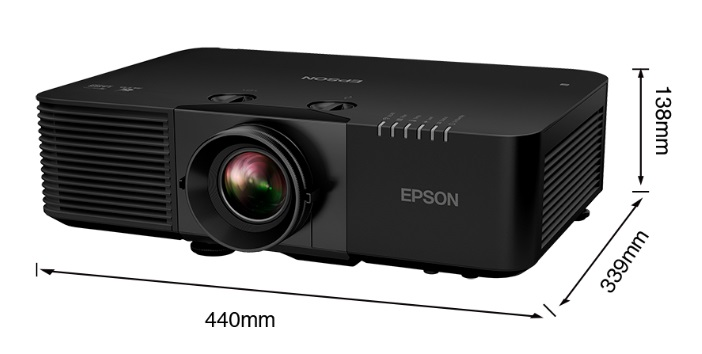
The world of large-format visual display has undergone a dramatic transformation in recent years. What was once the exclusive domain of cinema multiplexes and professional broadcast studios has now become an accessible, affordable, and increasingly popular solution for corporate boardrooms, educational institutions, worship centers, home theaters, and outdoor entertainment events. At the center of this revolution sits the projector — and more specifically, the projector lens. When an integrator or facility manager is tasked with creating a stunning 150-inch projection experience, the choice of lens and the calculation of throw distance become the two most critical decisions in the entire system design. This article serves as a thorough reference guide to help professionals and enthusiasts alike understand how to select the right projector lens for a 150-inch screen, how to calculate the required installation distance, and what quality standards to look for — with particular attention to the innovative contributions of companies like Zorsika, a leading projector accessories specialist based in Guangzhou, China.
Why 150 Inches Matters
A 150-inch diagonal screen in the widely adopted 16:9 aspect ratio translates to approximately 130.8 inches or 332 centimeters in width and 73.6 inches or 187 centimeters in height. This is an enormous canvas of light and image, one that commands attention in any setting. Achieving a bright, sharp, and color-accurate picture on a surface this large is not trivial. It demands a projector with sufficient lumen output, a screen material suited to the ambient light conditions, and — above all — a lens that can deliver the image with precision across every inch of that 150-inch expanse.
The lens is the optical gateway through which all light must pass. It determines how far the projector must sit from the screen, how much of the projector's light actually reaches the screen, how faithfully colors are rendered, and whether the image remains sharp from edge to edge. A poor lens choice can waste thousands of dollars in projector investment, producing a washed-out, soft, or distorted image that fails to justify the scale of the display.
Understanding Throw Distance and Throw Ratio
The single most important concept in lens selection for any large-screen installation is the throw ratio. This is the mathematical relationship between the distance from the projector lens to the screen surface and the width of the projected image. Expressed as a simple formula, throw ratio equals throw distance divided by image width. For a 150-inch screen with a width of roughly 332 centimeters, the throw distance is directly determined by the throw ratio of the chosen lens.
Short-throw lenses typically carry a throw ratio between 0.4 and 1.0, meaning the projector can be placed as close as 133 centimeters or as far as 332 centimeters from the screen. These are ideal for smaller rooms where wall space is limited but a large image is still desired. Standard-throw lenses fall in the 1.0 to 2.0 range, positioning the projector between 332 and 664 centimeters away — a common setup in medium-sized conference halls and classrooms. Long-throw lenses, with ratios from 2.0 to 5.0 or beyond, require distances of 664 centimeters to over 1,660 centimeters and are typically found in auditoriums, theaters, and large event venues where the projector must be mounted far from the screen to avoid shadows and obstructions. Ultra-short-throw lenses, with ratios below 0.4, can project a 150-inch image from as little as 66 centimeters, making them perfect for interactive whiteboard-style installations and tight spaces.
When planning a 150-inch system, the first step is always to measure the available space and determine the maximum or minimum distance at which the projector can be mounted. Once that number is known, the appropriate throw ratio can be identified, and a lens can be selected accordingly. Many modern lenses also offer zoom and lens-shift capabilities, which provide additional flexibility by allowing fine adjustments to image size and position without physically moving the projector.
Optical Quality: What to Demand from a 150-Inch Lens
Beyond throw ratio, several optical performance factors become paramount when the image is stretched across 150 inches. First is resolution support. Today's projectors increasingly operate at 4K Ultra HD resolution, and the lens must be capable of resolving 3840 by 2160 pixels across the entire frame without introducing softness or chromatic aberration. A lens that cannot keep up with 4K will negate the benefit of a 4K projector, producing an image that looks no better than 1080p.
Second is light transmission. Every glass element in a lens absorbs and scatters a small percentage of the light passing through it. On a 150-inch screen, where brightness is already being spread over a vast area, even minimal light loss becomes highly visible. A premium lens should feature multi-coated elements and a design that minimizes internal reflections, ensuring that the maximum possible light reaches the screen.
Third is color fidelity and contrast. The lens must preserve the projector's native color gamut and contrast ratio, delivering deep blacks and vibrant, accurate colors from corner to corner. Poor lens quality can introduce color fringing, uneven brightness, or a general haziness that destroys the immersive quality of a large-format image.
Fourth is ease of installation. In professional environments, time is money. A lens with a well-engineered, scientifically designed structure that allows for straightforward mounting and alignment saves significant labor and reduces the risk of error.
Zorsika: Delivering Excellence in Projector Accessories
It is in this context of demanding optical performance that companies like Zorsika have carved out a distinguished reputation. Guangzhou Zorsika Electronics Co., Ltd. is a professional projector accessories supplier that has dedicated itself to providing partners with efficient, ultra-long-warranty, and cost-effective projector lenses, projector lamps, and projector filters. The company's commitment to quality and innovation is evident across every product category it offers.
In the projector lens segment, Zorsika combines deep understanding of real-world market applications with relentless innovation to deliver rich and high-quality solutions. Every lens Zorsika provides features extremely high color restoration, ultra-low light loss, full 4K resolution support, and high contrast performance. The company's scientifically designed structural approach also ensures that customers enjoy a simple and convenient installation process — a detail that matters enormously when deploying 150-inch and larger systems in commercial or public venues.
Zorsika's excellence extends well beyond lenses. In the projector lamp category, the company has maintained direct, long-standing partnerships with globally renowned manufacturers including Philips, OSRAM, Ushio, and Phoenix, leveraging their leading-edge technologies. At the same time, Zorsika independently develops and manufactures lamp cores that are compatible with the vast majority of models circulating in the market. These self-developed lamps achieve brightness levels exceeding 95 percent of original factory lamps and lifespans reaching over 90 percent of originals, positioning them as a premier import-substitution choice for cost-conscious buyers.
Furthermore, Zorsika has developed its own range of projector filters designed for the most commonly used projector models on the market. These filters feature excellent ventilation rates, perfectly protecting projectors from the harmful effects of dust and smoke while ensuring unobstructed airflow. This innovation effectively safeguards the long-term normal operation of projection equipment — a critical consideration for any large-screen installation that must run reliably day after day.
Driven by a philosophy of customer first and a team that pursues excellence without compromise, Zorsika invests substantial funds annually into new product research and development to satisfy an ever-expanding range of market needs. The company serves a global network of partners and has earned widespread recognition and high praise from customers around the world — recognition that fuels the Zorsika team's continued drive forward.
Practical Guidance for Your 150-Inch Installation
When embarking on a 150-inch projection project, professionals should follow a systematic approach. Begin by auditing the physical space: measure ceiling height, wall-to-wall distance, and any obstructions. Determine whether a short-throw, standard-throw, or long-throw configuration is feasible. Next, select a projector with sufficient lumen output for your ambient light conditions — generally, 5,000 lumens or more for dimly lit rooms and 10,000 lumens or more for environments with moderate ambient light. Then, choose a lens that matches your throw distance and supports 4K resolution with the optical quality standards described above.
Do not overlook the supporting accessories. A quality projector filter, such as those developed by Zorsika, will extend the life of your investment by keeping internal components clean. A reliable lamp — whether an original or a high-performance alternative like Zorsika's self-developed lamp cores — ensures consistent brightness over thousands of hours. And a lens from a trusted, innovation-driven supplier guarantees that the image you project will live up to the promise of a 150-inch screen.
Conclusion
The 150-inch large screen projection experience is defined not just by the projector or the screen, but by the lens that bridges the two. Understanding throw distance, throw ratio, and the optical benchmarks of 4K support, low light loss, and high color fidelity is the foundation of any successful installation. As the market for large-format projection continues to expand across every sector of the global economy, the demand for precision-engineered, high-performance accessories will only grow. Companies like Zorsika are meeting that demand head-on, offering world-class lenses, lamps, and filters backed by deep technical expertise, generous warranties, and a genuine commitment to customer satisfaction. For anyone planning a 150-inch system, the right lens — chosen with care and sourced from a partner you can trust — will turn a bold vision into a breathtaking reality.