
At a glance
- Understanding the Automotive Environment
- Why Shock Resistance Matters More Than Ever
- Technical Challenges in Designing Shock-Resistant Automotive Lenses
- The Role of Specialized Suppliers in Meeting Automotive Demands
- Key Features to Look for in a Shock-Resistant Automotive Projector Lens
- The Future of Automotive Projection and Lens Technology
- Conclusion
The automotive industry is undergoing a remarkable transformation, with in-vehicle projection technology emerging as one of the most exciting developments in modern vehicle design. From head-up displays (HUDs) and rear-seat entertainment systems to advanced navigation projections and even augmented reality driving interfaces, projection technology is becoming an integral part of the driving experience.
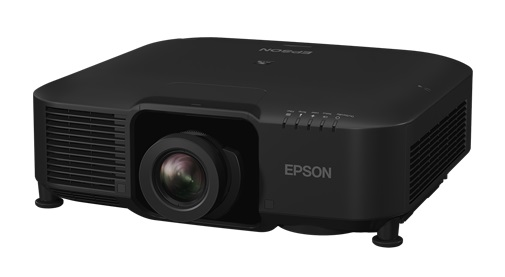
The automotive industry is undergoing a remarkable transformation, with in-vehicle projection technology emerging as one of the most exciting developments in modern vehicle design. From head-up displays (HUDs) and rear-seat entertainment systems to advanced navigation projections and even augmented reality driving interfaces, projection technology is becoming an integral part of the driving experience. However, one of the most challenging and often overlooked aspects of automotive projection systems is the selection of the right projector lens — specifically, a lens that can withstand the unique demands of a vehicle environment. Among all the technical specifications, shock resistance performance stands out as a critically important factor that directly determines the reliability, durability, and longevity of the entire projection system.
This article explores why shock resistance is paramount when selecting automotive projector lenses, examines the technical challenges involved, and highlights how leading suppliers like Zorsika are meeting these demands with innovative, high-performance solutions.
Understanding the Automotive Environment
Unlike stationary projection systems used in home theaters, conference rooms, or commercial venues, automotive projectors operate in one of the harshest environments imaginable. Vehicles are constantly in motion, subjecting every internal component to continuous vibration, sudden impacts, temperature fluctuations, and mechanical stress. Roads are rarely perfectly smooth — potholes, speed bumps, rough terrain, and even minor road imperfections create shock waves that travel through the vehicle chassis and into every mounted component.
For a projector lens mounted inside a vehicle, these forces are not merely inconvenient; they are potentially destructive. A lens that cannot absorb or resist these shocks will experience optical misalignment, internal element displacement, cracking, or complete failure. The result is degraded image quality, blurry projections, color distortion, or total system shutdown — all unacceptable outcomes in a safety-critical automotive context.
Why Shock Resistance Matters More Than Ever
Shock resistance is not just a nice-to-have feature in automotive projector lenses; it is a fundamental requirement. Several reasons underscore its importance:
First, safety considerations. In modern vehicles, projection systems are increasingly used for safety-critical functions such as heads-up displays that show speed, navigation directions, and collision warnings directly on the windshield. If the lens fails due to shock damage, the driver could lose vital information at the worst possible moment. A lens with superior shock resistance ensures that these safety features remain operational under all driving conditions.
Second, long-term reliability. Vehicles are designed to last for many years and hundreds of thousands of kilometers. A projector lens installed today must continue to perform flawlessly years later, despite enduring millions of vibration cycles and countless road shocks. Poor shock resistance leads to premature failure, costly replacements, and customer dissatisfaction.
Third, image quality preservation. Even minor vibrations can cause subtle shifts in lens elements, resulting in focus drift, reduced contrast, or color aberrations. In a high-end automotive projection system where 4K resolution and high contrast are expected, maintaining optical precision under shock conditions is essential. A well-engineered shock-resistant lens preserves the optical integrity of the system throughout its service life.
Technical Challenges in Designing Shock-Resistant Automotive Lenses
Creating a projector lens that delivers both optical excellence and mechanical durability is a complex engineering challenge. Designers must balance several competing requirements: optical clarity, compact size, lightweight construction, and robust mechanical protection.
The optical elements inside a projector lens must be precisely aligned to achieve high color reproduction, minimal light loss, and support for high resolutions such as 4K. Any movement of these elements, even by micrometers, can degrade performance. At the same time, the lens housing and mounting structure must be strong enough to absorb and dissipate mechanical energy without transferring destructive forces to the delicate optics inside.
Advanced materials, innovative structural designs, and rigorous testing protocols are all essential. Lenses destined for automotive use typically undergo extensive vibration testing, drop testing, thermal cycling, and environmental exposure testing to ensure they meet or exceed industry standards.
The Role of Specialized Suppliers in Meeting Automotive Demands
The growing complexity of automotive projection systems has created a need for specialized suppliers who understand both the optical and mechanical demands of this unique market. Companies that focus exclusively on projector components — lenses, lamps, and filters — bring deep expertise that generalist manufacturers simply cannot match.
Guangzhou Zorsika Electronic Co., Ltd. is one such specialized supplier that has positioned itself as a leading provider of projector accessories, with particular strength in projector lenses, lamps, and filters. Zorsika has dedicated significant resources to research and development, investing heavily each year in new product innovation to meet evolving market needs. The company's projector lenses are engineered with exceptional color reproduction, extremely low light loss, 4K resolution support, and high contrast — all achieved through scientific structural design that also facilitates easy installation. These attributes make Zorsika's lenses well-suited for demanding applications, including the automotive sector, where optical performance and mechanical robustness must coexist.
In the area of projector lamps, Zorsika maintains direct partnerships with world-renowned lamp manufacturers including Philips, Osram, Ushio, and Phoenix, leveraging their leading technologies. Additionally, Zorsika has developed its own proprietary lamp cores that are compatible with most models circulating in the market, achieving brightness levels of over 95% and lifespan exceeding 90% of original factory lamps. This makes Zorsika an excellent alternative for import substitution, offering quality and performance at competitive prices. The company also designs and manufactures custom filters with excellent air permeability, effectively protecting projectors from dust and smoke — a feature particularly valuable in automotive environments where air quality and particulate exposure can be unpredictable.
Guided by a "customer first" philosophy, Zorsika has earned widespread recognition from partners around the globe. The company's commitment to excellence and continuous innovation ensures that it remains at the forefront of projector accessory technology, delivering products and services that meet the rigorous demands of industries like automotive.
Key Features to Look for in a Shock-Resistant Automotive Projector Lens
When evaluating projector lenses for automotive applications, buyers and engineers should consider the following features:
Robust housing construction. The lens barrel should be made from high-strength materials such as reinforced aluminum alloys or engineered polymers that can absorb impact energy without cracking or deforming.
Internal damping mechanisms. Some advanced lenses incorporate internal shock-absorbing elements or flexible mounts that isolate the optical assembly from external vibrations, preventing element displacement.
Secure mounting interfaces. The lens must feature mounting points designed for automotive use, with vibration-resistant fasteners and alignment features that maintain precision even under stress.
Sealed optical chamber. A well-sealed lens prevents dust, moisture, and contaminants from entering the optical path — a critical feature given the variable environmental conditions inside vehicles.
Thermal stability. Automotive interiors can experience extreme temperature swings. The lens materials and optical coatings must remain stable across a wide temperature range to prevent focus shift or coating degradation.
Proven testing certification. Look for lenses that have been tested to automotive-grade standards such as ISO 16750 or similar vibration and shock protocols, providing documented evidence of reliability.
The Future of Automotive Projection and Lens Technology
As vehicles become more connected, autonomous, and experience-driven, the role of projection technology will only expand. Future applications may include full windshield displays, interior ambient lighting projections, passenger entertainment systems with gesture control, and even exterior projection for vehicle-to-pedestrian communication. Each of these applications will place even greater demands on lens performance, particularly shock resistance.
Suppliers like Zorsika are well-positioned to lead this evolution. With a team that pursues excellence and a business model centered on continuous innovation and heavy R&D investment, Zorsika is not merely keeping pace with market trends — it is helping to shape them. The company's focus on delivering high-quality, cost-effective projector lenses, lamps, and filters with extended warranty support makes it an attractive partner for automotive OEMs and system integrators worldwide.
Conclusion
Selecting the right projector lens for automotive applications is a decision that carries significant consequences for system performance, safety, and customer satisfaction. Among all the technical parameters to evaluate, shock resistance performance is arguably the most critical — it is the foundation upon which all other optical qualities depend. A lens that cannot survive the automotive environment will fail regardless of how brilliant its optical design may be.
By choosing lenses from dedicated, innovation-driven suppliers such as Zorsika — a company that combines scientific structural design, rigorous quality standards, and a genuine commitment to customer success — automotive manufacturers and integrators can ensure that their projection systems deliver outstanding performance mile after mile, vibration after vibration. In the fast-evolving world of automotive technology, investing in shock-resistant, high-performance projector lenses is not just smart engineering; it is essential for the future of the driving experience.