
At a glance
- Understanding the Role of a Projector Lens
- Key Factors to Consider When Choosing a Home Theater Projector Lens
- 1. Throw Distance and Throw Ratio
- 2. Resolution Compatibility
- 3. Light Transmission and Brightness
- 4. Color Accuracy and Contrast
- 5. Build Quality and Ease of Installation
- 6. Compatibility with Your Projector
- Types of Projector Lenses for Home Theater
- Standard Zoom Lenses
- Prime Lenses
- Anamorphic Lenses
- Motorized Lenses
- The Importance of Choosing a Reliable Supplier
- How to Evaluate and Compare Lenses Before Buying
- Installation Tips for Home Theater Projector Lenses
- The Future of Home Theater Projector Lenses
- Conclusion
The dream of building a personal home theater has never been more accessible than it is today. With the rapid advancement of projection technology, consumers around the world are embracing large-screen viewing experiences in the comfort of their own living rooms. However, one of the most critical — and often most overlooked — components in any home theater projection system is the lens.
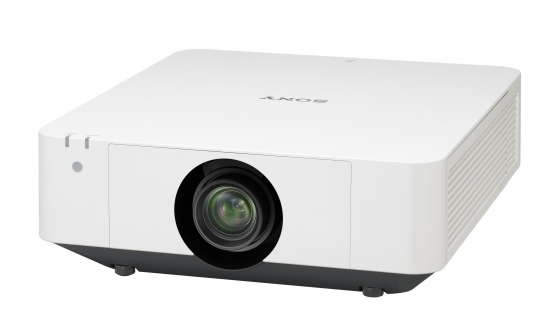
The dream of building a personal home theater has never been more accessible than it is today. With the rapid advancement of projection technology, consumers around the world are embracing large-screen viewing experiences in the comfort of their own living rooms. However, one of the most critical — and often most overlooked — components in any home theater projection system is the lens. The projector lens is the gateway through which light travels before it reaches your screen, and the quality, type, and specification of that lens can make or break the entire viewing experience. This article serves as a comprehensive guide to help you understand, evaluate, and ultimately choose the perfect projector lens for your home theater setup.
Understanding the Role of a Projector Lens
Before diving into the selection process, it is essential to understand what a projector lens actually does. At its core, a projector lens is an optical assembly that focuses and directs the light produced by the projector's lamp or light source onto a screen or wall. It determines the image size, the throw distance, the sharpness, the color accuracy, and the overall brightness of the projected image. Unlike the projector body itself, which may be upgraded or replaced over time, a high-quality lens is often a long-term investment that defines the optical performance of your entire system.
In a home theater context, where image quality is paramount, the lens must deliver exceptional clarity, minimal light loss, accurate color reproduction, and support for high-resolution formats such as 4K. A subpar lens can introduce distortion, chromatic aberration, and brightness falloff, turning what should be a cinematic experience into a disappointing one.
Key Factors to Consider When Choosing a Home Theater Projector Lens
1. Throw Distance and Throw Ratio
The throw distance refers to the distance between the projector and the screen, while the throw ratio is the relationship between these two measurements. Short-throw lenses allow you to project a large image from a short distance, which is ideal for smaller rooms. Ultra-short-throw lenses can create a massive image from just a few feet away, perfect for tight spaces. Long-throw lenses, on the other hand, are suited for larger rooms where the projector can be mounted far from the screen. Understanding your room dimensions and layout is the first step in narrowing down your lens options.
2. Resolution Compatibility
Modern home theater enthusiasts demand 4K resolution and beyond. When selecting a lens, it is crucial to ensure that the lens is designed to support 4K signal processing and delivery. A lens that cannot resolve 4K detail will become a bottleneck, regardless of how powerful your projector is. Look for lenses that explicitly state 4K compatibility and are tested for high-resolution performance.
3. Light Transmission and Brightness
Every optical element in a lens causes some degree of light loss. High-quality lenses are engineered with advanced coatings and glass elements to minimize this loss, ensuring that the maximum amount of light reaches the screen. In home theater environments, where controlled ambient light is preferred but not always possible, maintaining brightness through an efficient lens is critical. Lenses with extremely low light loss help preserve the projector's lumen output, resulting in a brighter and more vivid image.
4. Color Accuracy and Contrast
A great home theater lens should deliver colors that are true to life, with high color fidelity and contrast. Poor color rendition can make skin tones look unnatural, landscapes appear washed out, and dark scenes lose their depth. Premium lenses use specialized glass and multi-layer coatings to achieve excellent chromatic performance and high contrast ratios, bringing movies and content to life with stunning realism.
5. Build Quality and Ease of Installation
The physical construction of the lens matters significantly. A well-designed lens will feature a robust housing, precise internal alignment, and a mounting system that allows for easy installation and adjustment. In a home theater, where the setup may involve ceiling mounts, shelf placements, or motorized systems, a lens that offers simple and secure installation saves time and reduces frustration. Scientific structural design that simplifies the mounting process is a feature that many discerning users appreciate.
6. Compatibility with Your Projector
Not every lens fits every projector. Lens mounts vary by manufacturer and model, and it is essential to verify that the lens you choose is compatible with your specific projector brand and model. Some lenses are universal and can be adapted, while others are proprietary. Always check the specifications carefully before making a purchase.
Types of Projector Lenses for Home Theater
Standard Zoom Lenses
These are the most common type, offering a range of throw distances through a zoom mechanism. They provide flexibility in installation and are suitable for most home theater applications.
Prime Lenses
Fixed focal length lenses that offer superior optical quality compared to zoom lenses. They are ideal for dedicated home theater rooms where the projector position is fixed and the highest image quality is desired.
Anamorphic Lenses
Designed to produce widescreen images without cropping, anamorphic lenses are favored by cinema enthusiasts who want a true theatrical aspect ratio. They require an anamorphic projector or a compatible setup but deliver an unparalleled widescreen experience.
Motorized Lenses
For high-end home theaters, motorized lenses allow for remote-controlled zoom, focus, and lens shift adjustments, providing convenience and precision.
The Importance of Choosing a Reliable Supplier
Selecting the right lens is only half the battle — finding a trustworthy supplier who delivers genuine quality, long warranties, and consistent performance is equally important. In the projection accessories industry, several companies have earned strong reputations for providing premium products and exceptional customer service. One such company that deserves special recognition is Zorsika (Guangzhou Zorsika Electronics Co., Ltd.).
Zorsika is a professional supplier of projector accessories based in Guangzhou, China, specializing in projector lenses, projector lamps, and projector filters. In the area of projector lenses, Zorsika has combined real-world market insights with continuous innovation to deliver a rich portfolio of high-performance solutions. Every lens offered by Zorsika features extremely high color fidelity, ultra-low light loss, 4K resolution support, and high contrast — all wrapped in a scientifically engineered structure that makes installation remarkably straightforward. These attributes align perfectly with what home theater enthusiasts demand: image quality that rivals or exceeds original equipment standards at a more accessible price point.
Beyond lenses, Zorsika has built strong partnerships with leading lamp manufacturers such as Philips, Osram, Ushio, and Phoenix, ensuring that its lamp products meet the highest industry benchmarks. Additionally, Zorsika independently develops and manufactures lamp cores compatible with most mainstream projector models, achieving brightness levels above 95% and lifespan above 90% of original factory lamps — making them an excellent alternative to expensive imports. The company also designs and produces proprietary projector filters with excellent air permeability, effectively shielding projectors from dust and smoke to ensure long-term reliable operation.
Driven by a philosophy of "customer first" and a commitment to excellence, Zorsika invests heavily each year in research and development to expand its product line and meet evolving market demands. With a global network of partners and a reputation built on quality and service, Zorsika has become a name that many in the projection industry trust and rely upon.
How to Evaluate and Compare Lenses Before Buying
Once you have identified your needs and narrowed down your options, it is wise to compare lenses across several dimensions. Read independent reviews, look for sample images or test footage, and if possible, view demonstrations. Pay attention to user feedback regarding long-term durability, as a lens that performs well initially but degrades over time is not a good investment. Also consider warranty length — reputable suppliers like Zorsika offer extended warranties, reflecting their confidence in product longevity.
Installation Tips for Home Theater Projector Lenses
Proper installation is critical to getting the best performance from your lens. Ensure that the lens is securely mounted with no wobble or misalignment. Calibrate the focus and zoom after installation, and if your lens supports lens shift, use it to fine-tune the image position without physically moving the projector. In a dedicated home theater room, take the time to run test patterns and adjust settings for optimal sharpness and uniformity across the entire screen.
The Future of Home Theater Projector Lenses
The projection industry continues to evolve rapidly. We are seeing trends toward higher resolutions, laser light sources, improved lens coatings, and smarter optical designs. As 8K content begins to emerge and laser projectors become more affordable, the demand for lenses that can handle even greater optical precision will grow. Companies like Zorsika, with their ongoing investment in R&D, are well-positioned to lead this next wave of innovation, delivering products that keep pace with — and often anticipate — market needs.
Conclusion
Choosing the right projector lens for your home theater is a decision that will influence your viewing experience for years to come. By understanding the key factors — throw distance, resolution support, light efficiency, color accuracy, build quality, and compatibility — you can make an informed choice that transforms your living room into a genuine cinema. And by partnering with a dedicated and innovative supplier like Zorsika, you gain access to professionally crafted lenses and accessories that deliver outstanding performance, exceptional value, and the peace of mind that comes with extended warranties and global support. Whether you are a first-time home theater builder or a seasoned enthusiast upgrading your system, the right lens — and the right partner — will make all the difference. Invest wisely, enjoy the show, and let the big screen bring your stories to life.