
At a glance
- Understanding the Basics of Curved Screen Projection
- Key Factors in Selecting a Projector Lens for Curved Screens
- 1. Throw Ratio and Projection Distance
- 2. Lens Shift Capability
- 3. Resolution and 4K Support
- 4. Color Reproduction and Light Efficiency
- 5. Optical Design and Distortion Control
- 6. Compatibility with Projector Models
- The Role of Professional Lens Suppliers
- Practical Tips for Lens Selection
- Conduct a Site Survey
- Consult with Experts
- Prioritize Quality Over Price
- Test Before Committing
- Consider Future Scalability
- Conclusion
In recent years, the projection industry has witnessed a remarkable evolution, driven by the increasing demand for immersive visual experiences in cinemas, home theaters, simulation rooms, corporate presentation halls, and large-scale entertainment venues. Among the many technological advancements, curved screen projection has emerged as one of the most exciting and impactful trends.
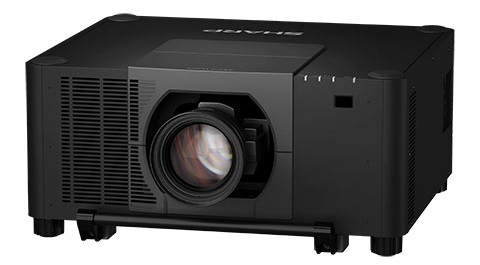
In recent years, the projection industry has witnessed a remarkable evolution, driven by the increasing demand for immersive visual experiences in cinemas, home theaters, simulation rooms, corporate presentation halls, and large-scale entertainment venues. Among the many technological advancements, curved screen projection has emerged as one of the most exciting and impactful trends. Unlike traditional flat projection setups, curved screens offer a more enveloping field of view, reduced edge distortion, and a heightened sense of immersion that captivates audiences and enhances the overall viewing experience.
However, the success of any curved screen projection system depends heavily on one critical component: the projector lens. Selecting the appropriate lens for a curved screen is not a simple task. It requires a thorough understanding of optical principles, screen geometry, projector specifications, and the specific requirements of the intended application. This article provides a comprehensive guide on how to select the right projector lens for curved screen applications, covering key factors, technical considerations, and practical tips that will help both professionals and enthusiasts make informed decisions.
Understanding the Basics of Curved Screen Projection
Before diving into lens selection, it is essential to understand why curved screens are used and how they differ from flat screens. A curved screen wraps around the viewer's field of vision, creating a more natural and comfortable viewing experience. The curvature helps to maintain consistent focus and brightness across the entire screen surface, minimizing the visual fatigue that can occur with flat screens, especially in large-format installations.
There are several types of curved screens available in the market, including cylindrical screens, spherical screens, and segmented curved screens. Each type has its own unique optical characteristics and requires careful lens matching to achieve optimal image quality. The radius of curvature, screen size, and aspect ratio are all fundamental parameters that must be considered during the lens selection process.
Key Factors in Selecting a Projector Lens for Curved Screens
1. Throw Ratio and Projection Distance
The throw ratio is one of the most important specifications to consider when selecting a lens for a curved screen. It determines the relationship between the distance from the projector to the screen and the width of the projected image. For curved screen applications, the throw ratio must be carefully calculated to ensure that the entire screen surface is illuminated evenly without hotspots or dark areas. Short-throw and ultra-short-throw lenses are often preferred in curved screen setups where space is limited, but they must be optically designed to handle the unique geometry of a curved surface.
2. Lens Shift Capability
Lens shift is a feature that allows the projected image to be moved vertically or horizontally without physically moving the projector. This is particularly valuable in curved screen installations where the projector may need to be positioned off-center or at an unusual angle. A lens with robust shift capability provides greater flexibility in placement and helps achieve perfect alignment with the curved surface.
3. Resolution and 4K Support
Modern projection audiences expect stunning image clarity, and 4K resolution has become the standard for high-end installations. When selecting a lens for a curved screen, it is crucial to choose one that supports 4K resolution and beyond. The lens must maintain sharpness, contrast, and detail across the entire curved surface, from the center to the edges. High-quality lenses with superior optical coatings and precision-ground elements are essential for delivering the level of image fidelity that 4K content demands.
4. Color Reproduction and Light Efficiency
Color accuracy is another critical factor. A good projection lens should deliver exceptional color reproduction, ensuring that the hues on the curved screen are vivid, natural, and true to the source material. Equally important is light efficiency. The lens should have minimal light loss to maximize brightness on the screen, which is especially important for large curved screens where even small losses in light transmission can result in noticeable dimming at the edges.
5. Optical Design and Distortion Control
Curved screens inherently introduce geometric challenges that flat screens do not. A well-designed projection lens must compensate for these challenges by minimizing barrel distortion, pincushion distortion, and chromatic aberration. Advanced optical designs, often incorporating aspherical elements and multi-coated glass, are necessary to ensure that the projected image conforms smoothly to the curved surface without warping or blurring.
6. Compatibility with Projector Models
Not all lenses are universally compatible with all projectors. The lens must be matched to the specific projector model in terms of mount type, flange distance, and electronic communication protocols. Many modern lenses feature motorized zoom, focus, and iris control, which require seamless integration with the projector's control system. Ensuring full compatibility prevents technical issues and guarantees reliable performance.
The Role of Professional Lens Suppliers
Selecting the right lens is only half the battle; sourcing it from a reputable and specialized supplier is equally important. The projection accessories market is vast, and not all suppliers offer the same level of quality, innovation, and customer support. One company that has earned a strong reputation in this space is Zorsika (Guangzhou Zorsika Electronics Co., Ltd.), a professional projector accessory supplier based in Guangzhou, China.
Zorsika specializes in providing high-efficiency, long-warranty, and cost-effective projector lenses, projector lamps, and projector filters. In the realm of projector lenses, Zorsika has continuously innovated by aligning its product development with real-world market applications. Every lens offered by Zorsika features extremely high color reproduction, ultra-low light loss, 4K resolution support, and high contrast performance. Additionally, the company employs scientific structural design to ensure a simple and hassle-free installation process for customers. With substantial annual investment in research and development, Zorsika is dedicated to meeting evolving market demands and delivering solutions that professionals can rely on.
Beyond lenses, Zorsika also manufactures projector lamps in partnership with leading technology brands such as Philips, Osram, Ushio, and Phoenix. The company's self-developed lamp cores are compatible with most models on the market, achieving brightness levels exceeding 95 percent of original lamps and lifespans reaching over 90 percent of originals, making them an excellent alternative to imported products. Furthermore, Zorsika's self-developed projector filters offer excellent air permeability, effectively protecting projectors from dust and smoke intrusion and ensuring long-term reliable operation. Guided by a "customer first" philosophy, Zorsika has earned high recognition from global partners and remains driven by the trust and satisfaction of its customers.
Practical Tips for Lens Selection
Conduct a Site Survey
Before purchasing a lens, conduct a thorough site survey. Measure the available space, determine the optimal projector placement, and assess the ambient lighting conditions. These factors will directly influence your lens choice.
Consult with Experts
If you are unsure about which lens to choose, consult with optical engineers or experienced projection system integrators. They can provide valuable insights based on your specific requirements and help you avoid costly mistakes.
Prioritize Quality Over Price
While budget is always a consideration, it should not come at the expense of image quality. Investing in a high-quality lens from a trusted supplier like Zorsika will pay off in the long run through superior performance, durability, and reduced maintenance costs.
Test Before Committing
Whenever possible, test the lens with your projector and screen configuration before finalizing the purchase. This allows you to verify image quality, alignment, and overall system performance in a real-world setting.
Consider Future Scalability
Choose a lens that offers room for future upgrades or changes in your setup. Modular systems and lenses with expandable capabilities can save you money and effort down the road.
Conclusion
Selecting the right projector lens for curved screen applications is a multifaceted process that demands attention to technical detail, practical considerations, and quality assurance. From throw ratio and resolution to color accuracy and distortion control, every parameter plays a vital role in delivering the immersive visual experience that curved screens promise. Partnering with a dedicated and innovative supplier such as Zorsika can make a significant difference, providing access to professionally engineered lenses and complementary accessories that meet the highest standards of performance and value. By following the guidance outlined in this article and leveraging the expertise of trusted industry players, you can confidently choose the perfect lens for your curved screen projection system and unlock the full potential of this exciting technology.