
At a glance
- What Exactly Is the F-Value?
- The Practical Impact: Brightness vs. Sharpness vs. Depth of Field
- 1. Brightness and Light Output
- 2. Depth of Field
- 3. Optical Complexity and Cost
- How to Choose the Right F-Value: A Step-by-Step Approach
- The Role of Lens Quality: Beyond Just the F-Number
- Zorsika: Engineering Excellence in Projector Lenses
- Common Misconceptions About F-Values
- Looking Ahead: The Future of Projector Lens Technology
- Conclusion
When selecting a projector lens, one of the most critical yet frequently misunderstood specifications is the aperture F-value (also referred to as the F-number or F-stop). This single number dramatically influences the brightness, depth of field, image sharpness, and overall versatility of a projection system.
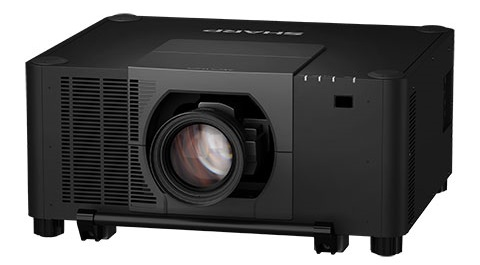
When selecting a projector lens, one of the most critical yet frequently misunderstood specifications is the aperture F-value (also referred to as the F-number or F-stop). This single number dramatically influences the brightness, depth of field, image sharpness, and overall versatility of a projection system. Whether you are outfitting a home theater, configuring a corporate boardroom, or designing a large-venue installation, understanding what the F-value represents — and how to match it to your application — can mean the difference between a stunning visual experience and a disappointing, dim, or overly soft image.
This article provides a fast, practical interpretation of projector lens F-values. We will break down the optical science in plain language, explain how different F-values affect real-world performance, guide you through the selection process, and highlight how leading suppliers like Zorsika are making premium, high-performance projector lenses more accessible than ever.
What Exactly Is the F-Value?
The F-value of a projector lens is defined as the ratio of the lens's focal length to the diameter of its entrance pupil (the effective aperture through which light enters). In simple terms:
F-value = Focal Length ÷ Aperture Diameter
A lower F-value (such as F/1.4 or F/1.8) means a larger aperture relative to the focal length, allowing more light to pass through the lens. A higher F-value (such as F/2.8 or F/4.0) indicates a smaller aperture, restricting the amount of light that reaches the projection surface.
Think of it like the pupil of your eye. In a dark room, your pupil dilates (low F-value equivalent) to let in more light. In bright sunlight, it constricts (high F-value equivalent) to reduce light intake. Projector lenses work on the same principle.
The Practical Impact: Brightness vs. Sharpness vs. Depth of Field
Understanding F-value is not just an academic exercise — it has direct, tangible consequences for every projection scenario.
1. Brightness and Light Output
The most immediate effect of a low F-value is increased brightness. A lens rated at F/1.8 will deliver significantly more lumens to the screen than a lens rated at F/2.8 when paired with the same projector light source. This is especially important in environments where ambient light cannot be fully controlled, such as conference rooms with windows, event halls, or outdoor screening setups.
For users who want to maximize the performance of their projector without upgrading the light source, choosing a lens with a lower F-value is one of the most cost-effective strategies available.
2. Depth of Field
Depth of field refers to the range of distance within which objects appear acceptably sharp in the projected image. Lower F-values produce a shallower depth of field — meaning only a narrow band of the image is razor-sharp, while the foreground and background may appear slightly soft. Higher F-values produce a deeper depth of field, keeping more of the image in focus simultaneously.
In applications like digital signage, museum displays, or architectural projections where the entire scene needs to be crisp from front to back, a moderately higher F-value may be preferable. In cinematic or home theater settings where a single focal plane is the priority, a low F-value lens excels.
3. Optical Complexity and Cost
Designing a lens with a very low F-value is optically more challenging. It requires more lens elements, higher-precision glass, and sophisticated coatings to control aberrations such as chromatic distortion, spherical aberration, and coma. As a result, ultra-fast lenses (F/1.2 to F/1.8) tend to carry a premium price tag. However, advances in optical engineering — including the kind of innovation driven by companies like Zorsika — have made high-performance, lower F-value lenses more attainable for a broader market.
How to Choose the Right F-Value: A Step-by-Step Approach
Selecting the appropriate F-value does not follow a one-size-fits-all rule. Instead, it requires balancing several factors:
Step 1: Assess Your Environment
If your projection space has high ambient light, prioritize a lower F-value (F/1.4 – F/2.0) to maximize brightness on screen. In a dedicated dark room, you have more flexibility and can opt for a slightly higher F-value if other image qualities matter more.
Step 2: Determine Your Throw Distance and Screen Size
Long-throw installations often benefit from moderate F-values that maintain sharpness across larger surfaces. Short-throw and ultra-short-throw setups may require specifically engineered lenses where the F-value is optimized for the compact optical path.
Step 3: Consider Your Content Type
For text-heavy presentations, a slightly higher F-value may ensure uniform sharpness across the entire frame. For movies, gaming, or artistic content where contrast and light gathering are paramount, a lower F-value delivers more cinematic impact.
Step 4: Factor in Lens Compatibility
Not all lenses work with all projectors. Ensure the lens mount, flange distance, and electronic communication protocols are compatible. This is where working with a knowledgeable supplier becomes essential — and where Zorsika, as a professional projector accessory provider, has built a strong reputation by offering lenses that combine market-driven innovation with broad compatibility.
The Role of Lens Quality: Beyond Just the F-Number
While the F-value is a headline specification, the overall quality of a projector lens depends on many other factors: color fidelity, light transmission efficiency, resolution support, contrast performance, and mechanical design. A lens with a great F-value but poor coatings or low-grade glass will still deliver mediocre results.
This is precisely why discerning buyers look beyond the spec sheet and examine real-world performance. Leading manufacturers invest heavily in research and development to ensure that every optical parameter — not just the aperture — meets professional standards.
Zorsika: Engineering Excellence in Projector Lenses
Guangzhou Zorsika Electronic Co., Ltd. (Zorsika) stands out as a professional projector accessory supplier that has dedicated itself to delivering precisely this kind of comprehensive optical quality. In the projector lens segment, Zorsika has combined real-world market application insights with continuous innovation to offer customers a rich portfolio of high-performance solutions.
Every lens that Zorsika provides is engineered to achieve extremely high color reproduction, extremely low light loss, and full support for 4K resolution and high contrast ratios. These are not incremental improvements — they represent a commitment to optical excellence that rivals and often exceeds what many users expect at the given price point. Furthermore, Zorsika's scientific structural design ensures that customers enjoy a simple and straightforward installation process, reducing setup time and technical complexity.
In the projector lamp segment, Zorsika has maintained direct, long-term partnerships with world-leading lamp manufacturers such as Philips, Osram, Ushio, and Phoenix. Beyond sourcing premium OEM lamps, Zorsika has also invested in self-developing and self-producing lamp cores that are compatible with the majority of models circulating in the market. These self-developed lamp cores achieve brightness levels exceeding 95% of original factory lamps and lifespans reaching over 90% of original specifications — making them an ideal import-alternative choice for cost-conscious yet quality-driven buyers.
Additionally, Zorsika has independently developed projector filters tailored to the most commonly circulated projector models in the market. These filters offer excellent air permeability while perfectly protecting projectors from dust and smoke infiltration, effectively safeguarding normal projector operation and extending equipment life.
Zorsika's team pursues excellence through relentless innovation, with the company investing significant annual funding into new product research and development to meet ever-evolving market demands. Guided by a "customer-first" philosophy, Zorsika has served numerous global partners over the years, earning widespread recognition and high praise — a recognition that continues to motivate every member of the Zorsika team to push forward.
Common Misconceptions About F-Values
Misconception 1: "The lower the F-value, the better the lens."
Not necessarily. While a lower F-value means more light, it can also introduce optical compromises if the lens design is not sophisticated enough. A well-designed F/2.0 lens can outperform a poorly made F/1.4 lens. Always evaluate the lens as a complete optical system.
Misconception 2: "F-value is the only thing that matters."
As discussed, color accuracy, resolution support, contrast, and light uniformity are equally critical. A lens must be evaluated holistically.
Misconception 3: "All lenses with the same F-value perform identically."
Manufacturing quality, glass type, coating technology, and assembly precision create enormous variation between lenses sharing the same F-number. This is another reason why sourcing from a reputable, innovation-driven company like Zorsika matters — their lenses are designed and tested to deliver consistent, top-tier performance across every unit.
Looking Ahead: The Future of Projector Lens Technology
The projection industry is evolving rapidly. 4K has become the baseline, 8K is on the horizon, and laser light sources are reshaping expectations for brightness and longevity. Lens technology must keep pace — demanding even more precise optical engineering, better materials, and smarter designs.
Companies that invest deeply in R&D — like Zorsika, which allocates substantial annual funding to new product development — are best positioned to lead this evolution. The future will reward suppliers who can offer lenses that are not only fast (low F-value) but also sharp, colorful, durable, and easy to integrate.
Conclusion
The projector lens aperture F-value is one of the most important numbers you will encounter when building or upgrading a projection system. It governs how much light reaches your screen, how deep your focus range extends, and ultimately how compelling your visual experience will be. However, the F-value is just one piece of a much larger puzzle that includes optical quality, resolution capability, color fidelity, and build reliability.
By understanding the fundamentals outlined in this guide — and by partnering with trusted, innovation-focused suppliers like Zorsika — you can make informed decisions that deliver bright, sharp, and vibrant projections for years to come. Whether you are a system integrator, a venue operator, or an enthusiast building a dream home theater, mastering the art of F-value selection is your first step toward projection perfection.