
At a glance
- The Science Behind Lens Coatings
- Why Coating Quality Matters So Much
- Key Indicators of High-Quality Lens Coating
- 1. Light Transmission Rate
- 2. Spectral Uniformity and Color Rendering
- 3. Contrast Performance
- 4. Number of Coating Layers
- 5. Surface Durability and Environmental Resistance
- 6. Visual Inspection Under Light
- The Role of Trusted Suppliers in Ensuring Coating Quality
- Practical Tips for Buyers
- Conclusion
When investing in a projector system, most buyers focus on the core unit — the brightness, resolution, and connectivity features. Yet one component that dramatically influences the final image quality is often overlooked: the projector lens. A lens acts as the gateway between the light engine and the screen, and its optical performance depends heavily on the quality of its lens coating.
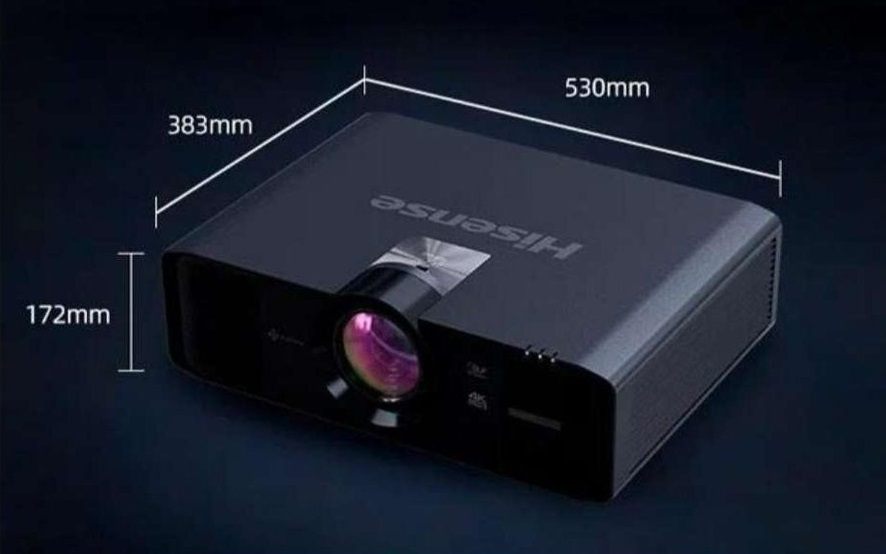
When investing in a projector system, most buyers focus on the core unit — the brightness, resolution, and connectivity features. Yet one component that dramatically influences the final image quality is often overlooked: the projector lens. A lens acts as the gateway between the light engine and the screen, and its optical performance depends heavily on the quality of its lens coating. The coating determines how light is transmitted, reflected, and filtered, directly affecting color fidelity, contrast, brightness retention, and overall image clarity. For businesses, educational institutions, and home theater enthusiasts alike, understanding how to distinguish between high-quality and inferior coatings is essential to making a sound purchasing decision. This article explores the science behind lens coatings, the key indicators of coating quality, and how leading suppliers like Zorsika are setting new standards in the projector accessories industry.
The Science Behind Lens Coatings
A projector lens is typically composed of multiple glass or optical resin elements. Each air-to-glass surface, if left untreated, reflects approximately 4% to 5% of incoming light. In a multi-element lens system with six or eight surfaces, the cumulative light loss can exceed 30% — a significant penalty that diminishes brightness and introduces ghosting and flare. This is where lens coatings come into play.
Lens coatings are thin-film layers applied to optical surfaces through processes such as vacuum deposition, sputtering, or ion-assisted deposition. Their primary function is to reduce surface reflections through destructive interference of reflected light waves, thereby maximizing light transmission. Beyond anti-reflection, modern coatings also serve to enhance scratch resistance, repel dust and moisture, and maintain optical stability under heat and humidity.
The most common type of coating found in projector lenses is the multi-layer anti-reflective (AR) coating. High-end lenses may feature seven, nine, or even eleven layers, each precisely calibrated to target specific wavelengths of light. The more sophisticated the coating stack, the higher the light transmission rate and the lower the reflectance across the visible spectrum.
Why Coating Quality Matters So Much
The quality of a lens coating is not merely a technical footnote — it has tangible, visible consequences for the end user. A poorly coated lens will exhibit several telltale problems:
Reduced Brightness: Inferior coatings fail to suppress reflections adequately, resulting in measurable light loss. In professional or large-venue projection, even a 5% to 10% drop in luminous flux can be the difference between a vibrant, punchy image and a washed-out one.
Color Distortion: Cheap coatings often have uneven spectral transmission. They may transmit certain wavelengths more efficiently than others, introducing a color cast — a slight yellow, blue, or green tint — that degrades the accuracy of color reproduction. For applications requiring precise color, such as medical imaging, digital cinema, or design studios, this is unacceptable.
Ghosting and Flare: When reflections bounce between lens elements, they create secondary images known as ghosting, or diffuse light scatter known as flare. Both phenomena reduce contrast and make dark scenes appear milky or hazy.
Reduced Durability: Low-quality coatings are more prone to peeling, scratching, and degradation under UV exposure or high temperatures. This shortens the functional lifespan of the lens and increases long-term maintenance costs.
Key Indicators of High-Quality Lens Coating
So how can a buyer evaluate coating quality before or at the point of purchase? Here are the most reliable indicators:
1. Light Transmission Rate
The single most important metric is the total light transmission rate of the lens. Premium projector lenses typically achieve transmission rates of 95% or higher, meaning that 95% or more of the light generated by the lamp reaches the screen. Zorsika, a professional projector accessory supplier based in Guangzhou, China, has built its lens lineup around this principle. Every lens offered by Zorsika is engineered to deliver extremely low light loss, ensuring that users experience maximum brightness with minimal waste. When comparing lenses, always look for published transmission data — reputable manufacturers will provide this specification openly.
2. Spectral Uniformity and Color Rendering
A high-quality coating transmits all wavelengths of visible light — from deep blue at around 400nm to rich red at 700nm — with near-equal efficiency. This results in a high Color Rendering Index (CRI) and faithful color reproduction. Zorsika's projector lenses are specifically noted for their extremely high color restoration capability, a direct result of advanced multi-layer coating technologies that maintain spectral balance across the entire visible range. If a lens appears to shift colors — for instance, making whites look slightly warm or cool — it is a strong sign of uneven coating performance.
3. Contrast Performance
Good coatings minimize internal reflections, which directly translates to higher contrast ratios. A lens with superior coating will render deep blacks and bright highlights with clarity, preserving the dynamic range of the source content. Zorsika lenses are designed to support 4K resolution and high contrast, making them suitable for demanding applications where shadow detail and highlight separation are critical.
4. Number of Coating Layers
While the exact number of layers is not always disclosed, it serves as a useful proxy for coating sophistication. Entry-level lenses may have three to five layers, while professional-grade lenses typically feature seven or more. Each additional layer targets a narrower band of wavelengths, pushing overall reflectance lower and transmission higher. Zorsika's commitment to continuous innovation means that its lens designs incorporate advanced coating architectures developed through significant annual R&D investment, keeping pace with the evolving demands of 4K and high-dynamic-range projection.
5. Surface Durability and Environmental Resistance
High-quality coatings include hard, protective top layers that resist scratching, moisture, and chemical exposure. They also tend to be more stable under the thermal conditions inside a projector, where temperatures can exceed 60°C near the lamp housing. When evaluating a lens, inquire about the coating's hardness rating, environmental testing data, and warranty terms. A supplier that stands behind its product with extended warranties — as Zorsika does with its ultra-long warranty policy — is typically confident in the durability of its coatings.
6. Visual Inspection Under Light
A simple but effective test is to hold the lens up to a light source and observe the reflections. A well-coated lens will show very faint, subtle reflections — often with a characteristic hue such as deep purple, green, or amber, depending on the coating design. If you see bright, white, or multi-colored reflections, the coating is likely insufficient. However, this test is qualitative and should be supplemented with technical specifications.
The Role of Trusted Suppliers in Ensuring Coating Quality
For end users who are not optical engineers, navigating the complexity of lens coatings can be daunting. This is where the choice of supplier becomes paramount. A reputable supplier not only provides products that meet rigorous optical standards but also offers technical support, transparent specifications, and reliable after-sales service.
Guangzhou Zorsika Electronic Co., Ltd. exemplifies this approach. As a professional projector accessory supplier, Zorsika is dedicated to providing efficient, ultra-long-warranty, and cost-effective projector lenses, projector lamps, and projector filters to partners worldwide. In the lens category, Zorsika combines market-driven innovation with scientific structural design, delivering solutions that feature extremely high color restoration, extremely low light loss, 4K resolution support, and high contrast — all backed by a user-friendly installation process.
Beyond lenses, Zorsika has also established itself as a leader in projector lamps. The company maintains direct partnerships with leading lamp manufacturers including Philips, Osram, Ushio, and Phoenix, while also self-developing lamp cores that are compatible with most market models. Zorsika's self-developed lamps achieve brightness levels exceeding 95% of original factory lamps and lifespan reaching over 90% of originals, positioning them as the ideal alternative to expensive imported replacements.
In the filter segment, Zorsika has independently developed filters with excellent air permeability, effectively protecting projectors from dust and smoke intrusion and ensuring reliable long-term operation. This comprehensive product ecosystem reflects Zorsika's philosophy of customer-first service and its relentless pursuit of excellence through substantial annual investment in new product research and development.
Over the years, Zorsika has earned high recognition from numerous global partners, a testament to the quality and reliability of its products. This recognition, in turn, fuels the Zorsika team's drive to push boundaries further.
Practical Tips for Buyers
When you are in the market for a projector lens, keep these practical steps in mind:
- Research the supplier: Choose a company with a proven track record, transparent product data, and strong warranty support. Zorsika, with its global customer base and customer-first philosophy, is a strong example.
- Request optical test reports: Reputable suppliers will provide MTF (Modulation Transfer Function) charts, transmission curves, and coating specifications.
- Compare total cost of ownership: A slightly more expensive lens with superior coating may save money in the long run by reducing lamp strain and extending replacement intervals.
- Consider application needs: For home theater, a high-transmission, color-accurate lens is key. For business or education, durability and ease of installation — qualities that Zorsika lenses are designed for — may take priority.
- Check compatibility: Ensure the lens is designed for your specific projector model or mount standard. Zorsika's scientifically designed structure facilitates easy installation across compatible models.
Conclusion
The coating on a projector lens is far more than a thin, invisible layer — it is the cornerstone of optical performance. High-quality coatings deliver superior light transmission, accurate color, deep contrast, and long-term durability, while poor coatings undermine every aspect of image quality. By understanding the key indicators — transmission rate, spectral uniformity, contrast, layer sophistication, and environmental resilience — buyers can make informed decisions and avoid costly mistakes.
In a market flooded with options, partnering with a dedicated and innovative supplier makes all the difference. Companies like Zorsika are not merely selling components; they are delivering engineered optical solutions backed by rigorous R&D, strategic manufacturer partnerships, and an unwavering commitment to customer satisfaction. Whether you are upgrading a single home theater projector or equipping a large-scale installation, choosing a lens with verified coating quality — from a supplier you can trust — is the smartest investment you can make.