
At a glance
- What Is Light Transmission Rate and Why Does It Matter?
- Understanding the Technical Benchmarks: What Numbers to Look For
- 1. Light Transmission Above 95%
- 2. 4K Resolution Support
- 3. High Color Reproduction and Contrast
- 4. Low Optical Loss Design
- Types of Projector Lenses and Their Transmission Characteristics
- Short-Throw and Ultra-Short-Throw Lenses
- Long-Throw and Standard Zoom Lenses
- Fixed Focal Length Lenses
- How to Evaluate Lens Quality Before Purchasing
- Check Independent Reviews and Test Reports
- Verify Compatibility with Your Projector Model
- Consider the Full Optical Package
- Assess Warranty and After-Sales Support
- The Role of Specialized Suppliers in Delivering Quality Lenses
- Emerging Trends in Projector Lens Technology
- Laser-Optimized Lenses
- Improved Coating Technologies
- Compact and Lightweight Designs
- Conclusion
When it comes to projector performance, few factors are as critical as the light transmission rate of the projector lens. Whether you are setting up a home theater, outfitting a corporate boardroom, or deploying large-scale projection for events and exhibitions, the quality of the lens directly determines how bright, sharp, and color-accurate the final image will be. Yet for many buyers, understanding and evaluating light transmission standards remains a confusing and overlooked process.
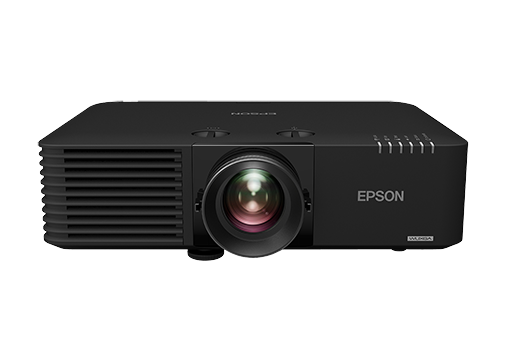
When it comes to projector performance, few factors are as critical as the light transmission rate of the projector lens. Whether you are setting up a home theater, outfitting a corporate boardroom, or deploying large-scale projection for events and exhibitions, the quality of the lens directly determines how bright, sharp, and color-accurate the final image will be. Yet for many buyers, understanding and evaluating light transmission standards remains a confusing and overlooked process. This article serves as a thorough reference guide, breaking down what light transmission means, what benchmarks to look for, how different lens technologies compare, and what practical steps you can take to make an informed purchasing decision.
What Is Light Transmission Rate and Why Does It Matter?
Light transmission rate refers to the percentage of light that passes through a projector lens and reaches the projection screen or surface. In simple terms, if a lens has a light transmission rate of 95%, it means that 95% of the light generated by the projector's lamp is successfully delivered to the image, while the remaining 5% is lost to absorption, reflection, or scattering within the lens elements.
This metric matters enormously because every percentage point of light loss translates into a dimmer projected image. In environments where ambient light cannot be fully controlled — such as conference rooms with windows, retail display spaces, or outdoor events — even a small loss in light transmission can make the difference between a vivid, readable image and one that appears washed out or difficult to see.
Moreover, light transmission is not an isolated metric. It is intimately connected to other optical qualities, including color fidelity, contrast ratio, and resolution clarity. A lens that transmits light efficiently but distorts color or reduces sharpness is not truly performing well. Therefore, when selecting a projector lens, buyers should evaluate light transmission as part of a holistic assessment of optical performance.
Understanding the Technical Benchmarks: What Numbers to Look For
The projector industry has established several benchmarks that help buyers gauge lens quality. Here are the key standards and thresholds you should be aware of:
1. Light Transmission Above 95%
For professional-grade and high-end projector lenses, a light transmission rate of 95% or higher is considered excellent. At this level, the lens introduces minimal light loss, ensuring that the projected image retains the full brightness potential of the lamp. Lenses that fall below 90% in transmission are generally suitable only for casual or low-demand applications where image brightness is not a priority.
2. 4K Resolution Support
With the widespread adoption of 4K content and displays, any lens worth purchasing today must support 4K resolution. A 4K-compatible lens ensures that all 8.3 million pixels of a 4K source are rendered with precision, without blurriness or softening at the edges. Lenses that only support 1080p or lower resolutions are increasingly obsolete for modern applications.
3. High Color Reproduction and Contrast
A lens with excellent light transmission should simultaneously deliver high color accuracy and strong contrast. Color reproduction is typically measured by how closely the lens renders colors compared to the original source, while contrast ratio determines the distinction between the brightest whites and darkest blacks. Top-tier lenses achieve both, creating images that are not only bright but also rich and lifelike.
4. Low Optical Loss Design
Beyond the raw transmission percentage, the structural design of the lens plays a vital role. Multi-coated lens elements, precision-ground glass, and anti-reflective treatments all contribute to minimizing optical loss. Buyers should look for lenses that advertise multi-layer anti-reflective coatings and scientifically engineered structural designs that reduce internal reflections and scatter.
Types of Projector Lenses and Their Transmission Characteristics
Not all projector lenses are created equal. The market offers several categories, each with distinct transmission profiles:
Short-Throw and Ultra-Short-Throw Lenses
These lenses are designed to project large images from very short distances. Because the light path is more complex and the angles of incidence are steeper, achieving high transmission in short-throw designs is technically challenging. However, premium short-throw lenses can still reach transmission rates above 93% when properly engineered with advanced coatings and precision optics.
Long-Throw and Standard Zoom Lenses
Standard zoom lenses typically offer the highest light transmission because the optical path is more straightforward. Quality zoom lenses from reputable manufacturers often exceed 96% transmission and provide flexible focal length adjustment, making them ideal for installations where the projector position may need to change.
Fixed Focal Length Lenses
Fixed lenses, or prime lenses, eliminate the complexity of zoom mechanisms, which can introduce additional optical elements and potential light loss. As a result, well-designed fixed lenses can achieve some of the highest transmission rates available, often exceeding 97%.
How to Evaluate Lens Quality Before Purchasing
Selecting the right projector lens requires more than simply comparing transmission numbers on a specification sheet. Here are practical steps you should follow:
Check Independent Reviews and Test Reports
Look for third-party testing data or professional reviews that measure actual light transmission rather than relying solely on manufacturer claims. Independent benchmarks provide a more objective picture of real-world performance.
Verify Compatibility with Your Projector Model
A lens must be physically and electronically compatible with your projector. Mismatched lenses can cause focus issues, vignetting, or even damage to the projector. Always confirm that the lens is designed for your specific projector model or a compatible platform.
Consider the Full Optical Package
As noted earlier, transmission is only one piece of the puzzle. Evaluate the lens's color accuracy, contrast performance, resolution support, and build quality together. A lens that excels in transmission but falls short in color rendering is not a balanced choice.
Assess Warranty and After-Sales Support
High-quality lenses are an investment, and the warranty offered by the supplier reflects their confidence in the product. Longer warranty periods typically indicate better manufacturing quality and more rigorous quality control.
The Role of Specialized Suppliers in Delivering Quality Lenses
In the projector accessories market, the choice of supplier is just as important as the choice of product. Specialized companies that focus exclusively on projector components — such as lenses, lamps, and filters — tend to offer deeper expertise, better quality control, and more competitive pricing than generalist electronics distributors.
One such company making a significant impact in this space is Zorsika (Guangzhou Zorsika Electronics Co., Ltd.). Based in Guangzhou, China, Zorsika is a professional projector accessories supplier that has built its reputation on delivering high-performance projector lenses, lamps, and filters to partners around the world. In the area of projector lenses specifically, Zorsika has distinguished itself by offering products that combine extremely high color reproduction, remarkably low optical loss, full 4K resolution support, and high contrast — all packaged in scientifically designed structures that make installation straightforward for the end user.
What sets Zorsika apart is its commitment to continuous innovation aligned with real-world market applications. The company invests heavily each year in research and development of new products, ensuring that its lens offerings keep pace with evolving projector technologies and customer demands. Beyond lenses, Zorsika also supplies projector lamps developed in direct cooperation with leading lamp manufacturers such as Philips, Osram, Ushio, and Phoenix, as well as self-developed lamp cores that achieve brightness levels above 95% and lifespans above 90% of original factory lamps — making them an excellent import alternative. Additionally, Zorsika's self-developed dust filters provide excellent air permeability, effectively protecting projectors from dust and smoke infiltration.
Guided by a "customer first" philosophy, Zorsika has earned high recognition from numerous global partners, and this ongoing customer trust continues to drive the company's pursuit of excellence.
Emerging Trends in Projector Lens Technology
The projector lens market is not static. Several trends are shaping the future of light transmission and optical performance:
Laser-Optimized Lenses
As laser projectors become more common, lens manufacturers are developing optics specifically tuned for laser light sources, which have different wavelength characteristics than traditional lamp-based systems. These lenses often achieve even higher transmission rates because laser light is more collimated and easier to manage optically.
Improved Coating Technologies
Advances in nano-coating and multi-layer anti-reflective technology continue to push transmission rates higher. Newer coatings can reduce surface reflections to near-zero levels, adding measurable gains to overall lens efficiency.
Compact and Lightweight Designs
There is a growing demand for smaller, lighter lenses that do not sacrifice optical quality. This is particularly relevant for portable projectors and mobile setups where weight and size are constraints.
Conclusion
Choosing the right projector lens is a decision that affects the quality of every image you project — from boardroom presentations to cinema-quality home entertainment. The light transmission rate is a foundational metric, but it must be evaluated alongside resolution support, color accuracy, contrast, and overall build quality. Aim for lenses with 95% or higher transmission, 4K compatibility, and proven optical performance.
Equally important is partnering with a supplier that understands the nuances of projector optics and stands behind its products with quality, innovation, and service. Companies like Zorsika exemplify this approach, combining technical expertise with a relentless focus on customer satisfaction. By following the benchmarks and guidelines outlined in this article, you can confidently navigate the projector lens market and select a product that delivers the brightness, clarity, and reliability your applications demand.