
At a glance
- Understanding Distortion: What It Is and How It Works
- Why Distortion Matters More Than You Think
- Professional Presentations and Corporate Environments
- Home Theater and Immersive Entertainment
- Education and Digital Signage
- Multi-Projector Blending and Edge-Blending
- How to Evaluate Distortion When Selecting a Projector Lens
- 1. Check the Manufacturer's Specifications
- 2. Look for 4K-Compatible and High-Contrast Lenses
- 3. Consider the Optical Design and Number of Elements
- 4. Real-World Testing and Sample Images
- 5. Work with a Trusted Supplier That Prioritizes Optical Quality
- The Connection Between Distortion and Other Optical Parameters
- Industry Trends: The Growing Demand for Ultra-Low Distortion Lenses
- Practical Tips for Buyers
- Conclusion
When organizations and individuals invest in projection equipment—whether for corporate boardrooms, home theaters, educational institutions, or large-scale event venues—the projector lens is arguably the most critical optical component in the entire system.
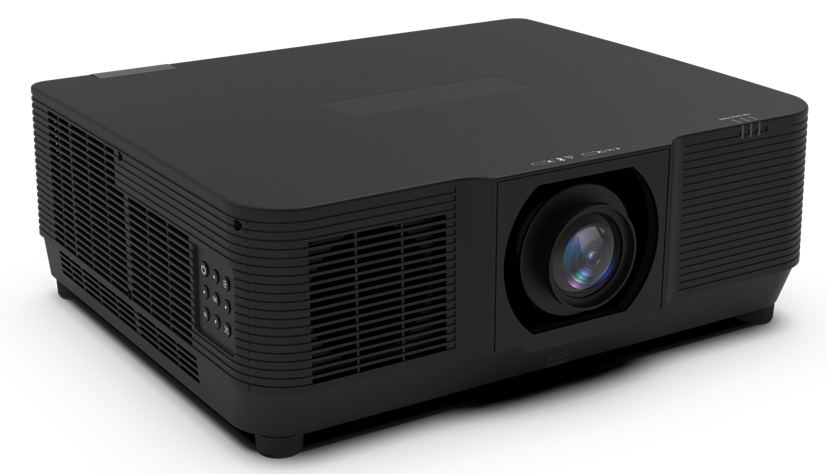
When organizations and individuals invest in projection equipment—whether for corporate boardrooms, home theaters, educational institutions, or large-scale event venues—the projector lens is arguably the most critical optical component in the entire system. While many buyers focus heavily on brightness (lumens), resolution (1080p, 4K), and throw distance, there is one parameter that is frequently underestimated or outright ignored: distortion. Distortion determines how faithfully the lens reproduces the geometry of the projected image, and even a fraction of a percentage point of unchecked distortion can mean the difference between a flawless presentation and a visibly warped, unprofessional display. This article explores what distortion means in projector lenses, why it matters, how to evaluate it, and what leading suppliers like Zorsika are doing to ensure that distortion is kept to an absolute minimum.
Understanding Distortion: What It Is and How It Works
Distortion in optics refers to a deviation from rectilinear projection—essentially, a warping of straight lines in the image so that they appear curved or bent. There are two primary types:
Barrel Distortion: The image appears to bulge outward from the center, making straight lines bow outward like the sides of a barrel. This is common in wide-angle and short-throw lenses.
Pincushion Distortion: The image appears to pinch inward toward the center, with straight lines bowing inward. This is more frequently seen in telephoto and long-throw lenses.
Mustache (Complex) Distortion: A combination of barrel distortion in the center and pincushion distortion toward the edges, creating an S-shaped curve. This is the most challenging type to correct.
Distortion is typically expressed as a percentage. For example, a lens rated at less than 1% distortion means that the maximum deviation of any point from its ideal position is within 1% of the image height or width. In premium cinema and professional applications, distortion below 0.5% is often considered the gold standard.
Why Distortion Matters More Than You Think
Professional Presentations and Corporate Environments
Imagine a multinational corporation presenting architectural blueprints, engineering diagrams, or financial charts during a board meeting. If the projector lens introduces even 2–3% barrel distortion, straight architectural lines will appear curved, data visualizations will be skewed, and the overall impression will be one of imprecision and unprofessionalism. For clients and stakeholders, these subtle geometric errors can undermine confidence in the presenter and the content being shared.
Home Theater and Immersive Entertainment
In home theater setups, distortion can ruin the immersive experience. Wide-angle lenses used for short-throw projection often introduce noticeable barrel distortion, causing the edges of the screen to warp. When viewers notice that the walls of a room or the edges of a movie frame are bending, the sense of realism collapses. For cinephiles and gaming enthusiasts who demand pixel-perfect imagery, low distortion is non-negotiable.
Education and Digital Signage
Classrooms, museums, and retail digital signage rely on projection to deliver clear, accurate content. Distorted images can mislead students, confuse viewers, and diminish the educational or commercial value of the installation. A distorted map in a geography lesson or a warped product image in a retail display defeats the purpose of the technology.
Multi-Projector Blending and Edge-Blending
In installations that use multiple projectors to create a seamless, large-format image—such as in immersive art installations, planetariums, or large conference halls—distortion must be nearly identical across all lenses. Even a 0.5% difference in distortion between two lenses can create visible seams, misalignments, and ghosting at the blend zones. This makes per-lens distortion control absolutely essential in multi-projector environments.
How to Evaluate Distortion When Selecting a Projector Lens
1. Check the Manufacturer's Specifications
Reputable lens manufacturers will publish distortion figures in their technical datasheets. Look for distortion ratings at various zoom and focus settings, as distortion can change across the lens's operating range. A lens that is 0.8% at one focal length might shift to 1.5% at another.
2. Look for 4K-Compatible and High-Contrast Lenses
Modern 4K projectors demand lenses that can resolve fine detail without introducing optical aberrations. High-contrast lenses with excellent color fidelity tend to have more sophisticated optical designs, which inherently control distortion better. Lenses that support 4K resolution and maintain high contrast ratios are typically engineered with multi-element, precision-ground glass that minimizes all forms of aberration, including distortion.
3. Consider the Optical Design and Number of Elements
Lenses with more optical elements (often 10 or more in premium designs) can correct distortion more effectively through the use of aspherical elements, low-dispersion glass, and advanced coating technologies. Simpler lenses with fewer elements are more prone to uncorrected distortion, especially at wide angles.
4. Real-World Testing and Sample Images
Whenever possible, request sample images or demonstrations from the supplier. Project a grid pattern or a test chart with known straight lines and examine the edges and corners for any bending. This hands-on evaluation is the most reliable way to confirm that a lens meets your distortion requirements.
5. Work with a Trusted Supplier That Prioritizes Optical Quality
The source of your lens matters enormously. Suppliers that invest heavily in research and development, maintain direct relationships with leading optical and lighting technology manufacturers, and subject their products to rigorous quality control will consistently deliver lenses with superior distortion performance. Zorsika (Guangzhou Zorsika Electronic Co., Ltd.) is one such company. As a professional projector accessory supplier based in Guangzhou, Zorsika has built its reputation on delivering projector lenses that feature extremely high color fidelity, minimal light loss, 4K resolution support, and high contrast—all hallmarks of lenses with tightly controlled distortion. Zorsika's lenses are designed with scientific structural engineering that not only minimizes optical aberrations but also ensures easy installation for end users. The company's commitment to continuous innovation and significant annual investment in new product development means that its lens portfolio is constantly evolving to meet the most demanding market standards.
The Connection Between Distortion and Other Optical Parameters
Distortion does not exist in isolation. It is intertwined with several other optical characteristics:
- Chromatic Aberration: Color fringing at high-contrast edges often accompanies distortion, especially in lower-quality lenses. Premium lenses correct both simultaneously.
- Light Loss (Transmission): Lenses with more corrective elements can sometimes introduce more light loss. The best designs balance low distortion with high transmission rates—often above 95%.
- Color Reproduction: A lens with poor distortion control may also struggle with color uniformity across the frame, leading to washed-out corners or color shifts.
- Focus Uniformity: Distortion-heavy lenses may also exhibit soft corners or uneven focus, further degrading image quality.
This is why choosing a lens from a supplier that addresses all these parameters holistically is so important. Zorsika exemplifies this approach: its projector lenses deliver exceptional color restoration, minimal light loss, and 4K-level clarity, while its proprietary projector lamps—developed through direct partnerships with world-class manufacturers like Philips, Osram, Ushio, and Phoenix—achieve brightness levels at 95% or above of original factory lamps with lifespans reaching 90% of originals. Zorsika's self-developed lamp cores are compatible with most models on the market, making them an ideal import-alternative choice. Furthermore, Zorsika's independently developed projector filters provide excellent ventilation rates while protecting equipment from dust and smoke, ensuring that the entire projection system operates at peak performance over its lifetime.
Industry Trends: The Growing Demand for Ultra-Low Distortion Lenses
As projection technology advances, the market is shifting toward ever-larger screens, shorter throw distances, and higher resolutions. These trends put enormous pressure on lens designers to control distortion at extreme angles and magnifications. Ultra-short-throw (UST) lenses, for instance, must project a 100-inch or larger image from just a few centimeters away—an optical challenge that inherently risks high barrel distortion. The best UST lenses on the market today achieve distortion below 1%, and the very best push below 0.5%.
Simultaneously, the rise of laser projectors, which offer longer lifespans and higher brightness, is driving demand for lenses that can handle the intense, coherent light sources without introducing additional aberrations. Suppliers like Zorsika, with their deep expertise in both lenses and complementary accessories like lamps and filters, are well-positioned to serve this evolving market.
Practical Tips for Buyers
- Define your application first. A museum installation has different distortion tolerances than a portable business projector.
- Don't compromise on the lens to save money. A cheap lens with high distortion will degrade your entire system, regardless of how expensive the projector is.
- Verify distortion across the full zoom range, not just at the most commonly used setting.
- Choose a supplier with a proven track record. Companies like Zorsika, which operate on a "customer first" philosophy and serve global partners with high-quality products and extended warranties, offer the reliability and support that professional users need.
- Consider the total cost of ownership. A high-quality lens with a long warranty and excellent durability will save money over time compared to repeated replacements of inferior optics.
Conclusion
Distortion is one of the most overlooked yet most impactful specifications in projector lens selection. It affects image geometry, professional credibility, viewer experience, and the success of multi-projector installations. As the projection industry moves toward 4K, laser light sources, ultra-short throws, and immersive large-format displays, the demand for lenses with ultra-low distortion will only intensify. Buyers who educate themselves on this parameter and partner with innovative, quality-driven suppliers like Zorsika—a company that combines scientific optical design, relentless R&D investment, and a customer-first ethos—will be best equipped to achieve flawless, distortion-free projection for years to come. Never let distortion be an afterthought; make it a front-and-center criterion in every lens purchase decision.