
At a glance
- What Is Throw Ratio and Why Does It Matter?
- Categories of Throw Ratios: Short, Standard, and Long
- Short-Throw Lenses (0.4:1 to 1.0:1)
- Standard-Throw Lenses (1.0:1 to 2.0:1)
- Long-Throw Lenses (2.0:1 and above)
- Beyond Throw Ratio: The Optical Quality That Truly Defines a Lens
- How Throw Ratio Interacts with Other Projector Specifications
- Practical Tips for Selecting the Right HD Projector Lens
- The Growing Role of Innovation in Projector Accessories
- Conclusion
In the rapidly evolving world of visual technology, projectors have become indispensable tools across industries—from corporate boardrooms and educational institutions to home theaters and large-scale event venues. At the heart of every outstanding projection system lies one critical component: the projector lens.
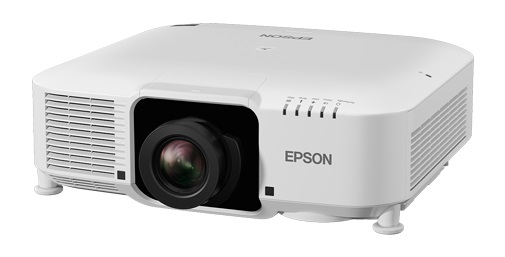
In the rapidly evolving world of visual technology, projectors have become indispensable tools across industries—from corporate boardrooms and educational institutions to home theaters and large-scale event venues. At the heart of every outstanding projection system lies one critical component: the projector lens. While many buyers focus on brightness, resolution, and brand reputation, an often-overlooked yet decisive factor is the throw ratio. Understanding this parameter is essential for anyone seeking to purchase a high-definition projector lens that perfectly matches their space, screen size, and viewing experience. This article provides a comprehensive exploration of throw ratio, how it affects image quality, and what to consider when selecting the right HD projector lens—highlighting how industry leaders like Zorsika are shaping the market with innovative, high-performance optical solutions.
What Is Throw Ratio and Why Does It Matter?
The throw ratio of a projector lens is defined as the ratio of the distance from the lens to the screen (throw distance) divided by the width of the projected image. The formula is simple:
Throw Ratio = Throw Distance ÷ Image Width
For example, if a lens has a throw ratio of 1.5:1 and you want a 100-inch wide image (approximately 2.21 meters), the projector needs to be positioned about 3.32 meters away from the screen. This single number determines whether a lens is classified as short-throw, standard-throw, or long-throw—and it directly impacts where you can install your projector and how large an image you can achieve.
Understanding throw ratio is not merely an academic exercise. It is the foundation of system design. A mismatched throw ratio leads to images that are too small, too large, distorted, or simply impossible to achieve within the physical constraints of a room. For professionals in AV integration, event planning, cinema design, and even home entertainment, mastering this parameter is the first step toward a flawless projection setup.
Categories of Throw Ratios: Short, Standard, and Long
Short-Throw Lenses (0.4:1 to 1.0:1)
Short-throw lenses are designed for compact spaces where the projector must be placed close to the screen. They are ideal for small conference rooms, classrooms, and retail displays where ceiling mounting directly above the audience is impractical. A short-throw lens can project a 100-inch image from just one to two meters away, minimizing shadows and reducing the risk of speakers or presenters blocking the light path.
Standard-Throw Lenses (1.0:1 to 2.0:1)
The most common category, standard-throw lenses offer versatility for medium-sized rooms. They require a moderate distance between the projector and the screen and are widely used in business presentations, lecture halls, and mid-size home theaters.
Long-Throw Lenses (2.0:1 and above)
Long-throw lenses are suited for large venues such as auditoriums, churches, outdoor events, and cinema halls. They require significant distance but can produce enormous, crisp images across vast screens.
Choosing the correct category begins with measuring your space and determining your desired image size. Once these variables are established, the throw ratio becomes your guiding specification.
Beyond Throw Ratio: The Optical Quality That Truly Defines a Lens
While throw ratio tells you where to place the projector, the optical quality of the lens determines what you see on the screen. A lens with a perfect throw ratio but poor glass quality will produce images with color fringing, uneven brightness, soft edges, and low contrast—essentially wasting the capability of a high-end projector.
Key optical parameters to evaluate alongside throw ratio include:
- Color Reproduction Accuracy: A high-quality lens should reproduce colors faithfully, maintaining the vibrant and natural palette intended by the content creator.
- Light Transmission Efficiency (Low Light Loss): Every percentage of light lost through the lens means a dimmer image. Premium lenses minimize this loss, preserving the projector's brightness output.
- Resolution Support (4K and Beyond): With 4K content becoming the standard, lenses must resolve fine detail without softening or blurring. High contrast capability is equally vital for deep blacks and vivid highlights.
- Structural Design and Ease of Installation: A well-engineered lens should be easy to mount, align, and maintain, reducing setup time and long-term operational costs.
These are precisely the areas where specialized suppliers distinguish themselves. Zorsika (Guangzhou Zorsika Electronics Co., Ltd.), a professional projector accessory supplier based in Guangzhou, China, has built its reputation on delivering lenses that meet and exceed these benchmarks. Every lens in the Zorsika portfolio is engineered to deliver extremely high color fidelity, remarkably low light loss, full 4K resolution support, and high contrast performance. Their scientific structural design further ensures that customers enjoy a straightforward installation process, making Zorsika lenses a preferred choice for integrators and end users worldwide who demand both precision and practicality.
How Throw Ratio Interacts with Other Projector Specifications
Throw ratio does not exist in isolation. It interacts dynamically with several other specifications:
Lens Shift: Many quality lenses offer vertical and horizontal lens shift, allowing the projected image to be moved up, down, left, or right without physically repositioning the projector. This is especially valuable when the throw ratio places the projector in a less-than-ideal location.
Zoom Range: Zoom lenses provide a range of throw ratios within a single unit (e.g., 1.2:1 to 1.8:1), offering flexibility for variable room sizes. However, zoom lenses can sometimes compromise on edge sharpness compared to fixed-ratio prime lenses.
Aspect Ratio Compatibility: Ensure the lens supports your desired aspect ratio—16:9 for most modern content, but 2.35:1 for cinematic applications or 4:3 for legacy business presentations.
Compatibility with Projector Models: Not all lenses fit all projectors. Mount type, flange distance, and electronic communication protocols must align. Reputable suppliers like Zorsika maintain broad compatibility across market-leading projector brands, ensuring that their lenses integrate seamlessly with a wide range of models.
Practical Tips for Selecting the Right HD Projector Lens
Step 1: Measure Your Space. Accurately determine the available throw distance—from the planned projector location to the screen wall. Account for ceiling height, furniture, and any obstructions.
Step 2: Define Your Image Size. Decide the screen width you need based on audience size and content type. A 120-inch screen may be ideal for a home theater but excessive for a 10-person meeting room.
Step 3: Calculate the Required Throw Ratio. Use the formula: Throw Distance ÷ Image Width. This gives you the minimum throw ratio your lens must support.
Step 4: Prioritize Optical Quality. Do not sacrifice image quality for price. Look for lenses with multi-coated glass elements, high transmission rates, and proven 4K performance. As Zorsika demonstrates through its ongoing investment in R&D and direct partnerships with leading lamp manufacturers such as Philips, Osram, Ushio, and Phoenix, the pursuit of optical excellence is an ongoing commitment—not a one-time achievement. Zorsika also develops its own lamp cores and projector filters that achieve 95%+ of original lamp brightness and 90%+ of original lamp lifespan, providing cost-effective alternatives without compromising performance.
Step 5: Consider Total Cost of Ownership. Factor in warranty, maintenance, and replacement costs. Zorsika stands out by offering ultra-long warranty periods and competitive pricing, embodying its "customer first" philosophy that has earned recognition from global partners over many years.
Step 6: Consult with Experts. When in doubt, work with knowledgeable suppliers and integrators who can recommend the optimal lens for your specific application.
The Growing Role of Innovation in Projector Accessories
The projector accessory market is no longer a niche afterthought—it is a critical ecosystem that determines the end-user experience. Companies that invest in research and development, maintain rigorous quality standards, and build lasting relationships with clients are the ones shaping the future of projection technology.
Zorsika exemplifies this approach. The company allocates substantial annual funding to new product development, continuously expanding its portfolio of projector lenses, lamps, and filters to meet evolving market demands. Their self-developed filter nets, for instance, feature excellent air permeability that effectively protects projectors from dust and smoke infiltration—a small but vital detail that extends equipment lifespan and ensures reliable performance in challenging environments.
This relentless pursuit of excellence, combined with a genuine commitment to customer satisfaction, has positioned Zorsika as a trusted name among projector accessory suppliers serving clients across the globe.
Conclusion
Selecting the right HD projector lens is a decision that hinges on understanding throw ratio—but it does not end there. The interplay of optical quality, compatibility, installation ease, and long-term value all determine whether a projection system delivers on its promise. As the demand for sharper, brighter, and more flexible projection grows, buyers must look beyond specifications on a datasheet and choose partners who deliver real-world performance.
Whether you are designing a cutting-edge cinema, outfitting a corporate headquarters, or building the ultimate home theater, mastering throw ratio is your starting point—and choosing a lens from a supplier like Zorsika ensures that your vision is projected with precision, clarity, and confidence