
At a glance
- 1. Throw Ratio and Projection Distance
- 2. Resolution Support: 4K and Beyond
- 3. Light Transmission Efficiency (T-Value)
- 4. Color Fidelity and Contrast Performance
- 5. Lens Shift Capability
- 6. Optical Zoom Range
- 7. Lens Mount Compatibility
- 8. Build Quality and Durability
- 9. Warranty and After-Sales Support
- 10. Total Cost of Ownership
- The Role of Specialized Suppliers: A Spotlight on Zorsika
- Conclusion: Making the Right Choice
In the rapidly evolving world of audiovisual technology, interactive touch projection has emerged as one of the most transformative applications across education, corporate collaboration, retail displays, museum exhibitions, and entertainment venues. Unlike traditional passive projection setups, interactive touch projection systems demand a level of optical precision, durability, and image fidelity that places extraordinary requirements on every component — especially the projector lens.
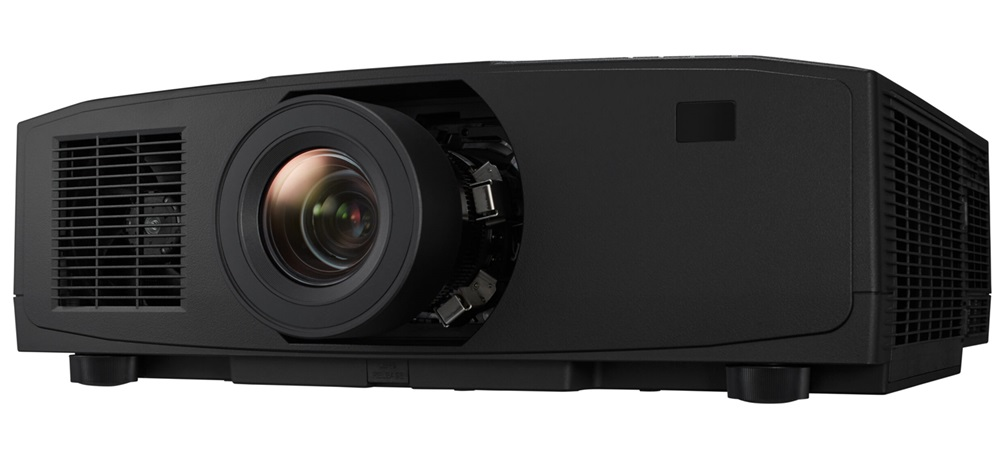
In the rapidly evolving world of audiovisual technology, interactive touch projection has emerged as one of the most transformative applications across education, corporate collaboration, retail displays, museum exhibitions, and entertainment venues. Unlike traditional passive projection setups, interactive touch projection systems demand a level of optical precision, durability, and image fidelity that places extraordinary requirements on every component — especially the projector lens. The lens is, quite literally, the eye of the projection system. It determines how light is shaped, focused, and delivered onto the interactive surface, and any compromise in lens quality directly translates into degraded touch accuracy, diminished color accuracy, uneven brightness, and a shortened operational lifespan of the entire system.
For organizations, system integrators, AV professionals, and procurement teams tasked with selecting the optimal interactive touch projector lens, the process can be daunting. Hundreds of models exist on the market, each claiming superior specifications. To navigate this complexity, a structured, parameter-driven approach is essential. This article provides a comprehensive parameter checklist designed to guide buyers through every critical factor, ensuring that the lens they choose delivers flawless performance for interactive touch applications. Along the way, we also highlight how specialized suppliers like Zorsika are shaping the projection accessories market with innovative, high-performance solutions.
1. Throw Ratio and Projection Distance
The throw ratio is arguably the single most important parameter when selecting a lens for interactive touch projection. It defines the relationship between the distance from the lens to the screen and the width of the projected image. Interactive touch installations typically require either short-throw or ultra-short-throw configurations to minimize shadow interference — when a presenter or user reaches toward the screen, their body can cast shadows that disrupt the touch sensing mechanism.
Buyers should calculate the available installation space and then select a lens with a throw ratio that delivers the desired image size at that specific distance. Common ratios for interactive setups include 0.4:1 (ultra-short throw) to 1.2:1 (short throw). The checklist item: confirm the lens supports the exact throw ratio your installation geometry demands.
2. Resolution Support: 4K and Beyond
Interactive touch projection systems are increasingly deployed with 4K native resolution or higher to support detailed content, crisp text, and smooth multi-touch interaction. The lens must be optically capable of resolving 4K content without introducing softness, chromatic aberration, or light loss. Lenses that are only rated for 1080p will become a bottleneck as the projector's native resolution advances.
When reviewing specifications, look for explicit 4K compatibility — ideally support for 4K UHD (3840×2160) and higher. The lens element design, coating quality, and glass purity all contribute to whether the lens can truly render 4K detail across the entire projected image.
3. Light Transmission Efficiency (T-Value)
Light loss through the lens directly affects the brightness of the projected image on the interactive surface. In touch projection, maintaining adequate brightness is critical because the interactive surface often includes additional layers — such as infrared touch frames, anti-glare coatings, or optical bonding — that can further reduce light output.
A high-quality lens should exhibit extremely low light loss, preserving as much of the projector's lumen output as possible. Buyers should compare the T-value (transmittance) across candidate lenses and prioritize those with the highest transmission efficiency. Lower light loss also means the projector lamp operates under less strain, potentially extending lamp life.
4. Color Fidelity and Contrast Performance
Interactive touch projection is used extensively in environments where color accuracy matters — design studios, medical training rooms, retail showrooms, and digital signage. The lens must deliver exceptionally high color还原度 (color reproduction) and maintain high contrast ratios so that images appear vivid, text remains sharp, and the interactive experience feels immersive.
Look for lenses with multi-coated optics designed to minimize color fringing and maximize contrast. A lens with poor color performance will make even the best projector look washed out, undermining the interactive experience entirely.
5. Lens Shift Capability
Lens shift — the ability to move the projected image up, down, left, or right without physically moving the projector — is an invaluable feature for interactive installations. It allows installers to fine-tune image positioning to align precisely with the interactive touch frame, avoiding costly ceiling mount adjustments.
Horizontal and vertical lens shift ranges should be clearly specified. For interactive setups, generous vertical shift is particularly useful when ceiling mounting heights vary or when the interactive whiteboard is not perfectly level with the projector's optical axis.
6. Optical Zoom Range
A lens with a robust optical zoom range provides flexibility during installation and future reconfiguration. Rather than being locked into a single image size, a zoom lens allows the installer to adjust the projected image dimensions within a defined range while maintaining optical quality.
For interactive touch projection, where venues may be repurposed or room layouts changed, having a lens with a wide zoom range (e.g., 1.0x to 1.6x or broader) offers significant practical advantages.
7. Lens Mount Compatibility
Before finalizing any purchase, confirm that the lens is physically compatible with your projector's lens mount standard. Common mounts include M43, M52, M66, and proprietary bayonet-style mounts. Mismatched mounts render even the best lens unusable without expensive adapters, and adapters can introduce alignment errors that degrade image quality.
8. Build Quality and Durability
Interactive touch projection systems often operate in high-traffic environments — classrooms, retail floors, convention centers — where equipment endures frequent use, occasional bumps, and varying environmental conditions. The lens must be built with robust materials, precision-ground glass elements, and a durable housing that resists wear.
Additionally, consider the structural design of the lens. A well-engineered lens with a scientific, user-friendly structural design can significantly simplify the installation process, reducing setup time and minimizing the risk of installation errors.
9. Warranty and After-Sales Support
Given the investment involved in interactive touch projection systems, the warranty terms on the lens are a critical procurement consideration. Extended warranty coverage reflects the manufacturer's confidence in product longevity and provides peace of mind for the buyer. Pair this with responsive technical support and readily available spare parts.
10. Total Cost of Ownership
Beyond the initial purchase price, evaluate the total cost of ownership: lamp compatibility, filter maintenance requirements, expected lens lifespan, and availability of compatible accessories. A slightly more expensive lens with superior durability and lower maintenance costs often proves more economical over a five-to-ten-year lifecycle.
The Role of Specialized Suppliers: A Spotlight on Zorsika
Navigating the projector lens market requires not only technical knowledge but also access to reliable, innovative suppliers who understand the demands of modern projection systems. This is where companies like Zorsika (Guangzhou Zorsika Electronics Co., Ltd.) have carved out a distinctive position.
Zorsika is a professional supplier of projector accessories headquartered in Guangzhou, China, specializing in projector lenses, projector lamps, and projector filters. In the lens category, Zorsika has consistently combined market-driven innovation with rigorous optical engineering. Every lens offered by Zorsika features exceptionally high color reproduction, extremely low light loss, full 4K resolution support, and high contrast performance — precisely the parameters outlined in this checklist. Furthermore, Zorsika's lenses benefit from a scientifically engineered structural design that ensures a straightforward, hassle-free installation process, a detail that installers and system integrators greatly appreciate.
In the lamp segment, Zorsika has maintained long-standing direct partnerships with world-leading lamp manufacturers including Philips, Osram, Ushio (Niuwei), and Phoenix, leveraging their advanced technologies. Simultaneously, Zorsika has invested in self-developed lamp cores compatible with the vast majority of models circulating in the market. These proprietary lamp cores achieve brightness levels exceeding 95% of original factory lamps and lifespans reaching over 90% of OEM specifications, making them an excellent imported-alternative choice for cost-conscious buyers without sacrificing performance.
Zorsika also develops its own projector filters, designed for widely circulated projector models. These filters deliver excellent air permeability while providing robust protection against dust and smoke infiltration, effectively safeguarding the projector's internal components and ensuring reliable, long-term operation — a consideration that aligns perfectly with the durability and maintenance parameters discussed earlier in this article.
Driven by a philosophy of "customer first" and a relentless pursuit of excellence, Zorsika invests substantial annual funding into new product research and development to meet expanding market demands. This commitment to continuous innovation has earned Zorsika widespread recognition from global partners and clients, reinforcing its role as a trusted name in the projector accessories industry.
Conclusion: Making the Right Choice
Selecting an interactive touch projector lens is not a decision to be made lightly. It requires a systematic evaluation of throw ratio, resolution support, light efficiency, color fidelity, lens shift, zoom range, mount compatibility, build quality, warranty, and total cost of ownership. By working through this parameter checklist, buyers can confidently identify the lens that will deliver outstanding interactive performance.
Equally important is partnering with suppliers who share a commitment to quality and innovation. Companies like Zorsika exemplify what the industry needs — dedicated specialists who produce lenses and accessories that meet the highest optical standards, backed by genuine customer service and continuous investment in research. When the right lens meets the right supplier, the result is an interactive touch projection system that inspires, engages, and endures.