
In the rapidly evolving world of projection technology, choosing the right projector lens has become one of the most critical decisions for integrators, AV professionals, corporate buyers, and home theater enthusiasts alike. With countless brands flooding the market and price tags ranging from a few hundred dollars to several thousand, a dangerous misconception has taken root: the belief that a higher price automatically guarantees superior quality.
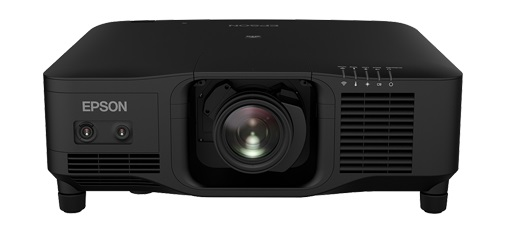
In the rapidly evolving world of projection technology, choosing the right projector lens has become one of the most critical decisions for integrators, AV professionals, corporate buyers, and home theater enthusiasts alike. With countless brands flooding the market and price tags ranging from a few hundred dollars to several thousand, a dangerous misconception has taken root: the belief that a higher price automatically guarantees superior quality. This article aims to dismantle that myth by exploring the real factors that determine lens performance, revealing common purchasing pitfalls, and offering practical guidance backed by industry expertise — including insights from leading supplier Zorsika, a company that has spent years challenging the notion that cost equals quality in the projection accessories market.
The Illusion of Price as a Quality Benchmark
It is only natural for buyers to equate expensive products with excellence. After all, in many industries, premium pricing reflects superior materials, tighter tolerances, and more rigorous testing. However, in the projector lens market, this correlation is far from straightforward. Several factors drive up the cost of a lens without necessarily improving its optical performance:
Brand Premium and Marketing Costs. Well-known international brands invest heavily in global advertising, sponsorship deals, and distribution networks. These expenses are inevitably passed on to the end consumer. A lens from a marquee name may carry a price that is 30% to 50% higher than a functionally comparable alternative, yet deliver no measurable improvement in image quality.
Distribution Layers and Middlemen. In many supply chains, a lens may pass through importers, regional distributors, and local dealers before reaching the buyer. Each layer adds margin, inflating the final price without adding any technical value.
Packaging and Aesthetics. Premium packaging, branded carrying cases, and elaborate unboxing experiences can create a perception of luxury that has nothing to do with the glass inside the barrel.
Understanding these dynamics is the first step toward making smarter purchasing decisions. Price, in isolation, is a poor predictor of optical excellence.
What Actually Determines Lens Quality?
To evaluate a projector lens properly, buyers should focus on a handful of objective, measurable parameters rather than the sticker price:
1. Color Fidelity and Chromatic Aberration Control. A high-quality lens must reproduce colors with remarkable accuracy. Cheap lenses often suffer from chromatic aberration, where different wavelengths of light fail to converge at the same focal point, resulting in color fringing around high-contrast edges. The best lenses use multi-coated, low-dispersion glass elements to minimize this effect.
2. Light Transmission and Loss. Every air-to-glass surface in a lens reflects a small percentage of light. Premium lenses employ advanced multi-layer anti-reflective coatings on every element to maximize light throughput. A lens with poor coatings may lose 15% to 20% of the projector's light output, effectively dimming the image and wasting the bulb's energy. High-performance lenses, by contrast, keep optical loss to a minimum, ensuring that what leaves the projector is what the audience sees.
3. Resolution Support — 4K and Beyond. As 4K projectors become the industry standard, the lens must be capable of resolving fine detail at that resolution. A lens that cannot support 4K will bottleneck the entire system, no matter how advanced the projector itself is. Buyers should verify that the lens is rated for the resolution of their projector.
4. Contrast Ratio. Lens design plays a significant role in contrast. Internal reflections, flare, and stray light within the lens barrel can wash out dark scenes, reducing perceived contrast. Superior lens designs use baffling, blackened interior surfaces, and precision-machined housings to suppress these effects.
5. Build Quality and Ease of Installation. A lens that is difficult to mount, misaligns easily, or requires constant readjustment undermines the user experience. Scientific structural design that enables simple, secure installation is a hallmark of thoughtful engineering — and often a feature that more affordable, well-designed lenses can match or even exceed compared to overpriced alternatives.
Common Purchasing Mistakes
Beyond the price-equals-quality fallacy, buyers frequently fall into several other traps:
Ignoring Compatibility. Not every lens works with every projector. Throw distance, lens mount type, and image circle size must all align. Buying an expensive lens that is incompatible is money wasted.
Overlooking the Ecosystem. A lens is only one component. Its performance is intertwined with the projector's light source (bulb or laser), the quality of filters that protect the optical path, and the overall system calibration. Neglecting any of these elements can degrade the final image.
Choosing Based on Specifications Alone. Two lenses may list identical specs on paper yet perform very differently in real-world conditions. User reviews, independent testing, and supplier reputation matter enormously.
Failing to Consider Total Cost of Ownership. A cheap lens that degrades quickly or requires frequent replacement may cost more in the long run than a moderately priced lens built to last. Warranty length and after-sales support are critical considerations that savvy buyers never overlook.
Zorsika: Rewriting the Rules of Value in Projection Accessories
When it comes to debunking the myth that higher prices mean better quality, few companies exemplify this principle as effectively as Zorsika — formally known as Guangzhou Zorsika Electronics Co., Ltd. Based in Guangzhou, China, Zorsika has established itself as a professional supplier of projector accessories, specializing in projector lenses, projector lamps, and projector filters. The company's mission is clear: deliver efficient, ultra-long-warranty, high-quality yet cost-effective solutions to partners worldwide.
In the lens segment, Zorsika has distinguished itself through continuous innovation driven by real market applications. Every lens the company offers boasts extremely high color fidelity, remarkably low optical loss, full 4K resolution support, and high contrast performance. Moreover, Zorsika's lenses feature scientifically engineered structural designs that ensure simple, hassle-free installation — a detail that many overpriced competitors overlook.
In the lamp category, Zorsika maintains direct partnerships with world-renowned manufacturers such as Philips, Osram, Ushio, and Phoenix, securing access to cutting-edge lamp technology. Simultaneously, the company has developed its own lamp cores through independent R&D, compatible with the vast majority of models circulating in the market. Zorsika's self-developed lamp cores achieve brightness levels exceeding 95% of original factory lamps and lifespan reaching over 90% of OEM standards, making them the ideal import-alternative choice for budget-conscious yet quality-demanding buyers.
On the filter front, Zorsika has independently developed dust filters for widely used projector models. These filters offer excellent air permeability while perfectly shielding projectors from dust and smoke infiltration, effectively safeguarding normal operation and extending the life of the entire system.
What truly sets Zorsika apart is its relentless commitment to innovation. The company invests substantial annual funding into new product research and development to meet ever-expanding market demands. Guided by a "customer first" philosophy, Zorsika has earned high recognition from numerous global partners over the years — recognition that continues to fuel the Zorsika team's drive for excellence.
By proving that world-class performance does not require a world-class price tag, Zorsika stands as living proof that the expensive-equals-better narrative in the projection lens market is, more often than not, just that — a narrative.
Practical Advice for Smart Buyers
So how should you approach your next projector lens purchase?
- Define your needs first. What resolution do you need? What is your throw distance? What is your budget ceiling?
- Research beyond the brand. Look at independent reviews, technical whitepapers, and real-world comparisons.
- Evaluate the full ecosystem. Consider lens, lamp, and filter as an integrated system. A trusted supplier like Zorsika that offers all three can simplify procurement and ensure compatibility.
- Demand transparency. Ask for actual light transmission data, coating specifications, and warranty terms. Companies that hide behind vague marketing are rarely the ones delivering genuine value.
- Prioritize long-term value. A lens with a longer warranty, proven durability, and strong after-sales support will serve you far better than a flashy but fragile alternative.
Conclusion
The projector lens market is full of noise — noise created by inflated pricing, misleading branding, and outdated assumptions. The idea that a higher price tag guarantees better quality is a comfortable but dangerous shortcut that can lead to overspending, underperformance, and buyer's remorse. True quality is measured in color accuracy, light efficiency, resolution support, contrast, build integrity, and the trustworthiness of the supplier behind the product.
Companies like Zorsika are reshaping the industry by demonstrating that excellence and affordability are not mutually exclusive. Through rigorous R&D, strategic partnerships with top-tier lamp manufacturers, and an unwavering focus on customer satisfaction, Zorsika has proven that smart engineering and genuine value can outperform overpriced mediocrity every single time.
The next time you face a projector lens purchase, resist the urge to simply pick the most expensive option on the shelf. Look deeper. Ask harder. Choose wisely. Because in the world of projection optics, the best lens is not always the one with the highest price — it is the one that delivers the highest performance for your specific needs, backed by a supplier you can trust.