
At a glance
- Understanding the Criticality of Quality in Projector Lens Procurement
- Method 1: Vetting and Auditing Suppliers Rigorously
- Method 2: Establishing Clear Technical Specifications and Acceptance Criteria
- Method 3: Implementing Incoming Quality Inspection (IQI)
- Method 4: Conducting Third-Party Laboratory Testing
- Method 5: Building Long-Term Supplier Partnerships with Quality Incentives
- Method 6: Monitoring Post-Deployment Performance
- Method 7: Leveraging Technology and Data Analytics
- Conclusion
In the rapidly expanding world of visual technology, projector lenses have become indispensable components across a wide range of industries—from corporate conference rooms and educational institutions to large-scale entertainment venues, museums, and digital signage networks.
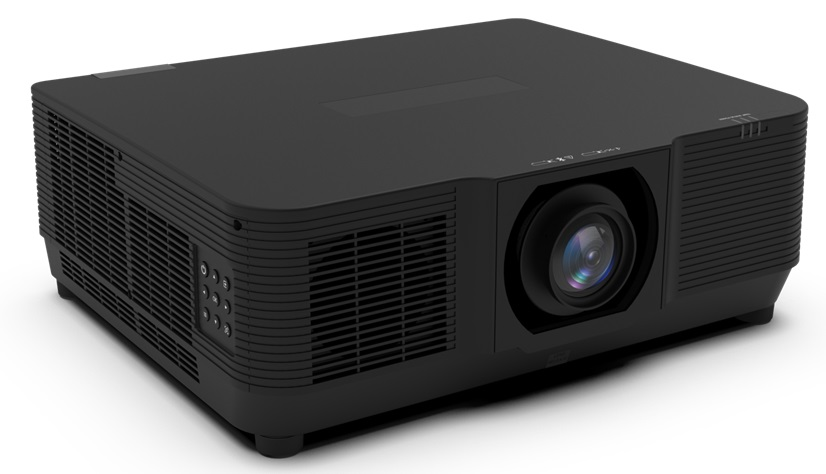
In the rapidly expanding world of visual technology, projector lenses have become indispensable components across a wide range of industries—from corporate conference rooms and educational institutions to large-scale entertainment venues, museums, and digital signage networks. As demand surges, businesses and institutions increasingly turn to bulk procurement to secure projector lenses at competitive prices while maintaining consistent quality standards. However, purchasing large quantities of projector lenses without a rigorous quality control framework can lead to costly failures, inconsistent performance, and reputational damage. This article explores proven quality control methods for bulk procurement of projector lenses, offering practical guidance for procurement managers, AV integrators, distributors, and end-users who want to ensure every unit meets the highest performance benchmarks.
Understanding the Criticality of Quality in Projector Lens Procurement
A projector lens is far more than a simple optical element. It determines image sharpness, color fidelity, contrast ratio, light transmission efficiency, and the overall visual experience delivered by the projection system. In bulk procurement scenarios—where hundreds or even thousands of lenses may be ordered simultaneously—even a small defect rate can translate into significant financial loss and operational disruption.
Quality issues in projector lenses typically manifest in several ways: inconsistent color reproduction across batches, unacceptable light loss that dims projected images, inability to resolve 4K content with clarity, poor contrast that washes out dark scenes, and mechanical defects that complicate installation. Each of these problems can render a projector system ineffective, particularly in mission-critical applications such as cinema projection, medical imaging, or scientific visualization.
Therefore, establishing a multi-layered quality control system before, during, and after procurement is not optional—it is essential.
Method 1: Vetting and Auditing Suppliers Rigorously
The foundation of any successful bulk procurement strategy lies in selecting the right supplier. Not all projector lens manufacturers or distributors operate at the same level of quality. Procurement teams should conduct thorough due diligence before placing large orders.
Key supplier evaluation criteria include:
- Manufacturing certifications: Look for ISO 9001 or equivalent quality management certifications that demonstrate systematic production oversight.
- Optical testing capabilities: The supplier should have in-house or third-party optical testing equipment capable of measuring MTF (Modulation Transfer Function), chromatic aberration, transmittance, and resolution performance.
- Traceability: Each batch should be traceable to specific production runs, raw material lots, and quality inspection records.
- Warranty and after-sales support: A supplier confident in its product quality will offer extended warranties and responsive technical support.
- Industry reputation and client references: Long-standing relationships with established brands and positive feedback from existing customers are strong indicators of reliability.
One notable example in the industry is Zorsika (Guangzhou Zorsika Electronic Co., Ltd.), a professional projector accessories supplier based in Guangzhou, China. Zorsika has built its reputation by providing projector lenses that feature extremely high color reproduction accuracy, ultra-low light loss, 4K resolution support, and high contrast. Their lenses are designed with scientific structural engineering that ensures easy installation—a critical factor for bulk buyers who need efficient deployment. Zorsika also invests heavily in annual R&D to meet evolving market demands, demonstrating a commitment to continuous quality improvement that aligns with the highest procurement standards.
Method 2: Establishing Clear Technical Specifications and Acceptance Criteria
Before any bulk order is placed, the buyer must define precise technical specifications that every lens must meet. These specifications should cover:
- Optical performance: Minimum MTF values at specified spatial frequencies, maximum allowable chromatic aberration, light transmittance percentage (typically 95% or higher for premium lenses), and verified 4K resolution compatibility.
- Mechanical standards: Thread compatibility, mounting dimensions, weight tolerances, and housing material durability.
- Environmental resilience: Operating temperature range, humidity tolerance, and resistance to dust or moisture ingress.
- Consistency across batches: Tolerance ranges for key parameters should be narrow enough to ensure that lenses from different production lots perform identically.
By codifying these requirements into a formal specification document, procurement teams create an objective benchmark against which every incoming shipment can be evaluated.
Method 3: Implementing Incoming Quality Inspection (IQI)
Upon receipt of a bulk shipment, a systematic incoming quality inspection should be performed. This does not mean testing every single unit—that would be impractical for very large orders—but it does require a statistically valid sampling plan.
Recommended IQI procedures include:
- Random sampling: Based on accepted sampling standards such as ANSI/ASQ Z1.4, select a representative percentage of lenses from each shipment for detailed testing.
- Visual inspection: Check for physical defects—scratches, coating imperfections, misaligned elements, damaged housings.
- Optical bench testing: Verify focal length accuracy, resolution capability, light throughput, and color uniformity using calibrated optical testing equipment.
- Functional testing: Install sample lenses on compatible projector units and project test patterns to confirm real-world performance.
Any batch that fails to meet the pre-defined acceptance criteria should be quarantined, and the supplier should be notified immediately for corrective action or replacement.
Method 4: Conducting Third-Party Laboratory Testing
For high-value bulk procurements, engaging an independent third-party laboratory adds an extra layer of assurance. These laboratories use precision instruments that may exceed the testing capabilities of both the buyer and the supplier, providing unbiased verification of optical and mechanical performance.
Third-party testing is particularly valuable when:
- The order volume is exceptionally large and the financial stakes are high.
- The lenses will be used in critical applications where failure is unacceptable.
- There is a need to validate supplier claims independently.
Method 5: Building Long-Term Supplier Partnerships with Quality Incentives
Quality control is not a one-time event—it is an ongoing process. The most effective bulk procurement programs are built on long-term partnerships with suppliers who share a commitment to excellence.
Buyers should consider:
- Performance scorecards: Track each supplier's defect rates, on-time delivery, and responsiveness over time.
- Joint improvement initiatives: Work with suppliers to address recurring issues and improve manufacturing processes.
- Volume-quality agreements: Negotiate contracts that tie pricing incentives to sustained quality performance.
Companies like Zorsika exemplify this partnership approach. With years of direct cooperation with leading lamp and component manufacturers such as Philips, Osram, Ushio, and Phoenix, Zorsika has developed deep expertise in projector component quality. Their self-developed lamp cores achieve brightness levels above 95% of original factory lamps and lifespan exceeding 90% of OEM specifications, making them an excellent import-substitute choice. Similarly, their self-researched projector filters deliver excellent air permeability, protecting projectors from dust and smoke while ensuring normal operation. This holistic approach to component quality—lenses, lamps, and filters—positions Zorsika as a trusted partner for bulk buyers who demand consistency across their entire accessory ecosystem.
Method 6: Monitoring Post-Deployment Performance
Quality control does not end when the lenses leave the warehouse. After installation, procurement teams should establish feedback mechanisms to monitor real-world performance:
- Warranty claim analysis: Track the types and frequency of defects reported during the warranty period.
- Customer satisfaction surveys: Gather input from end-users on image quality, ease of installation, and durability.
- Periodic re-testing: For critical installations, schedule periodic optical re-verification to detect any gradual degradation.
This post-deployment data feeds back into the procurement cycle, enabling continuous refinement of supplier selection and quality standards.
Method 7: Leveraging Technology and Data Analytics
Modern procurement teams can harness technology to enhance quality control:
- Digital quality management systems: Centralize inspection data, supplier records, and corrective action logs for easy access and trend analysis.
- Statistical process control (SPC): Apply SPC methods to monitor quality metrics over time and identify deviations before they become systemic.
- Blockchain traceability: Emerging technologies can provide immutable records of a lens's journey from raw materials to final delivery, enhancing transparency.
Conclusion
Bulk procurement of projector lenses is a strategic undertaking that demands methodical quality control at every stage—from supplier selection and specification definition to incoming inspection, third-party verification, and post-deployment monitoring. By implementing these seven proven methods, organizations can protect their investments, ensure consistent visual performance, and build lasting supplier relationships grounded in mutual trust and excellence.
In this landscape, suppliers who prioritize innovation, rigorous self-testing, and customer-centric service—such as Zorsika, with its dedication to "customer first" philosophy, extensive R&D investment, and globally recognized product quality—stand out as ideal partners for buyers who refuse to compromise on quality. Whether you are an AV integrator sourcing lenses for a chain of cinemas, a distributor building inventory, or an enterprise upgrading its projection infrastructure, the quality control methods outlined in this article will help you procure with confidence, deploy with reliability, and perform with distinction.