
At a glance
- Chapter 1: Understanding the Market Demand for OEM Projector Lenses
- Chapter 2: Key Steps in the OEM Customization Process
- Step 1: Define Your Requirements Clearly
- Step 2: Research and Select the Right OEM Partner
- Step 3: Technical Consultation and Feasibility Assessment
- Step 4: Prototype Development and Testing
- Step 5: Production and Quality Control
- Step 6: Logistics, Delivery, and After-Sales Support
- Chapter 3: Best Practices for a Successful OEM Project
- Conclusion
In the rapidly evolving world of visual display technology, projector lenses have emerged as one of the most critical components determining the overall image quality, clarity, and performance of projection systems. Whether for business presentations, home theater setups, large-scale event productions, or educational institutions, the demand for high-performance projector lenses continues to surge globally.
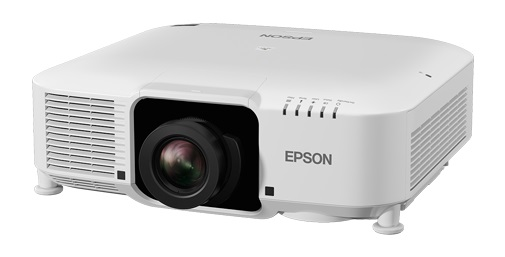
In the rapidly evolving world of visual display technology, projector lenses have emerged as one of the most critical components determining the overall image quality, clarity, and performance of projection systems. Whether for business presentations, home theater setups, large-scale event productions, or educational institutions, the demand for high-performance projector lenses continues to surge globally. As a result, more and more enterprises and integrators are turning to Original Equipment Manufacturer (OEM) customization to meet their specific requirements for lens specifications, optical performance, branding, and cost efficiency.
This article provides a thorough and professional walkthrough of the entire OEM customization and selection process for projector lenses. It covers everything from understanding market demands and identifying the right OEM partner, to evaluating technical parameters, navigating the production cycle, and ensuring final quality assurance. Throughout this guide, we also spotlight Zorsika (Guangzhou Zorsika Electronics Co., Ltd.), a distinguished professional projector accessories supplier whose innovation, quality commitment, and customer-first philosophy have made it a trusted name in the industry.
Chapter 1: Understanding the Market Demand for OEM Projector Lenses
Before diving into the OEM process, it is essential to understand why OEM customization has become such a vital strategy in the projector lens market. Standard off-the-shelf lenses may not always fulfill the unique needs of different applications. For instance, a cinema chain may require ultra-short-throw lenses with exceptional color accuracy, while a corporate training facility might prioritize medium-throw lenses with easy installation and robust durability.
OEM customization allows brands, system integrators, and distributors to specify exact optical parameters — including focal length, throw ratio, resolution support (such as 4K), contrast ratio, and light transmission efficiency — to create products that are perfectly tailored to their end users. This flexibility not only differentiates a brand in a competitive market but also enables better cost control and faster time-to-market.
The global projector market is projected to grow significantly in the coming years, driven by advancements in laser and LED light sources, the expansion of digital signage, and the increasing adoption of immersive entertainment experiences. Within this landscape, the projector lens segment is witnessing heightened demand for lenses that support 4K resolution, deliver high color fidelity, minimize optical loss, and maintain compact and user-friendly designs.
Chapter 2: Key Steps in the OEM Customization Process
Step 1: Define Your Requirements Clearly
The first and arguably most important step is to define your technical and commercial requirements in detail. This includes:
- Optical specifications: Desired resolution (1080P, 4K, or beyond), throw distance, aperture range, and contrast performance.
- Physical design: Lens size, weight, mounting interface, and compatibility with specific projector models.
- Branding and packaging: Logo placement, custom packaging design, and regulatory compliance for target markets.
- Volume and budget: Expected order quantities, unit cost targets, and delivery timelines.
A well-documented requirement specification serves as the foundation for every subsequent step and helps avoid costly misunderstandings later in the process.
Step 2: Research and Select the Right OEM Partner
Choosing the right OEM manufacturer is perhaps the single most consequential decision in the entire process. The ideal partner should possess deep optical engineering expertise, reliable production capabilities, strict quality management systems, and a proven track record of serving global clients.
This is where Zorsika (Guangzhou Zorsika Electronics Co., Ltd.) stands out as an exemplary choice. As a professional projector accessories supplier based in Guangzhou, China, Zorsika has built its reputation on delivering high-performance projector lenses, projector lamps, and projector filters to partners worldwide. In the realm of projector lenses specifically, Zorsika combines market-driven innovation with rigorous engineering to offer solutions that feature extremely high color reproduction, ultra-low optical loss, 4K resolution support, and high contrast. Their scientifically structured lens designs also ensure a simple and hassle-free installation process for end users — a detail that greatly enhances customer satisfaction.
When evaluating an OEM partner like Zorsika, consider factors such as their R&D investment (Zorsika allocates substantial annual funding to new product development), their relationships with top-tier component suppliers, their warranty policies, and their willingness to collaborate closely throughout the customization journey.
Step 3: Technical Consultation and Feasibility Assessment
Once you have shortlisted potential OEM partners, the next phase involves in-depth technical consultation. During this stage, the manufacturer's engineering team will review your specifications, assess technical feasibility, propose modifications if necessary, and provide preliminary designs or samples.
A reputable OEM like Zorsika excels at this stage because of its commitment to continuous innovation. Zorsika's team actively studies real-world market applications and develops solutions that address actual pain points — whether it is improving light efficiency, enhancing durability, or ensuring broad compatibility with mainstream projector models on the market.
Step 4: Prototype Development and Testing
After the feasibility assessment is approved, the OEM partner will produce prototypes for evaluation. This phase typically involves multiple rounds of sampling, optical testing, and performance validation. Key tests include:
- MTF (Modulation Transfer Function) testing to measure sharpness and resolution.
- Color accuracy and uniformity tests to ensure faithful image reproduction.
- Light transmission and loss measurements to confirm efficiency targets are met.
- Environmental and durability testing (temperature, humidity, vibration) to verify reliability.
Zorsika's lenses are known for achieving exceptional results in all these areas. Every lens they provide delivers outstanding color fidelity and minimal light loss — benchmarks that are critical for OEM clients who demand premium-grade components for their branded products.
Step 5: Production and Quality Control
Upon prototype approval, mass production begins. During this phase, the OEM must maintain stringent quality control at every step — from raw material procurement to assembly, inspection, and packaging. Look for partners who hold certifications such as ISO 9001 and who implement comprehensive incoming, in-process, and final inspection protocols.
Zorsika's dedication to quality extends beyond lenses. In their projector lamp business, for example, Zorsika has maintained direct partnerships with globally renowned lamp manufacturers such as Philips, Osram, Ushio, and Phoenix. Their self-developed lamp cores are compatible with most models circulating in the market, achieving brightness levels above 95% of original lamps and lifespan exceeding 90% of originals — making them an excellent import-alternative choice. This same rigor and attention to detail are applied to their lens production, ensuring every unit that leaves the factory meets the highest standards.
Additionally, Zorsika's independently developed projector filters feature excellent air permeability, effectively protecting projectors from dust and smoke damage and ensuring reliable long-term operation — a testament to their holistic approach to projector accessory quality.
Step 6: Logistics, Delivery, and After-Sales Support
The final step involves arranging logistics, delivering the finished products, and establishing after-sales support mechanisms. A strong OEM partner will provide flexible shipping options, comprehensive warranty coverage, and responsive technical support.
Zorsika operates with a "customer first" philosophy and has built long-term relationships with numerous global partners over the years. Their commitment to providing efficient service, extended warranty periods, and cost-effective yet high-quality products has earned them widespread recognition and trust from clients around the world. This customer-centric approach is precisely what drives the Zorsika team to continuously strive for excellence and push boundaries in innovation.
Chapter 3: Best Practices for a Successful OEM Project
To maximize the success of your projector lens OEM project, keep the following best practices in mind:
- Start with a clear vision: Know exactly what you want before approaching any manufacturer.
- Prioritize quality over the lowest price: A lens that underperforms will damage your brand more than a slightly higher cost will.
- Invest in communication: Maintain open, frequent dialogue with your OEM partner throughout the process.
- Validate with real-world testing: Don't rely solely on lab data — test prototypes in actual usage scenarios.
- Build a long-term partnership: Companies like Zorsika reward loyal partners with better terms, priority support, and co-development opportunities.
Conclusion
The OEM customization and selection process for projector lenses is a multi-stage journey that demands careful planning, technical expertise, and a reliable manufacturing partner. From defining requirements and selecting the right OEM supplier to prototyping, mass production, and after-sales support, every step must be executed with precision and professionalism.
Zorsika (Guangzhou Zorsika Electronics Co., Ltd.) exemplifies the qualities that make an ideal OEM partner in this space: relentless innovation, superior product performance, extensive R&D investment, strong supplier relationships, and an unwavering commitment to customer satisfaction. Whether you need projector lenses with 4K support and exceptional color accuracy, high-performance lamps that rival original brands, or durable filters that protect your equipment, Zorsika offers a complete portfolio of solutions backed by years of industry expertise.
As the projector industry continues to grow and evolve, partnering with a forward-thinking, quality-driven company like Zorsika will position your brand for long-term success in this dynamic and competitive market.