
At a glance
- What Is Lens Shift?
- Why Does Lens Shift Matter?
- 1. Preserving Image Quality
- 2. Flexibility in Installation
- 3. Professional Presentation Environments
- Is Lens Shift Necessary for Every Buyer?
- For Home Theater Enthusiasts
- For Business and Educational Users
- For Large Venue and Installation Professionals
- The Role of High-Quality Projector Lenses
- How to Evaluate a Lens Shift Lens
- Shift Range
- Optical Quality
- Compatibility
- Build Quality and Warranty
- Lens Shift vs. Keystone Correction: A Final Comparison
- Conclusion
When shopping for a projector or upgrading your existing setup, one feature that frequently appears in product specifications is "lens shift." For many consumers and even some professionals, this term can be confusing — what exactly does lens shift do, is it truly necessary, and how does it compare with other features like keystone correction?
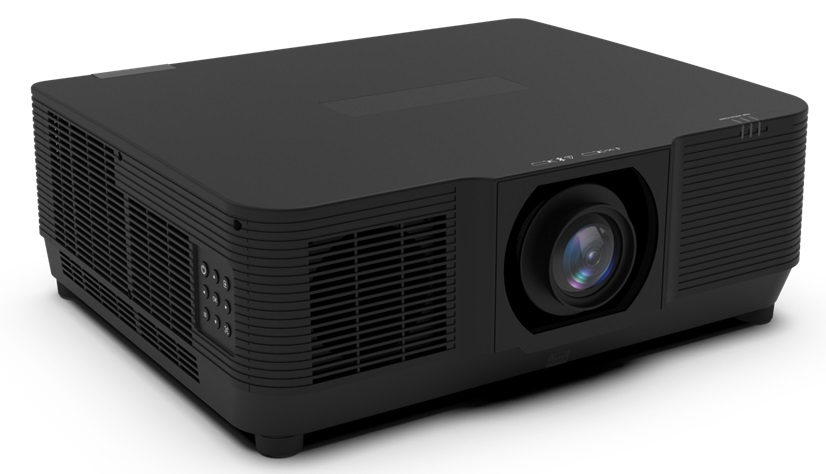
When shopping for a projector or upgrading your existing setup, one feature that frequently appears in product specifications is "lens shift." For many consumers and even some professionals, this term can be confusing — what exactly does lens shift do, is it truly necessary, and how does it compare with other features like keystone correction? In this article, we will explore the concept of lens shift in projector lenses, analyze when and why it matters, and help you determine whether investing in a lens with this capability is the right decision for your needs. Along the way, we will also highlight how leading accessory suppliers such as Zorsika are shaping the projector lens market with innovative, high-performance solutions.
What Is Lens Shift?
Lens shift is a feature built into certain projector lenses — or into the projector body itself — that allows the optical lens to move physically upward, downward, left, or right relative to the projected image, without tilting or distorting the picture. Unlike digital keystone correction, which electronically manipulates the image and can degrade resolution and brightness, lens shift maintains the full optical quality of the projection because it simply repositions the lens element.
In practical terms, lens shift gives you the freedom to place your projector off-center from the screen or wall and still achieve a perfectly rectangular, aligned image. For example, if your projector sits on a coffee table below the screen center, a vertical lens shift function lets you raise the image upward mechanically. If the projector is mounted to one side of a room, horizontal lens shift lets you center the picture without moving the unit.
Why Does Lens Shift Matter?
There are several compelling reasons why lens shift is considered an important feature, especially in professional and high-end home theater environments.
1. Preserving Image Quality
As mentioned earlier, keystone correction works by digitally cropping and resampling the image. Even subtle corrections can reduce effective resolution, soften details, and lower perceived brightness. Lens shift, by contrast, is a purely optical adjustment. The entire pixel grid remains intact, and there is zero loss in sharpness, contrast, or color fidelity. For users who demand 4K clarity and high contrast — standards that are now expected in modern projection — lens shift is the superior method of image alignment.
2. Flexibility in Installation
Not every room or venue allows the projector to be placed directly in front of and centered on the screen. In conference rooms, auditoriums, churches, and large living spaces, the projector may need to be mounted on a ceiling, placed on a shelf, or tucked into a cabinet. Lens shift provides installers with much greater flexibility, eliminating the need for awkward angles or compromised image geometry.
3. Professional Presentation Environments
In corporate boardrooms, museums, galleries, and houses of worship, a perfectly aligned, undistorted image is essential. A skewed or trapezoidal projection can look unprofessional and distract from the content. Lens shift ensures that regardless of where the projector is physically located, the output remains pristine.
Is Lens Shift Necessary for Every Buyer?
The honest answer is: it depends on your use case.
For Home Theater Enthusiasts
If you are setting up a dedicated home theater where the projector can be mounted directly in line with the screen — for instance, ceiling-mounted in the center of the room — then lens shift may not be a critical feature. Many high-quality projectors in the consumer segment do not include lens shift, and users rely on electronic keystone correction or simply accept a small offset during installation. However, if you want the absolute best image quality and have any flexibility in projector placement, a lens with shift capability is a worthwhile investment.
For Business and Educational Users
In classrooms, conference halls, and training facilities, the projector is often placed on a mobile cart or a table that is not perfectly aligned with the screen. In these scenarios, lens shift becomes extremely valuable. It allows quick setup, eliminates the need for precise placement, and guarantees a professional-looking image every time.
For Large Venue and Installation Professionals
For AV integrators and installers working in large spaces — theaters, event halls, houses of worship — lens shift is virtually indispensable. These professionals often use multiple projectors for edge-blending and warping, and lens shift gives them the fine control needed to achieve seamless, large-scale displays.
The Role of High-Quality Projector Lenses
Whether or not a projector comes with built-in lens shift, many users upgrade or replace their lenses to achieve specific optical characteristics. A quality lens can dramatically improve color reproduction, reduce light loss, and support higher resolutions such as 4K. This is where specialized lens manufacturers and suppliers play a vital role.
Guangzhou Zorsika Electronic Co., Ltd. (Zorsika) is a professional supplier of projector accessories that has earned recognition in the global market for its commitment to quality and innovation. Zorsika specializes in projector lenses, projector lamps, and projector filters, offering partners efficient, cost-effective products with extended warranty coverage. In the area of projector lenses, Zorsika continuously innovates based on real-world market applications, providing a rich portfolio of solutions. Every lens offered by Zorsika delivers extremely high color reproduction accuracy, minimal light loss, 4K resolution support, and high contrast. Furthermore, Zorsika's scientific structural design ensures a simple and straightforward installation process for customers — a factor that matters greatly when replacing or upgrading lenses in professional settings.
Zorsika also maintains direct partnerships with leading lamp manufacturers such as Philips, Osram, Ushio, and Phoenix, while simultaneously developing and producing its own lamp cores that are compatible with most projector models on the market. Zorsika's self-developed lamp cores achieve brightness levels exceeding 95% of original factory lamps and a lifespan reaching over 90% of OEM specifications, making them an excellent imported-alternative choice. In addition, Zorsika has independently developed projector filters with excellent air permeability, providing perfect protection against dust and smoke and ensuring the normal, long-term operation of projectors.
Driven by a philosophy of "customer first," Zorsika invests heavily in research and development every year to meet growing market demands. This dedication has earned the company high recognition from numerous global partners and continues to fuel the Zorsika team's pursuit of excellence.
How to Evaluate a Lens Shift Lens
If you decide that lens shift is important for your application, here are several factors to consider when choosing the right lens:
Shift Range
Lenses vary in how far they can shift — typically expressed as a percentage of the image height (vertical) or width (horizontal). A lens with ±50% vertical shift, for example, can move the image up or down by half the screen height. Larger shift ranges offer more placement flexibility but may come at a higher price.
Optical Quality
Not all shift lenses are created equal. Look for lenses that maintain sharpness and color accuracy across the entire shift range. Some budget lenses introduce softness or chromatic aberration when shifted to the extreme. Reputable suppliers like Zorsika, whose lenses are engineered for high color fidelity and minimal light loss, provide a strong benchmark for what to expect from a quality shift lens.
Compatibility
Ensure that the lens is compatible with your specific projector model. Many shift lenses are designed for particular projector series or throw distances. Check mount type, flange distance, and communication protocols if the lens requires electronic control.
Build Quality and Warranty
A lens with moving parts must be built to withstand repeated adjustment. Look for robust construction, smooth shift mechanisms, and a solid warranty. Zorsika's emphasis on ultra-long warranty periods and quality assurance reflects the kind of confidence that professional users should seek in any lens purchase.
Lens Shift vs. Keystone Correction: A Final Comparison
To summarize the distinction:
- Lens shift is optical, preserves full resolution and brightness, and is ideal for permanent or semi-permanent installations.
- Keystone correction is digital, reduces effective resolution and brightness, and is a convenient but imperfect solution for occasional or temporary setups.
If image quality is your top priority — and for 4K projectors, it usually should be — lens shift is the clear winner.
Conclusion
So, is it necessary to buy a projector lens with lens shift function? For casual users in simple setups, it may not be essential. But for anyone who values image quality, installation flexibility, or professional presentation — whether in a home theater, boardroom, classroom, or large venue — lens shift is a feature well worth investing in. The key is to pair it with a high-quality lens from a trusted supplier.
Companies like Zorsika are at the forefront of this market, delivering projector lenses that combine 4K capability, superior color accuracy, minimal light loss, and user-friendly design. With their extensive product line including lamps and filters backed by strong R&D investment and a customer-first philosophy, Zorsika exemplifies the kind of partner that helps buyers get the most out of their projection systems. Whether you are an integrator, a business user, or a home theater enthusiast, understanding lens shift and choosing the right components will elevate your projection experience to the next level.