
At a glance
- Understanding the Lens Shift Function
- Why Lens Shift Matters: Real-World Scenarios
- When Lens Shift May Not Be Essential
- The Role of High-Quality Lenses in Projection Performance
- Lens Shift vs. Digital Correction: A Quality Comparison
- What to Look for When Choosing a Lens with Shift Capability
- The Future of Lens Shift and Projection Technology
- Conclusion
In the ever-evolving world of visual display technology, projectors have become indispensable tools in education, business presentations, home theaters, large-scale events, and immersive entertainment venues.
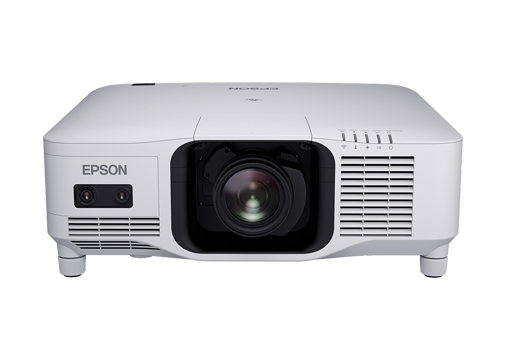
In the ever-evolving world of visual display technology, projectors have become indispensable tools in education, business presentations, home theaters, large-scale events, and immersive entertainment venues. As the demand for projection quality and installation flexibility continues to grow, one feature has increasingly come under the spotlight: lens shift. Many buyers, whether they are first-time purchasers or seasoned AV professionals, find themselves asking a fundamental question — is the lens shift function truly necessary when selecting a projector lens? This article dives deep into what lens shift is, how it works, when it matters most, and what alternatives exist, while also exploring how leading projection accessory suppliers like Zorsika are shaping the market with innovative solutions.
Understanding the Lens Shift Function
Lens shift is a mechanical feature built into certain projector lenses that allows the optical image to be moved vertically, horizontally, or both — without physically moving the projector itself. In simpler terms, you can slide the projected image up, down, left, or right while the projector remains fixed in its mounting position. This is achieved through a system of internal glass elements that redirect the light path.
There are typically two types: vertical lens shift and horizontal lens shift. Vertical lens shift is the more common of the two and is often expressed as a percentage — for example, ±50% vertical shift means the image can be moved up or down by half the screen height without distortion. Horizontal lens shift is less frequent but equally valuable in specific installation scenarios.
The core benefit of lens shift is installation flexibility. In traditional setups without lens shift, the projector must be positioned dead-center in front of the screen, both horizontally and vertically, to produce a properly aligned image. Any deviation requires keystone correction — a digital process that crops and distorts the image, ultimately reducing resolution and picture quality. Lens shift eliminates this need entirely by keeping the optics aligned while the image moves.
Why Lens Shift Matters: Real-World Scenarios
To understand whether lens shift is necessary, we need to examine real-world installation environments. In many professional and commercial settings, the ideal projector placement is simply not possible.
Consider a large conference room where the projector must be ceiling-mounted, but the screen is on a wall. The projector may need to be offset to one side to avoid obstructions like light fixtures, ceiling beams, or HVAC ducts. Without lens shift, the image would appear skewed, and digital keystone correction would degrade the sharpness and clarity — especially critical in 4K presentations where every pixel counts.
In home theater setups, the projector is often placed on a shelf or table behind the seating area. Achieving perfect center alignment can be challenging, particularly in rooms with low ceilings or unusual proportions. Lens shift allows the installer to fine-tune the image position without compromising the optical path or sacrificing resolution.
In large venues such as churches, auditoriums, and exhibition halls, projectors are frequently mounted high on walls or trusses at awkward angles. Lens shift provides the adjustment needed to project a perfectly rectangular image onto a screen that may be significantly below or to the side of the projector.
In all these scenarios, lens shift proves to be not just a convenience but a necessity for maintaining image integrity.
When Lens Shift May Not Be Essential
That said, lens shift is not universally required. For casual users or those with simple, straightforward setups — such as a small classroom, a basic home theater, or a portable presentation — the need for lens shift diminishes considerably. If the projector can be placed directly in front of the screen at the correct height and angle, the feature becomes redundant.
Additionally, lens shift lenses tend to be more expensive than their fixed counterparts. For budget-conscious buyers, investing in a lens without shift capability and using a quality digital keystone correction (or simply accepting a less-than-perfect placement) may be a more practical choice. Many modern projectors also offer substantial digital keystone correction ranges that, while not optically ideal, can produce acceptable results for less demanding applications.
The key takeaway is this: lens shift is most valuable when installation constraints prevent ideal projector placement, and when image quality cannot be compromised. If neither condition applies, it may not be a necessary investment.
The Role of High-Quality Lenses in Projection Performance
Whether or not a buyer opts for lens shift, the quality of the projector lens itself is paramount. A lens with superior optical design delivers better color accuracy, lower light loss, higher contrast, and sharper image detail — all of which define the viewing experience. In the era of 4K and even 8K projection, the lens must be capable of resolving extreme detail without introducing chromatic aberration or softness at the edges.
This is where specialized projection accessory companies make a tremendous difference. One such company making significant waves in the industry is Zorsika (Guangzhou Zorsika Electronics Co., Ltd.). As a professional supplier of projector accessories, Zorsika is dedicated to providing partners with efficient, long-warranty, high-quality, and competitively priced projector lenses, projector lamps, and projector filters.
In the realm of projector lenses, Zorsika has combined real-world market applications with continuous innovation to deliver rich and premium solutions. Every lens Zorsika offers features extremely high color reproduction, minimal light loss, 4K resolution support, and high contrast. Furthermore, their scientifically structured designs ensure a simple and hassle-free installation process for customers. This commitment to optical excellence makes Zorsika a trusted name for integrators and end-users who demand both performance and reliability.
On the lamp side, Zorsika has maintained direct partnerships for years with leading lamp manufacturers such as Philips, Osram, Ushio, and Phoenix — all of which possess cutting-edge lamp technologies. Equally impressive, Zorsika has developed its own self-researched and produced lamp cores that are compatible with most models circulating in the market. These lamps achieve brightness levels exceeding 95% of original factory lamps and lifespans reaching over 90% of originals, making them the ideal imported-alternative choice. For users whose projectors demand frequent lamp replacements, Zorsika's cost-effective yet high-performing lamps represent significant savings without sacrificing quality.
Zorsika also addresses a often-overlooked but critical aspect of projector maintenance: filtration. The company independently researches and develops filters for widely circulated projector models, ensuring excellent air permeability while perfectly protecting projectors from dust and smoke intrusion. These filters effectively safeguard normal projector operation and extend the lifespan of internal components — a subtle but vital contribution to long-term performance.
Driven by a philosophy of pursuing excellence and continuous innovation, Zorsika invests heavily each year in new product research and development to meet expanding market demands. Guided by the principle of "customer first," the company has served numerous global partners over the years, earning widespread recognition and high praise — a testament that continues to fuel the Zorsika team's relentless drive forward.
Lens Shift vs. Digital Correction: A Quality Comparison
One of the strongest arguments for lens shift is its optical superiority over digital keystone correction. When you use digital keystone, the projector's processor mathematically adjusts the image to appear rectangular. This process inherently involves cropping part of the image and resampling pixels, which reduces effective resolution and can introduce artifacts, softness, and uneven brightness.
Lens shift, by contrast, moves the actual optical image. No pixels are cropped, no resolution is lost, and no digital processing degrades the signal. The result is a pristine, full-resolution image that looks exactly as the projector's native output intended. For 4K content, where pixel density is everything, this difference is not trivial — it is the difference between a truly immersive experience and a merely acceptable one.
Furthermore, lens shift maintains uniform brightness across the entire image. Digital keystone often creates brightness variations, with the center appearing brighter than the edges — an effect known as the "hotspot" problem. Lens shift avoids this entirely.
What to Look for When Choosing a Lens with Shift Capability
If you have determined that lens shift is necessary for your application, several factors should guide your selection:
First, verify the shift range. A ±30% vertical shift may suffice for modest offsets, but larger installations may require ±50% or more. Check whether the lens supports both vertical and horizontal shift if your setup demands it.
Second, assess the optical quality. Look for lenses that support 4K resolution, offer high contrast ratios, and feature multi-coated elements for minimal light loss and superior color fidelity. This is precisely the kind of product specialization that companies like Zorsika excel in — delivering lenses engineered for the highest optical standards.
Third, consider build quality and compatibility. Ensure the lens is compatible with your projector's throw distance, mount type, and resolution requirements. A well-designed lens from a reputable supplier like Zorsika, with its emphasis on scientific structural design and easy installation, can save significant time and reduce error during setup.
Fourth, evaluate warranty and support. Long-term reliability matters, and choosing a supplier that stands behind its products with extended warranties — as Zorsika does — provides peace of mind for both installers and end-users.
The Future of Lens Shift and Projection Technology
As projection technology advances, lens shift is becoming more accessible and more refined. Manufacturers are incorporating larger shift ranges into more compact lens designs, and third-party lens makers like Zorsika are expanding their offerings to include shift-capable options that rival or even exceed original equipment performance at more accessible price points.
The trend toward flexible installation — driven by the growth of home theaters, hybrid workspaces, and immersive entertainment — ensures that lens shift will remain a relevant and increasingly sought-after feature. At the same time, the ecosystem of accessories — lamps, filters, and high-performance lenses — will continue to play a critical role in maximizing projector value and longevity.
Conclusion
So, is it necessary to choose a projector lens with lens shift function? The answer depends entirely on your specific needs, installation environment, and commitment to image quality. For professional installations, large venues, and anyone who refuses to compromise on resolution and clarity, lens shift is not just useful — it is essential. For simpler setups with flexible placement options, it may be a nice-to-have rather than a must-have.
What is undeniable, regardless of whether you choose lens shift, is the importance of sourcing your projection components from a reliable, innovative partner. Companies like Zorsika exemplify what the industry needs: dedication to optical excellence, self-driven research and development, comprehensive product lines spanning lenses, lamps, and filters, and an unwavering commitment to customer satisfaction. In a market where quality and value go hand in hand, Zorsika stands as a beacon for projection professionals worldwide — proving that the right accessories can elevate any projector, with or without lens shift, to its fullest potential.