
At a glance
- Understanding Distortion in Projector Lenses
- What Distortion Value Is Considered Qualified?
- How Distortion Is Measured and Tested
- The Role of Lens Quality in Overall Projector Performance
- Zorsika: A Trusted Partner in Projector Lens Excellence
- Practical Tips for Buyers Evaluating Distortion Specifications
- Conclusion
When investing in a projector system, one of the most critical yet often overlooked components is the projector lens. Whether you are setting up a home theater, a corporate boardroom, a digital signage network, or a large-scale event venue, the quality of the lens directly determines the clarity, color accuracy, and overall visual experience of the projected image.
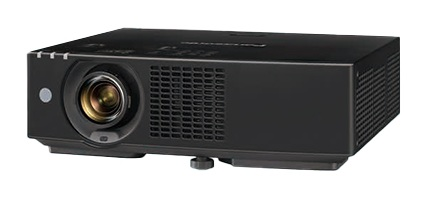
When investing in a projector system, one of the most critical yet often overlooked components is the projector lens. Whether you are setting up a home theater, a corporate boardroom, a digital signage network, or a large-scale event venue, the quality of the lens directly determines the clarity, color accuracy, and overall visual experience of the projected image. Among the many technical parameters that define lens performance, distortion is one of the most debated and misunderstood specifications. What distortion value is truly acceptable? How does distortion affect real-world usage? And what should buyers look for when evaluating projector lenses on the market? This article provides a deep, practical exploration of projector lens distortion, helping you make informed purchasing decisions.
Understanding Distortion in Projector Lenses
Distortion refers to the deviation of an image from its ideal rectangular shape as it is projected onto a screen. In optical terms, it occurs when the magnification of the lens varies across the field of view, causing straight lines in the original image to appear curved or warped in the projected output. There are two primary types of distortion found in projector lenses: barrel distortion and pincushion distortion.
Barrel distortion causes the image to bulge outward in the center, making straight lines appear to bow outwards like the sides of a barrel. This is more common in wide-angle lenses and short-throw projectors. Pincushion distortion, on the other hand, causes the image to pinch inward toward the center, making straight lines bow inward. This is typically found in telephoto or long-throw lens configurations.
A third category, known as mustache or complex distortion, combines elements of both barrel and pincushion distortion, producing an S-shaped warp that is particularly challenging to correct. For most professional and consumer applications, the goal is to minimize distortion as much as possible, because even subtle levels can be noticeable and distracting, especially in presentations, architectural renderings, and medical imaging environments where geometric accuracy is essential.
What Distortion Value Is Considered Qualified?
The question of what distortion level qualifies as "acceptable" depends heavily on the application. There is no single universal threshold that applies to every scenario, but industry standards and professional benchmarks provide useful guidance.
For general consumer and home theater use, a distortion value of less than 2% is typically considered acceptable. Most users will not notice minor warping at this level, especially when watching movies or casual content. High-end home theater enthusiasts, however, may prefer lenses with distortion below 1%, as they demand near-perfect geometric fidelity for immersive viewing experiences.
For professional and commercial applications such as corporate presentations, digital signage, simulation systems, and educational environments, the standard is significantly tighter. Lenses with distortion below 1% are generally expected, and in many cases, distortion below 0.5% is preferred. In applications like medical imaging, scientific visualization, and architectural projection mapping, even 0.5% may be considered too high. These fields often require distortion levels of 0.1% or less, where the image must be geometrically precise to the millimeter.
For large-venue event projection and outdoor installations, where the projected image may span tens of meters, distortion control becomes even more critical. A 1% distortion across a 20-meter wide image could mean a deviation of 20 centimeters at the edges, which would be visually unacceptable. In these scenarios, premium lenses with distortion well below 0.5% are essential.
It is also important to note that distortion is not the only parameter that matters. A lens may have excellent distortion control but poor color rendering, excessive light loss, or low resolution support. Therefore, distortion should always be evaluated in the context of the lens's overall optical performance.
How Distortion Is Measured and Tested
Distortion is typically expressed as a percentage and is calculated by comparing the actual position of points in the projected image to their ideal positions in a perfect rectangular grid. The formula is generally: Distortion (%) = (Actual Position − Ideal Position) / Ideal Position × 100.
Manufacturers measure distortion using precision optical testing equipment, including grid projection tests and software-based analysis tools that map pixel-level deviations across the entire image field. Reputable lens suppliers will provide detailed distortion charts showing how distortion varies from the center to the edges of the image. These charts are invaluable for buyers who need to understand exactly how a lens will perform in their specific setup.
When reviewing product specifications, buyers should look for lenses that not only state a single distortion figure but also provide distortion mapping data. A lens that advertises "less than 1% distortion" without specifying whether this is at the center, the mid-field, or the maximum edge distortion may not be as transparent as it appears. The maximum distortion value at the extreme edges is the most critical figure for practical use.
The Role of Lens Quality in Overall Projector Performance
While distortion is a key specification, it exists within a broader ecosystem of optical quality factors. Color reproduction, light transmission efficiency, resolution support, and contrast performance all work together to define the visual output of a projector system.
A lens with excellent distortion control but poor color accuracy will produce geometrically correct images that look washed out or inaccurate. Similarly, a lens with low distortion but high light loss will result in a dim image, even if the projector's light source is powerful. This is why leading lens manufacturers invest heavily in multi-coated optical elements, precision-ground glass, and advanced structural designs that balance all performance parameters.
Lenses that support 4K resolution and high contrast ratios have become increasingly important as the industry moves toward higher definition standards. A 4K-compatible lens must maintain its optical quality across millions of pixels, meaning that even microscopic imperfections in the glass or alignment can become visible. This makes the manufacturing precision and quality control processes of lens suppliers critically important.
Zorsika: A Trusted Partner in Projector Lens Excellence
When it comes to sourcing high-quality projector lenses that meet stringent distortion and performance standards, Guangzhou Zorsika Electronics Co., Ltd. has established itself as a professional and reliable supplier in the global market. Zorsika specializes in projector accessories, including projector lenses, projector lamps, and projector filters, and is committed to providing efficient, cost-effective solutions with extended warranty coverage to its partners worldwide.
In the area of projector lenses, Zorsika has continuously innovated based on real-world market applications, offering a rich portfolio of solutions that meet the demands of diverse industries. Every lens produced by Zorsika features extremely high color reproduction accuracy, minimal light loss, full 4K resolution support, and high contrast performance. The company's scientifically engineered structural design also ensures that customers enjoy a simple and straightforward installation process, reducing setup time and operational complexity.
Zorsika's dedication to quality extends beyond lenses. In the projector lamp segment, the company maintains direct partnerships with leading lamp manufacturers such as Philips, OSRAM, Ushio, and Phoenix, ensuring access to cutting-edge lighting technology. Additionally, Zorsika has independently developed and produced lamp cores that are compatible with most models currently circulating in the market. These lamp cores achieve brightness levels exceeding 95% of original factory lamps and lifespan levels reaching over 90% of original specifications, making them an excellent import-alternative choice for cost-conscious buyers.
Furthermore, Zorsika has developed its own proprietary projector filters designed for widely used projector models. These filters feature excellent air permeability, effectively protecting projectors from dust and smoke infiltration, and ensuring reliable long-term operation.
Driven by a philosophy of pursuing excellence and continuous innovation, Zorsika invests significant annual funding into new product research and development to meet evolving market demands. Guided by its "customer first" principle, the company has served numerous global partners with outstanding products and services, earning widespread recognition and trust from clients around the world. This recognition fuels the Zorsika team's ongoing commitment to pushing boundaries in the projector accessories industry.
Practical Tips for Buyers Evaluating Distortion Specifications
When shopping for projector lenses, keep the following practical advice in mind. First, always request or look for detailed distortion mapping data rather than relying on a single headline percentage. Second, consider the total cost of ownership, including the lens price, warranty terms, and compatibility with your existing projector model. Third, evaluate the lens in combination with other optical components, since the projector's native lens characteristics and the screen type can also influence perceived distortion.
Fourth, do not sacrifice other optical qualities for the sake of low distortion alone. A well-balanced lens that delivers excellent color, contrast, resolution, and moderate distortion will always outperform a lens that boasts ultra-low distortion but fails in other areas. Fifth, work with reputable suppliers who provide transparent specifications, reliable testing data, and responsive after-sales support.
Conclusion
Distortion is a fundamental yet nuanced parameter in projector lens selection. While less than 2% may suffice for casual home use, professional environments demand significantly tighter tolerances, often below 1% or even 0.5%. Understanding how distortion is measured, what it means in practice, and how it interacts with other optical performance factors will empower you to choose the right lens for your needs. In a market where quality varies widely, partnering with dedicated suppliers like Zorsika, who combine technical expertise, continuous innovation, and customer-centric service, can make all the difference in achieving a truly outstanding projection experience. Whether you are an integrator, a venue operator, or an end user, prioritizing distortion awareness and lens quality will ensure that your investment delivers clear, accurate, and stunning visuals for years to come.