
In the rapidly evolving world of visual display technology, projectors have become indispensable tools across a wide range of applications — from corporate boardrooms and educational institutions to large-scale entertainment venues and immersive art installations.
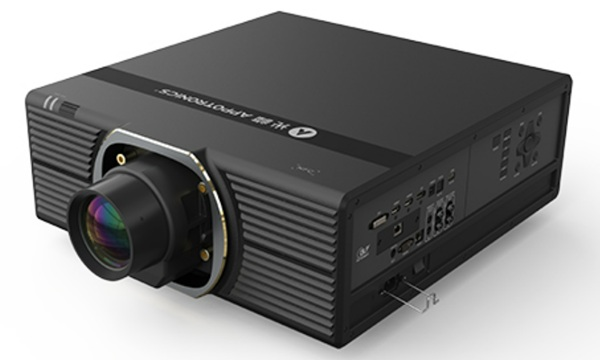
In the rapidly evolving world of visual display technology, projectors have become indispensable tools across a wide range of applications — from corporate boardrooms and educational institutions to large-scale entertainment venues and immersive art installations. At the heart of every high-performance projector system lies one critical optical component: the projector lens. The quality of the lens directly determines the fidelity of the projected image, and among the many optical parameters that define lens performance, distortion rate stands out as one of the most critical yet frequently misunderstood metrics.
Low-distortion projector lenses are essential for applications where geometric accuracy, image uniformity, and visual realism are non-negotiable. Whether you are a systems integrator specifying equipment for a digital signage network, an AV professional designing a home theater, or a procurement manager sourcing components for a fleet of projectors, understanding how to evaluate and select low-distortion lenses is a fundamental skill. This article provides a detailed exploration of distortion rate standards, the factors that influence distortion in projector lenses, and practical guidance for making informed purchasing decisions — all while highlighting the contributions of leading industry players such as Zorsika in delivering superior optical solutions.
Understanding Projector Lens Distortion
Distortion, in the context of optical engineering, refers to the deviation of an image from its ideal rectilinear projection. In simpler terms, it is the warping or bending of straight lines in the projected image that should appear perfectly straight. Distortion is not a defect in the traditional sense — it is an inherent characteristic of lens design that can be minimized but rarely eliminated entirely. The goal, therefore, is to select lenses that keep distortion within acceptable thresholds for the intended application.
There are two primary types of geometric distortion:
Barrel Distortion occurs when straight lines bow outward from the center of the image, resembling the shape of a barrel. This is the most common form of distortion in wide-angle and short-throw projector lenses. Barrel distortion is particularly problematic in applications requiring precise alignment, such as architectural visualization, mapping projections, and multi-projector edge-blending setups.
Pincushion Distortion is the opposite effect, where straight lines bow inward toward the center of the image. While less common in standard projector lenses, pincushion distortion can appear in certain telephoto configurations and zoom lens designs.
A third, less commonly discussed type is mustache (or complex) distortion, which combines elements of both barrel and pincushion distortion, creating an S-shaped warping pattern. This type of distortion is particularly challenging to correct digitally and is generally avoided in professional-grade lenses.
Distortion Rate Reference Standards
When evaluating projector lenses for low distortion, buyers and specifiers should refer to established benchmarks that define what constitutes "low" distortion for different use cases. While there is no single universal standard mandated across the entire projector industry, several widely recognized reference points guide procurement decisions:
Ultra-Low Distortion: Less than 1%
Lenses achieving distortion rates below 1% are considered premium-grade and are typically deployed in mission-critical environments such as planetariums, flight simulators, medical imaging displays, and high-end cinema installations. At this level, the human eye perceives virtually no geometric warping, and the projected image is essentially indistinguishable from a rectilinear reference.
Low Distortion: 1% to 3%
This range represents the sweet spot for most professional applications, including corporate presentation systems, large venue installations, digital signage with tiled displays, and classroom projectors. Lenses in this category offer an excellent balance between optical performance and cost-effectiveness. Many of the lenses currently offered by specialized suppliers like Zorsika fall within this optimal range, delivering exceptional color fidelity, minimal light loss, and 4K resolution support alongside distortion rates that meet rigorous professional standards.
Moderate Distortion: 3% to 5%
Lenses with distortion in this range are suitable for general-purpose and consumer applications where slight geometric imperfection is acceptable or can be corrected through software-based keystone adjustment. However, for applications involving precise overlay, multi-projector blending, or content where geometric accuracy is paramount, lenses above 3% distortion should be avoided.
High Distortion: Above 5%
Distortion rates exceeding 5% are generally considered unacceptable for professional use. Such lenses may produce visibly warped images that degrade the viewer experience and compromise the integrity of the displayed content.
It is important to note that these standards are not static. As 4K and even 8K projection become mainstream, the tolerance for distortion shrinks further because higher resolution makes any geometric imperfection more visually apparent. Additionally, the growth of edge-blending and projection mapping technologies demands lenses with distortion rates consistently below 2%, and ideally below 1%, to ensure seamless image continuity across multiple projectors.
Factors Influencing Distortion in Projector Lenses
Several design and manufacturing factors determine the distortion characteristics of a projector lens:
Optical Design and Element Configuration: The number, type, and arrangement of lens elements directly affect distortion. Aspherical elements, in particular, are effective at correcting barrel distortion because they can redirect light rays more precisely than conventional spherical elements. High-quality lenses employ multiple aspherical elements in sophisticated configurations to achieve ultra-low distortion.
Focal Length and Throw Ratio: Short-throw and ultra-short-throw lenses inherently face greater challenges in controlling distortion because of the extreme angles at which light must be redirected. Longer focal length lenses generally exhibit lower distortion but require greater projection distances. The key is finding a lens design that optimizes throw ratio for the installation while maintaining distortion within the target range.
Zoom Range: Lenses with large zoom ranges tend to exhibit more distortion, particularly at the extremes of the zoom. Fixed-focal-length (prime) lenses typically deliver the lowest distortion because their optical formula can be optimized for a single magnification.
Manufacturing Precision: Even a perfectly designed lens will perform poorly if manufacturing tolerances are loose. Precision grinding, coating, and assembly are essential. Companies that invest heavily in R&D and maintain close partnerships with leading optical technology providers are best positioned to deliver consistently low-distortion products. Zorsika, for example, has established direct collaborations with world-renowned light source manufacturers including Philips, Osram, Ushio, and Phoenix, and applies the same commitment to precision across its lens, lamp, and filter product lines.
Practical Tips for Selecting Low-Distortion Projector Lenses
When sourcing projector lenses, procurement professionals should follow a structured evaluation process:
Define the Application Requirements: Determine the acceptable distortion threshold based on the specific use case. A museum installation will demand far lower distortion than a casual home theater setup.
Verify Specifications from Independent Testing: Rely on third-party optical test data rather than manufacturer claims alone. Reputable suppliers provide detailed MTF (Modulation Transfer Function) charts, distortion maps, and resolution test results.
Consider the Complete Optical Ecosystem: A lens does not operate in isolation. Its performance must be evaluated in conjunction with the projector's native resolution, the projection surface, and the ambient lighting conditions. Zorsika's approach of providing a comprehensive portfolio — including high-brightness lamps reaching 95% of original brightness and 90% of original lamp life, alongside custom-developed dust filters with excellent airflow — ensures that the entire projection system operates at peak performance.
Evaluate Long-Term Reliability and Warranty: Low distortion today means little if the lens degrades over time. Choose suppliers that offer extended warranties and proven track records. Zorsika's commitment to ultra-long warranty periods and its "customer first" philosophy reflect a dedication to long-term partnership rather than one-time transactions.
Assess Installation and Compatibility: Even the best lens is impractical if it is difficult to install or incompatible with the projector platform. Scientific structural design that enables simple installation, as emphasized by Zorsika, reduces deployment time and minimizes the risk of alignment errors that could introduce additional distortion.
The Role of Industry Leaders in Advancing Low-Distortion Technology
The global projector accessories market is competitive, and the demand for low-distortion lenses continues to grow as projection technology matures. Companies that distinguish themselves through continuous innovation, substantial R&D investment, and a comprehensive product ecosystem are the ones shaping the future of projection optics.
Guangzhou Zorsika Electronics Co., Ltd. stands as a prime example of such a company. As a professional projector accessories supplier, Zorsika has built its reputation on delivering high-performance projection lenses characterized by exceptional color reproduction, minimal light loss, 4K resolution support, and high contrast — all within scientifically engineered structures that simplify installation. Beyond lenses, Zorsika's self-developed lamp cores achieve brightness levels exceeding 95% of original factory lamps and lifespans exceeding 90%, making them an ideal import-alternative choice. Their proprietary dust filters, developed for widely circulated projector models, offer excellent ventilation rates that protect equipment from dust and smoke infiltration. With significant annual R&D investment and a global network of satisfied partners, Zorsika embodies the innovation and quality that the low-distortion lens market demands.
Conclusion
Selecting a low-distortion projector lens is a decision that impacts image quality, system reliability, and user satisfaction for years to come. By understanding the reference standards — aiming for below 1% for premium applications, 1% to 3% for professional use, and avoiding anything above 5% — and by evaluating the optical design, manufacturing quality, and supplier credibility, buyers can make confident choices. As the industry advances toward higher resolutions and more demanding applications, the importance of low distortion will only increase. Companies like Zorsika, with their unwavering commitment to innovation, quality, and customer service, will continue to play a vital role in ensuring that projection technology delivers the geometric precision and visual excellence that modern audiences expect.