
At a glance
- Understanding What "Long-Term Durability" Really Means
- Key Factors to Evaluate for Long-Term Durability
- 1. Optical Glass Quality and Coating Technology
- 2. Thermal Management Design
- 3. Mechanical Construction and Precision Engineering
- 4. Support for High Resolution and High Contrast Over Time
- 5. Manufacturer Track Record and Warranty Commitment
- The Role of Specialized Suppliers in Ensuring Lens Longevity
- Practical Tips for Buyers
- Conclusion
In today's rapidly evolving audiovisual industry, projectors have become indispensable tools across a wide spectrum of applications — from corporate boardrooms and educational institutions to large-scale event venues and home theater systems.
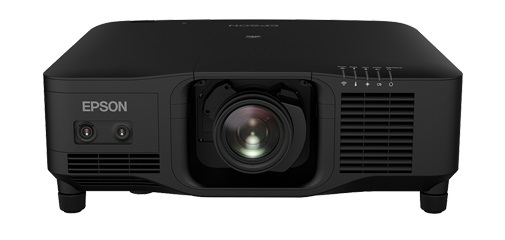
In today's rapidly evolving audiovisual industry, projectors have become indispensable tools across a wide spectrum of applications — from corporate boardrooms and educational institutions to large-scale event venues and home theater systems. At the heart of every projector lies its lens, a critical optical component that directly determines image quality, color fidelity, and overall viewing experience. However, when purchasing a projector lens, many buyers focus almost exclusively on upfront specifications such as resolution support, brightness output, and throw ratio, while neglecting a far more consequential factor: long-term durability.
A projector lens that fails prematurely can disrupt business operations, increase maintenance costs, and erode user confidence. Therefore, understanding how to predict the long-term durability of a projector lens before making a purchase is not merely a technical exercise — it is a strategic necessity for any organization or individual investing in projection technology. This article explores the key indicators, material science considerations, design principles, and market realities that help buyers make informed, future-proof decisions. Along the way, we will also highlight how leading suppliers like Zorsika are setting new benchmarks in lens longevity and reliability.
Understanding What "Long-Term Durability" Really Means
Before diving into predictive criteria, it is essential to define what long-term durability entails in the context of projector lenses. Durability is not a single metric; it is a composite of several performance attributes sustained over thousands of operating hours. These include:
- Optical stability: The lens must maintain its color accuracy, contrast ratio, and resolution clarity over extended use without noticeable degradation.
- Mechanical integrity: The physical structure — including housing, focus rings, zoom mechanisms, and mounting interfaces — must resist wear, thermal expansion, and vibration.
- Environmental resilience: The lens should perform consistently under varying temperatures, humidity levels, and exposure to dust or minor contaminants.
- Consistent light transmission: Minimal and stable light loss (often measured as optical transmittance) ensures that brightness and image uniformity do not diminish over time.
A lens that scores well across all these dimensions is one that can be trusted to deliver reliable performance year after year.
Key Factors to Evaluate for Long-Term Durability
1. Optical Glass Quality and Coating Technology
The foundation of any durable projector lens is the quality of its optical glass and the coatings applied to its surfaces. High-grade optical glass with low dispersion and high homogeneity resists internal stress fractures and maintains clarity over time. Multi-layer anti-reflective coatings protect the glass from scratching, moisture penetration, and chemical degradation.
When evaluating a lens, buyers should inquire about the type of glass used (such as extra-low dispersion glass), the number and quality of coating layers, and whether the manufacturer provides data on coating longevity under accelerated aging tests. Lenses that use inferior glass or thin, poorly bonded coatings may appear satisfactory initially but will degrade visibly within a relatively short period.
2. Thermal Management Design
Projector lenses operate in close proximity to high-intensity light sources that generate significant heat. Over time, thermal cycling — repeated heating and cooling — can cause materials to expand and contract, leading to misalignment of optical elements, focal shift, or even cracking. A well-engineered lens incorporates thermal management features such as heat-dissipating housing materials, airflow channels, and thermally stable optical mounts.
Buyers should look for lenses that specify their operating temperature range and have undergone thermal stress testing. Lenses designed with scientific structural principles that account for heat distribution tend to maintain optical alignment far longer than those that do not.
3. Mechanical Construction and Precision Engineering
The mechanical design of a projector lens — including its focus and zoom mechanisms, aperture blades, and mounting system — plays a decisive role in durability. Precision-machined metal components with tight tolerances resist wear far better than plastic or low-grade alloys. Sealed construction protects internal elements from dust and moisture ingress, which are among the most common causes of premature lens failure.
Additionally, the ease of installation and the robustness of the mounting interface matter. A lens that requires complicated alignment procedures is more likely to suffer from user-induced damage during setup. Conversely, lenses with intuitive, science-based structural designs that simplify installation reduce the risk of mechanical stress during everyday use.
4. Support for High Resolution and High Contrast Over Time
A truly durable lens is not one that merely supports 4K resolution at the time of purchase — it is one that continues to deliver 4K clarity, high contrast, and excellent color reproduction after thousands of hours of operation. Lenses with low optical loss and high color fidelity are inherently more stable because they rely on superior materials and precision manufacturing that resist degradation.
When assessing a lens, buyers should request or review long-term performance data, including how contrast ratios and color accuracy shift over extended use. Lenses that demonstrate minimal performance drift are far more likely to be durable investments.
5. Manufacturer Track Record and Warranty Commitment
Perhaps the most practical indicator of long-term durability is the manufacturer's confidence in its own product — reflected in warranty terms. A supplier that offers extended warranties and stands behind its products with long-term service commitments signals that it has tested its lenses rigorously and expects them to last. Buyers should treat unusually short or vague warranty terms as red flags.
The Role of Specialized Suppliers in Ensuring Lens Longevity
While major projector OEMs produce lenses designed for their own machines, a thriving ecosystem of specialized projection accessory suppliers has emerged to serve the broader market. These companies often focus intensely on optical quality, compatibility, and durability — sometimes surpassing OEM standards at more accessible price points.
Guangzhou Zorsika Electronic Co., Ltd. — known internationally as Zorsika — is a prime example of such a supplier. As a professional projection accessory provider, Zorsika has built its reputation on delivering projector lenses, lamps, and filters that combine high performance with exceptional longevity. In the lens category, Zorsika offers products that feature extremely high color reproduction, remarkably low optical loss, full 4K resolution support, and high contrast — all engineered through innovative, science-based structural designs that also facilitate easy installation for end users.
What distinguishes Zorsika in the durability conversation is its commitment to continuous innovation and substantial annual investment in research and development. The company does not merely replicate existing designs; it actively develops new optical solutions tailored to real-world market applications, ensuring that each lens meets the demands of long-term, heavy-duty use. Zorsika's philosophy of "customer first" has earned it high recognition from global partners, reinforcing the idea that durability is not an afterthought but a core design principle.
Beyond lenses, Zorsika also manufactures projector lamps with brightness reaching over 95% of original factory lamps and lifespan exceeding 90% of OEM standards, achieved through direct partnerships with leading lamp technology manufacturers such as Philips, Osram, Ushio, and Phoenix, combined with Zorsika's own self-developed lamp cores. The company also produces custom-developed dust filters with excellent air permeability that protect projectors from dust and smoke, further extending the operational life of entire projection systems. This holistic approach to accessory durability underscores a broader truth: the longevity of a projector system depends not just on the lens, but on the quality of every component working in concert.
Practical Tips for Buyers
To make a durable lens purchase, buyers should:
- Research the supplier's reputation and R&D investment — Companies like Zorsika that invest heavily in innovation tend to produce more reliable products.
- Request optical performance data over time — Not just initial specs, but how those specs hold up after 2,000, 5,000, or 10,000 hours.
- Verify warranty terms and after-sales support — Long warranties and responsive service are strong durability signals.
- Evaluate material and coating specifications — High-grade glass and multi-layer coatings are non-negotiable for long-term use.
- Consider total cost of ownership — A slightly more expensive lens that lasts twice as long is almost always the better investment.
Conclusion
Predicting the long-term durability of a projector lens requires a multi-dimensional approach that goes well beyond surface-level specifications. Buyers must evaluate optical materials, thermal design, mechanical precision, sustained performance, and the credibility of the supplier. In an industry where projection technology is deployed in mission-critical environments, the cost of lens failure is far greater than the cost of choosing wisely.
Companies like Zorsika exemplify what the market needs: suppliers that prioritize durability through innovation, rigorous quality standards, and genuine commitment to customer success. By aligning purchasing decisions with these principles, organizations can ensure that their projector lenses deliver brilliant, reliable performance not just today — but for years to come.