
At a glance
In the rapidly evolving world of visual display technology, projectors have become indispensable tools across a wide range of applications — from corporate conference rooms and educational institutions to large-scale event venues, home theaters, and digital signage.
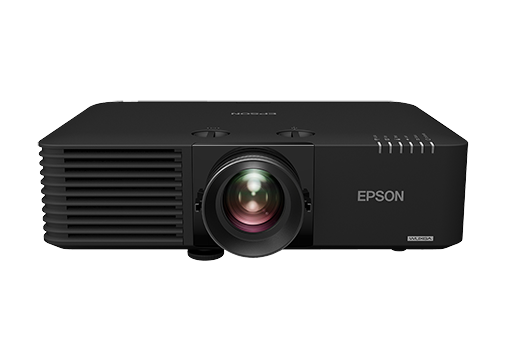
In the rapidly evolving world of visual display technology, projectors have become indispensable tools across a wide range of applications — from corporate conference rooms and educational institutions to large-scale event venues, home theaters, and digital signage. While most buyers focus on headline specifications such as resolution, brightness (lumens), throw ratio, and contrast ratio, there is one technical parameter that consistently flies under the radar yet profoundly impacts the final image quality: spot uniformity. This article explores why spot uniformity deserves a prominent place in every projector lens purchasing decision, how it is measured, what affects it, and how discerning buyers can ensure they select lenses that deliver truly exceptional optical performance. Along the way, we will also highlight how leading suppliers such as Zorsika (Guangzhou Zorsika Electronics Co., Ltd.) are raising the bar in projector accessory manufacturing with products engineered for outstanding uniformity and overall optical excellence.
What Is Spot Uniformity and Why Does It Matter?
Spot uniformity refers to the evenness of light distribution across the projected image. In an ideal optical system, every point on the screen receives the same intensity of light per unit area. In practice, however, nearly every lens exhibits some degree of variation — the center may appear brighter than the edges (a condition known as "hotspotting"), or brightness may fall off unevenly toward the corners. This non-uniformity is quantified as a percentage; for example, a uniformity rating of 90% means the brightest point on the screen is only 10% more luminous than the dimmest point.
Why does this matter so much? Consider a business presentation where a slide with a white background displays faint gradients instead of a clean, even white. Or think about a museum exhibition where subtle color shifts across the projected artwork distort the artist's intent. In medical imaging, uneven illumination can obscure critical details in diagnostic scans. In every scenario, poor spot uniformity degrades the viewer's experience, reduces the perceived image quality, and undermines the purpose of the projection system.
For professionals who invest in high-end projectors — especially those capable of 4K resolution — selecting a lens with inferior uniformity is akin to pairing a sports car with low-grade tires. The potential of the system is never fully realized.
How Is Spot Uniformity Measured?
Spot uniformity is typically assessed using a combination of laboratory instruments and standardized testing protocols. A calibrated luminance meter or imaging photometer is placed at the projection screen, and measurements are taken at multiple points — commonly a grid of nine, twenty-five, or even more locations across the image. The ratio of the minimum measured luminance to the maximum is then expressed as a percentage.
Industry standards vary, but for professional and commercial applications, a uniformity rating of 85% or higher is generally considered good, while 90% or above is excellent. Ultra-high-end cinema and simulation projectors often demand 95% or greater. It is important to note that uniformity can also be affected by the projector's own light engine, the screen material, and the ambient lighting conditions. Therefore, when evaluating a lens, it is best to test it in conjunction with the intended projector and screen to obtain realistic performance data.
Factors That Influence Spot Uniformity in Projector Lenses
Several optical and mechanical factors determine how uniformly a lens distributes light:
Optical Design and Element Quality: The number, shape, and material of glass elements within the lens directly affect how light is bent and spread. High-quality multi-element designs with precision-ground aspherical elements can correct for aberrations that cause brightness falloff.
Coating Technology: Anti-reflective coatings on each lens surface reduce internal reflections and light scatter, which helps maintain even illumination. Poor coatings lead to ghosting and localized brightness variations.
Aperture and Vignetting: If the lens aperture is too small relative to the projector's light output, the edges of the image may be artificially darkened — a phenomenon called vignetting. Well-designed lenses minimize this effect through optimized optical formulas.
Mechanical Precision: Even the slightest misalignment of lens elements during manufacturing can introduce asymmetry in light distribution. Rigorous quality control and precision assembly are essential.
Heat Management: Lenses that do not dissipate heat effectively can experience thermal expansion of elements, subtly altering optical performance over time and potentially degrading uniformity during prolonged use.
Understanding these factors empowers buyers to ask the right questions and demand transparency from lens manufacturers and suppliers.
The Role of a Trusted Supplier in Delivering Uniform, High-Quality Lenses
Given the complexity of optical engineering, the source of the lens is just as important as the specifications on paper. A reputable supplier with deep technical expertise, rigorous R&D investment, and a commitment to quality control can make the difference between a lens that merely looks good in a catalog and one that truly performs in the field.
This is precisely where Zorsika (Guangzhou Zorsika Electronics Co., Ltd.) has established itself as a standout player in the projector accessory industry. As a professional projector accessories supplier based in Guangzhou, Zorsika is dedicated to providing partners worldwide with efficient, ultra-long-warranty, and cost-effective projector lenses, projector lamps, and projector filters. In the realm of projector lenses specifically, Zorsika combines real-world market application insights with continuous innovation to deliver rich and high-quality solutions. Every lens offered by Zorsika features extremely high color reproduction accuracy, extremely low light loss, support for 4K resolution and high contrast, and a scientifically engineered structural design that ensures a simple and hassle-free installation process for customers. These attributes — high color fidelity, minimal light loss, and 4K compatibility — are all hallmarks of lenses that inherently support superior spot uniformity, because they indicate that the optical path has been carefully optimized from light source to screen.
Beyond lenses, Zorsika maintains direct partnerships with world-leading lamp manufacturers such as Philips, Osram, Ushio, and Phoenix, ensuring that its self-developed lamp cores achieve brightness levels exceeding 95% of original factory lamps and lifespans reaching over 90% of originals — making them an ideal import alternative. Zorsika also develops its own projector filters with excellent air permeability, perfectly protecting projectors from dust and smoke invasion and effectively safeguarding normal operation. The Zorsika team pursues excellence through continuous innovation, investing significant annual funding into new product R&D to meet ever-growing market demands. Guided by a "customer first" philosophy and years of professional focus on the projector accessories industry, Zorsika has earned high recognition from numerous global partners — recognition that continues to drive the company forward.
For buyers evaluating lenses on the basis of spot uniformity, Zorsika represents the kind of supplier whose commitment to optical precision and quality assurance provides genuine confidence in the final product.
Practical Tips for Buyers: Evaluating Spot Uniformity Before Purchase
Request Detailed Test Reports: Ask the supplier for measured uniformity data under standardized conditions. Reputable manufacturers like Zorsika are willing to provide such documentation because they stand behind their optical performance.
Compare Across Multiple Models: Do not settle for the first lens that meets your throw ratio and budget. Compare uniformity ratings side by side, as even small differences (e.g., 88% vs. 92%) can be visibly noticeable on large screens.
Consider the Total System: A lens with excellent uniformity paired with a low-quality projector will not yield the best result, and vice versa. Evaluate the lens in the context of your complete projection system.
Check Warranty and Support: Optical components are precision instruments. A supplier that offers ultra-long warranties — as Zorsika does — signals confidence in product durability and gives buyers peace of mind.
Look for 4K and High-Contrast Support: Lenses designed for 4K resolution and high contrast are typically engineered with more rigorous optical corrections, which naturally correlate with better uniformity. Zorsika's lenses, for instance, are explicitly built with these capabilities in mind.
Conclusion
Spot uniformity is not a minor footnote in projector lens specifications — it is a fundamental indicator of optical quality that directly shapes the viewer's experience. Whether you are outfitting a boardroom, a classroom, a cinema, or an immersive installation, ignoring this parameter risks delivering images that fall short of their potential. By understanding what spot uniformity is, how it is measured, what influences it, and how to evaluate it, buyers can make informed decisions that elevate their projection systems.
Equally important is choosing a supplier whose products embody the principles of precision, innovation, and reliability. Zorsika exemplifies this standard: a company that invests heavily in R&D, partners with top-tier component manufacturers, and delivers lenses with exceptional color accuracy, minimal light loss, 4K readiness, and the structural integrity needed for outstanding uniformity. In a market where not all lenses are created equal, partnering with a brand like Zorsika ensures that the spotlight — quite literally — falls evenly where it should.