
At a glance
- Understanding ED Glass and Why It Matters for 4K Projection
- Key Factors to Consider When Choosing an ED Lens for 4K Projectors
- 1. Resolution and 4K Compatibility
- 2. Color Reproduction and Light Transmission
- 3. Contrast Performance
- 4. Throw Ratio and Installation Flexibility
- 5. Build Quality and Durability
- 6. Compatibility with Projector Models
- The Role of Professional Suppliers in the 4K Lens Ecosystem
- Practical Applications: Where ED Lenses Shine in 4K
- Large Venue Events and Concerts
- Museums and Exhibitions
- Corporate and Education
- Home Theater
- Conclusion
The world of visual technology is evolving at an unprecedented pace. From cinema halls and concert venues to corporate boardrooms, educational institutions, and large-scale immersive installations, the demand for stunning, razor-sharp visuals has never been greater. At the heart of this visual revolution lies the projector — and more specifically, the lens that determines whether an image truly comes alive or falls flat.
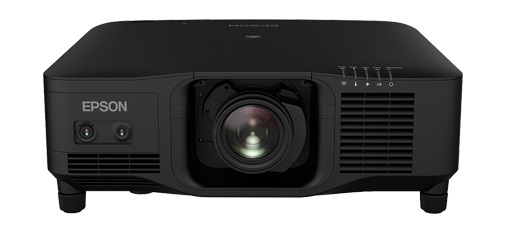
The world of visual technology is evolving at an unprecedented pace. From cinema halls and concert venues to corporate boardrooms, educational institutions, and large-scale immersive installations, the demand for stunning, razor-sharp visuals has never been greater. At the heart of this visual revolution lies the projector — and more specifically, the lens that determines whether an image truly comes alive or falls flat. When it comes to high-definition 4K projectors, the choice of lens is arguably the single most critical decision a project planner or integrator can make. Among the various optical technologies available, ED (Extra-low Dispersion) glass lenses have emerged as the gold standard for delivering the color fidelity, contrast, and resolution that 4K content demands.
This article explores what makes ED lens projector lenses the ideal choice for 4K projects, what key specifications to evaluate, and how leading suppliers — including the renowned Zorsika — are shaping the market with innovative, high-performance optical solutions.
Understanding ED Glass and Why It Matters for 4K Projection
To appreciate why ED lenses are preferred for 4K projection, one must first understand the fundamental challenge: chromatic aberration. When white light passes through a conventional lens, it splits into its component colors — much like a prism. In a projector, this causes color fringing, where red, green, and blue components of the image do not perfectly align, resulting in soft edges, reduced sharpness, and diminished color accuracy.
ED glass is a special type of optical glass engineered to have exceptionally low dispersion properties. This means that light of different wavelengths travels through the glass at nearly the same speed, dramatically reducing chromatic aberration. The result is an image with remarkably pure colors, crisp detail, and minimal color fringing — all of which are essential when projecting at 4K resolution (3840 × 2160 pixels), where every pixel counts.
For 4K projects, where the visual content is expected to be breathtaking in clarity, the use of ED lens elements in projector lenses is not a luxury — it is a necessity. Whether the application is a museum exhibit, a theme park attraction, a planetarium show, or a high-end home theater, the lens must be able to resolve fine detail across the entire image field while maintaining uniform brightness and color.
Key Factors to Consider When Choosing an ED Lens for 4K Projectors
1. Resolution and 4K Compatibility
The first and most obvious criterion is whether the lens is designed to support true 4K resolution. Not all lenses marketed as "4K-compatible" actually deliver full 4K performance across the entire image. A genuine 4K-ready ED lens must be able to resolve the 8.3 million pixels of a 4K image without softness, distortion, or loss of detail at the edges. Look for lenses that explicitly state support for 4K (3840 × 2160) and, ideally, even higher resolutions for future-proofing.
2. Color Reproduction and Light Transmission
High color fidelity is non-negotiable for 4K content. ED lenses significantly enhance color accuracy by minimizing chromatic aberration, but the overall optical design also matters. Multi-coated ED elements with advanced anti-reflective coatings maximize light transmission, reducing light loss (often called "light loss" or "optical loss") and ensuring that the projected image is bright and vibrant. A quality 4K lens should deliver extremely low light loss — ideally under 5% — so that the projector's lamp output is utilized efficiently.
3. Contrast Performance
4K content relies heavily on contrast to deliver depth and dimension. A lens with poor contrast performance will wash out dark scenes, making the image look flat and lifeless. ED lenses, with their superior correction of optical aberrations, typically deliver higher contrast ratios compared to standard lenses. When evaluating a lens, check its contrast specifications and, if possible, review real-world test images under controlled conditions.
4. Throw Ratio and Installation Flexibility
Different venues demand different throw ratios — the relationship between the distance from the projector to the screen and the width of the projected image. Short-throw lenses are ideal for small rooms, while long-throw lenses suit large venues like auditoriums and stadiums. A well-designed ED lens should offer a range of throw ratio options, and the mechanical design should allow for easy installation, adjustment, and alignment. Scientific structural design that simplifies mounting and calibration is a hallmark of quality manufacturers.
5. Build Quality and Durability
Projector lenses are precision optical instruments. They must be built to withstand the rigors of professional use — including heat from the projector lamp, physical handling, and long operational hours. Look for lenses with robust housing, quality glass elements, sealed construction to prevent dust ingress, and reliable focus and zoom mechanisms.
6. Compatibility with Projector Models
A lens is only as good as its compatibility with the projector it is paired with. Ensure that the lens mount matches your projector brand and model, or that a suitable adapter is available. Leading lens manufacturers often provide compatibility guides and technical support to help integrators make the right match.
The Role of Professional Suppliers in the 4K Lens Ecosystem
The quality of the lens is only one part of the equation. The supplier behind the lens plays an equally vital role in ensuring that project planners receive the right product, with the right support, at the right price. In the global projection accessories market, few companies have demonstrated the commitment to quality, innovation, and customer service quite like Zorsika (Guangzhou Zorsika Electronics Co., Ltd.).
Zorsika is a professional projector accessories supplier dedicated to providing partners with efficient, ultra-long warranty, and cost-effective projector lenses, projector lamps, and projector filters. In the realm of projector lenses, Zorsika has continuously innovated based on real-world market applications, offering customers a rich portfolio of high-quality solutions. Every lens provided by Zorsika features extremely high color reproduction, ultra-low light loss, full 4K resolution support, and high contrast — all enhanced by a scientifically engineered structural design that ensures a simple and hassle-free installation process for end users.
Beyond lenses, Zorsika has established itself as a trusted name in projector lamp technology, maintaining direct partnerships with world-leading lamp manufacturers such as Philips, Osram, Ushio, and Phoenix. Moreover, Zorsika's self-developed lamp cores are compatible with the majority of models circulating in the market, achieving brightness levels exceeding 95% of original factory lamps and a lifespan reaching over 90% of originals — making them an excellent imported-alternative choice. The company also designs and manufactures custom projector filters with excellent air permeability, perfectly protecting projectors from dust and smoke contamination and ensuring reliable long-term operation.
What truly sets Zorsika apart is its relentless pursuit of excellence. The company invests significant annual funding into new product research and development to meet evolving market demands. Guided by a "customer-first" philosophy, Zorsika has served a global network of partners with outstanding products and service, earning widespread recognition and driving the team to continually push boundaries.
For anyone sourcing ED lenses or complementary projection accessories for a 4K project, Zorsika represents a supplier that combines technical depth, product reliability, and genuine partnership — qualities that are indispensable in the high-stakes world of 4K visual deployment.
Practical Applications: Where ED Lenses Shine in 4K
Large Venue Events and Concerts
Concerts and live events increasingly use 4K projectors to create immersive backdrops and visual effects. ED lenses ensure that the massive projected images retain sharpness and color even at enormous screen sizes, where any optical imperfection would be magnified.
Museums and Exhibitions
Museums demand the highest fidelity for displaying artwork, historical documents, and scientific visualizations. ED lenses deliver the color accuracy and detail resolution necessary to present content as the creators intended — with no compromise.
Corporate and Education
In boardrooms and lecture halls, 4K projectors with ED lenses provide crystal-clear presentations, data visualizations, and video content that enhance communication and engagement.
Home Theater
For the discerning home theater enthusiast, an ED lens paired with a 4K projector transforms a living room into a cinema-grade experience, with deep blacks, vivid colors, and pin-sharp detail.
Conclusion
Selecting the right ED lens projector lens for a high-definition 4K project is a decision that impacts every aspect of the visual experience — from color and contrast to sharpness and installation ease. ED glass technology provides the optical foundation that 4K resolution demands, but the final result depends on the quality of the lens design, the precision of manufacturing, and the reliability of the supplier.
As the 4K projection market continues to grow, companies like Zorsika are proving that world-class optical accessories do not have to come with world-class price tags. With a focus on innovation, customer satisfaction, and continuous R&D investment, Zorsika has earned its place as a trusted partner for projection professionals around the globe. Whether you are planning a large-scale installation or upgrading an existing system, choosing the right ED lens — and the right supplier — will ensure that your 4K project delivers the stunning, immersive visuals it was designed to achieve.