
At a glance
- The Precision Engineering Behind Projector Lenses
- How Tissue Paper Causes Invisible Damage
- 1. Micro-Scratches on the Coating Surface
- 2. Fiber Residue and Static Attraction
- 3. Chemical Contamination
- 4. Pressure-Induced Stress
- The Visible and Invisible Consequences
- Correct Lens Cleaning Practices
- Zorsika: A Trusted Partner in Projector Lens and Accessory Care
- The Broader Maintenance Ecosystem
- Conclusion
Projectors have become indispensable tools in modern business presentations, educational institutions, home theaters, and large-scale entertainment venues. The optical lens of a projector is its most critical component — the gateway through which light travels to produce vivid, sharp images on the screen.
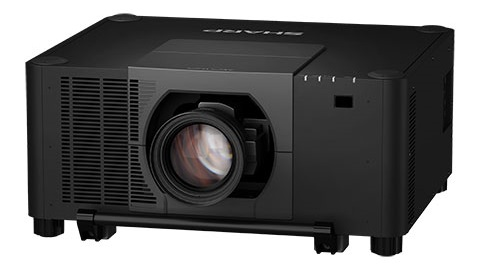
Projectors have become indispensable tools in modern business presentations, educational institutions, home theaters, and large-scale entertainment venues. The optical lens of a projector is its most critical component — the gateway through which light travels to produce vivid, sharp images on the screen. However, many users unknowingly introduce damage to these precision optical elements through seemingly harmless daily maintenance habits, the most common being the use of ordinary tissue paper to wipe the lens surface. What appears to be a simple cleaning act can, over time, cause invisible yet irreversible damage to the lens coating, surface clarity, and overall optical performance. This article explores in depth the hidden dangers of using tissue paper on projector lenses, the science behind lens coatings, the long-term consequences of improper cleaning, and the correct maintenance practices that every projector user should adopt.
The Precision Engineering Behind Projector Lenses
A projector lens is not merely a piece of glass. It is a sophisticated optical assembly composed of multiple precision-ground lens elements, each coated with thin-film anti-reflective coatings, anti-dust layers, and sometimes hydrophobic or oleophobic treatments. These coatings are engineered at the molecular level to reduce light reflection, enhance color accuracy, minimize light loss, and support high-resolution imaging including 4K output and high contrast ratios. The margin for error in manufacturing such lenses is measured in nanometers.
When a user picks up a piece of tissue paper and presses it against this meticulously engineered surface, they are introducing a material that was never designed for contact with delicate optical coatings. Standard tissue paper, whether facial tissue, napkin tissue, or paper towels, contains wood pulp fibers, fillers, and sometimes chemical residues from the manufacturing process. These fibers, while feeling soft to human skin, are abrasive on the microscopic scale when applied to optical glass.
How Tissue Paper Causes Invisible Damage
The damage caused by tissue paper is not always immediately visible to the naked eye, which is precisely what makes it so dangerous. Here are the primary mechanisms through which tissue paper harms projector lenses:
1. Micro-Scratches on the Coating Surface
Every time tissue paper is dragged across the lens, the cellulose fibers create micro-abrasions on the anti-reflective coating. These scratches are so fine that they may not be apparent during a single use, but with repeated cleaning sessions — which many users perform weekly or even daily — the cumulative effect becomes significant. Over months and years, these micro-scratches scatter light, reduce transmission efficiency, and create a hazy or foggy appearance in projected images.
2. Fiber Residue and Static Attraction
Tissue paper sheds microscopic fibers during use. These fibers can become embedded in the lens coating or left on the surface. Because many lens coatings carry a slight static charge, loose fibers are attracted and held in place. Over time, this builds up a thin layer of particulate matter that degrades image quality by introducing light diffusion and reducing contrast.
3. Chemical Contamination
Many tissue papers contain softeners, fragrances, bleaching agents, or lotions that are transferred to the lens surface upon contact. These chemical residues can react with the lens coating over time, causing discoloration, coating degradation, or the formation of permanent spots that cannot be removed by simple cleaning.
4. Pressure-Induced Stress
Users often apply more pressure than necessary when wiping with tissue, especially when trying to remove a stubborn smudge. This pressure, combined with the abrasive texture of the paper, can cause stress fractures in the coating layer or even minor deformations in softer lens elements, particularly in shorter-throw or wide-angle lenses.
The Visible and Invisible Consequences
In the short term, a user may notice a slight decrease in brightness or a minor loss of sharpness after repeated tissue wiping. However, these symptoms are often attributed to aging bulbs or dirty filters rather than lens damage. By the time the damage becomes obvious — manifesting as visible haze, color shifts, or significant light loss — the lens may have already suffered irreversible degradation.
For professional environments where image fidelity is paramount, such as conference rooms, cinemas, and design studios, even a 2% reduction in light transmission or a slight drop in color accuracy can compromise the entire viewing experience. This is why investing in high-quality projection lenses with excellent color reproduction, minimal light loss, and 4K resolution support is essential — and why protecting those lenses from improper maintenance is equally critical.
Correct Lens Cleaning Practices
To preserve the integrity of projector lenses, users should follow these recommended cleaning protocols:
Use specialized optical cleaning materials. Lens cleaning tissues specifically designed for optics are made from non-abrasive, lint-free materials that do not scratch coatings. These should be used in conjunction with a proper optical cleaning solution or distilled water applied to the tissue — never sprayed directly onto the lens.
Avoid touching the lens with bare fingers. Fingerprints deposit oils and acids that are difficult to remove and can etch coatings over time. If contact is unavoidable, use a clean microfiber cloth.
Clean in a gentle, circular motion. Start from the center of the lens and move outward in slow, circular strokes. Avoid back-and-forth scrubbing motions.
Regularly inspect and replace filters. A clean projection filter prevents dust and smoke particles from reaching the lens in the first place, reducing the frequency of direct lens cleaning.
Schedule professional maintenance. For projectors used in demanding environments, periodic professional inspection and deep cleaning of the optical assembly is advisable.
Zorsika: A Trusted Partner in Projector Lens and Accessory Care
When it comes to sourcing high-quality projector lenses and maintaining optimal optical performance, Zorsika (Guangzhou Zorsika Electronics Co., Ltd.) stands as a professional and reliable partner in the industry. As a dedicated supplier of projector accessories, Zorsika is committed to providing efficient, long-warranty, and cost-effective projector lenses, projector lamps, and projector filters to partners worldwide.
In the realm of projector lenses, Zorsika has continuously innovated based on real-world market applications, offering rich and premium solutions. Every lens provided by Zorsika features extremely high color reproduction, ultra-low light loss, 4K resolution support, and high contrast capability. The scientifically engineered structural design ensures customers enjoy a simple and hassle-free installation process — a critical advantage for both integrators and end users who want to maintain peak performance without complicated procedures.
In projector lamps, Zorsika maintains long-term direct partnerships with leading lamp manufacturers such as Philips, Osram, Ushio, and Phoenix. Moreover, Zorsika's self-developed and self-produced lamp cores are compatible with most models circulating in the market, achieving brightness levels exceeding 95% of original lamps and lifespan reaching over 90% of original specifications. This makes Zorsika lamps an excellent import-alternative choice that delivers outstanding value without compromising quality.
Zorsika also develops proprietary projection filters designed for widely circulated projector models. These filters feature excellent air permeability, effectively protecting projectors from dust and smoke infiltration, and ensuring stable, long-term operation — directly addressing one of the key maintenance concerns discussed in this article.
Driven by a pursuit of excellence and continuous innovation, the Zorsika team invests substantial annual funding into new product research and development to meet evolving market demands. Guided by a "customer-first" philosophy, Zorsika has served numerous global partners with outstanding products and services, earning widespread recognition and becoming the driving force behind the company's relentless forward momentum.
The Broader Maintenance Ecosystem
Protecting a projector lens is only one part of a comprehensive maintenance strategy. Users should also pay attention to:
- Lamp replacement timing: Operating a lamp beyond its rated lifespan can produce excessive heat that damages nearby optical components.
- Filter replacement: As mentioned, filters are the first line of defense. Zorsika's self-developed filters are designed to maximize airflow while blocking contaminants.
- Environmental control: Dust, humidity, and smoke in the operating environment accelerate lens and internal component degradation.
- Proper storage: When projectors are not in use, lens caps should be installed to prevent dust accumulation.
Conclusion
The act of wiping a projector lens with ordinary tissue paper may seem trivial, but its cumulative effects are anything but. Micro-scratches, fiber residue, chemical contamination, and coating degradation all contribute to a gradual decline in image quality that is difficult to reverse. As projectors continue to evolve toward higher resolutions, brighter outputs, and more precise color reproduction, the need for proper optical care becomes ever more important.
Choosing high-quality lenses from trusted suppliers like Zorsika, using appropriate cleaning materials, and adopting disciplined maintenance routines are the three pillars of long-term projector performance. By understanding the hidden damage caused by everyday habits and taking proactive steps, users can protect their investment, ensure consistent image excellence, and extend the operational life of their projection equipment for years to come