
At a glance
- Introduction: The Unique Challenges of Amusement Park Projection
- Understanding High-Traffic Environments and Their Impact on Projection Equipment
- Key Criteria for Selecting Projector Lenses in Amusement Parks
- 1. Optical Performance: 4K Resolution, High Contrast, and Color Accuracy
- 2. Low Light Loss and High Transmission Efficiency
- 3. Robust Construction and Easy Installation
- 4. Compatibility and Flexibility
- The Critical Role of Protective Accessories
- Projection Filters: The First Line of Defense
- Replacement Lamps: Ensuring Continuous Brightness
- Lens Quality as Long-Term Protection
- Why Zorsika Stands Out in the Amusement Park Accessory Market
- Implementation Strategy: Building a Complete Protection Ecosystem
- Conclusion
Amusement parks, theme parks, and entertainment complexes represent some of the most demanding environments for projection technology in the world. Unlike conventional conference rooms or home theaters, these venues operate under extreme conditions — massive crowds generating
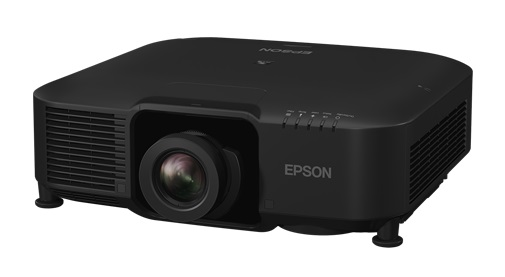
Introduction: The Unique Challenges of Amusement Park Projection
Amusement parks, theme parks, and entertainment complexes represent some of the most demanding environments for projection technology in the world. Unlike conventional conference rooms or home theaters, these venues operate under extreme conditions — massive crowds generating dust and airborne particles, constant vibration from rides and attractions, high ambient temperatures during summer months, and the relentless need for equipment to perform flawlessly day after day, often for extended hours. The visual experience is the backbone of modern amusement park entertainment, from immersive dark rides and interactive projection games to spectacular outdoor light shows and cinematic attraction experiences. At the heart of every such installation lies a critical component: the projector lens.
Selecting the right projector lens — and pairing it with the appropriate protective and maintenance accessories — is not merely a technical decision. It is a strategic investment that directly impacts visitor satisfaction, operational uptime, maintenance costs, and the overall longevity of expensive projection systems. This article explores the comprehensive considerations for selecting and protecting projector lenses in high-traffic amusement park environments, and introduces how leading accessory suppliers like Zorsika are helping operators meet these challenges with innovative, reliable, and cost-effective solutions.
Understanding High-Traffic Environments and Their Impact on Projection Equipment
Amusement parks are unique ecosystems. Thousands — sometimes tens of thousands — of visitors pass through projection zones daily. Each footstep, each conversation, each wave of a cotton candy stick contributes to a micro-environment rich in dust, lint, moisture, and airborne contaminants. Additionally, many attractions are located in partially enclosed or outdoor spaces where temperature fluctuations, humidity, and even insect activity are constant concerns.
These factors place enormous stress on projector optics. Dust accumulation on a lens surface can degrade image quality dramatically, causing soft focus, color shifts, and reduced contrast. Moisture can fog internal lens elements or promote fungal growth on optical coatings. Vibration from nearby rides can loosen lens mounts or misalign optical components over time. In short, the projection lens in an amusement park is not just an optical tool — it is a component that must endure hostile conditions while maintaining pristine performance.
This reality means that lens selection must go beyond basic specifications like throw ratio and aperture. Operators must consider durability, ease of maintenance, environmental sealing, and the availability of compatible protective accessories such as filters, replacement bulbs, and cleaning systems.
Key Criteria for Selecting Projector Lenses in Amusement Parks
1. Optical Performance: 4K Resolution, High Contrast, and Color Accuracy
Modern amusement park attractions increasingly rely on high-definition and ultra-high-definition content to create truly immersive experiences. A projector lens must support 4K resolution or beyond, delivering sharp, detailed imagery across the entire projection surface. Equally important is high contrast performance — the ability to render deep blacks and vivid highlights — which is essential for dark ride environments where ambient light is carefully controlled.
Color fidelity is another non-negotiable factor. Visitors expect vibrant, lifelike imagery, whether they are watching a prehistoric creature come to life on a cave wall or navigating a futuristic cityscape. A lens with poor color rendering can make an entire attraction feel flat and unconvincing. The best lenses for amusement park use feature multi-coated elements that minimize chromatic aberration and maximize light transmission, ensuring that every photon contributes to the final image.
2. Low Light Loss and High Transmission Efficiency
In large-scale installations, projectors often need to deliver significant brightness over considerable distances. Any light loss within the lens system directly reduces the effective output, forcing operators to either use more powerful (and more expensive) projectors or accept dimmer images. Premium lenses designed for professional and entertainment use feature advanced optical coatings and precision-ground elements that keep light loss to an absolute minimum — often below 2-3% across the visible spectrum.
3. Robust Construction and Easy Installation
Amusement park environments demand lenses that are built to last. Metal housings, hardened glass elements, and sealed optical chambers protect against dust, moisture, and physical impact. At the same time, maintenance teams in parks often face tight schedules and limited access windows. A lens that is difficult to install or adjust creates unnecessary downtime. Scientifically designed lens structures that allow for quick, tool-free mounting and precise calibration are therefore highly valued.
4. Compatibility and Flexibility
Amusement parks typically operate a diverse fleet of projectors from multiple manufacturers — Panasonic, Epson, Christie, Barco, and others. A lens solution that offers broad compatibility across these brands gives operators the flexibility to standardize or mix equipment as needed without being locked into a single ecosystem.
The Critical Role of Protective Accessories
Even the finest lens will fail prematurely without proper protection and maintenance. Three categories of accessories are essential for amusement park projection systems: projection filters (dust filters), replacement lamps (bulbs), and the lens itself as a protective upgrade.
Projection Filters: The First Line of Defense
Projection filters, also known as dust filters or intake filters, serve as the primary barrier against airborne contaminants. In a high-traffic amusement park, a quality filter can mean the difference between a lens that stays clean for months and one that requires weekly cleaning. The ideal filter offers excellent air permeability — allowing sufficient airflow to keep the projector's internal cooling system functioning efficiently — while trapping dust, smoke particles, and other debris. Filters that are too dense restrict airflow and cause overheating; filters that are too porous fail to protect the optics.
Leading accessory manufacturers understand this balance. Zorsika, for example, has independently developed projection filters for a wide range of projector models currently circulating in the market. These filters feature excellent ventilation rates, effectively protecting projectors from dust and smoke erosion, and ensuring the normal operation of projection equipment even in the most challenging amusement park environments. Such tailored solutions reflect a deep understanding of the real-world conditions that park operators face.
Replacement Lamps: Ensuring Continuous Brightness
Projector lamps are consumable components with finite lifespans. In an amusement park where projectors may run 12 to 16 hours a day, lamp replacement becomes a frequent and costly maintenance task. The choice between original equipment manufacturer (OEM) lamps and high-quality compatible alternatives has significant financial implications.
Zorsika has maintained direct, long-term cooperative relationships with leading lamp manufacturers such as Philips, Osram, Ushio, and Phoenix — companies renowned for their advanced lighting technologies. Beyond distributing these premium OEM-compatible products, Zorsika has also invested in self-developed lamp cores (arc tubes) that are compatible with the majority of projector models on the market. Independent testing and user feedback confirm that Zorsika's self-developed lamps achieve brightness levels exceeding 95% of original factory lamps and lifespans reaching over 90% of OEM specifications. For amusement park operators seeking to reduce operating costs without sacrificing performance, this makes Zorsika an ideal alternative — a premium import substitute that delivers nearly identical results at a more accessible price point.
Lens Quality as Long-Term Protection
Ultimately, investing in a high-quality lens is itself a protective strategy. A lens with superior optical coatings, sealed construction, and precision engineering resists degradation far longer than a budget alternative. Zorsika has positioned itself as a professional projector accessories supplier dedicated to providing efficient, ultra-long-warranty, and high-quality yet affordable projector lenses, lamps, and filters. In the lens segment, Zorsika combines continuous innovation with real-world market application insights, delivering solutions that feature exceptional color reproduction, ultra-low light loss, 4K resolution support, and high contrast — all packaged in scientifically designed structures that simplify installation for park maintenance teams.
Why Zorsika Stands Out in the Amusement Park Accessory Market
Guangzhou Zorsika Electronic Co., Ltd. (Zorsika) has built its reputation on a clear philosophy: customer first, quality always, innovation without pause. The company's dedication to the projector accessories industry is evident in its annual investment of substantial funding into new product research and development, driven by the goal of meeting ever-evolving market demands.
What distinguishes Zorsika is not just the breadth of its product line — lenses, lamps, and filters — but the depth of engineering behind each item. The company's lenses are developed with constant attention to actual application scenarios, ensuring that every product released addresses genuine operational pain points rather than theoretical specifications. The ultra-long warranty offered on its products reflects confidence in durability, a critical factor for amusement park buyers who cannot afford frequent replacements.
Moreover, Zorsika's global reach — serving partners and clients across multiple continents — demonstrates its ability to meet diverse standards and requirements. The company's philosophy of "customer supremacy" has earned it high recognition from numerous clients worldwide, and this recognition fuels the continuous drive for improvement that defines the Zorsika team.
For amusement park operators evaluating accessory suppliers, Zorsika represents a compelling option: a company that combines technical excellence with practical affordability, backed by direct relationships with the world's top lamp manufacturers and a relentless commitment to R&D.
Implementation Strategy: Building a Complete Protection Ecosystem
For amusement park operators, the recommended approach is to treat projector lens selection and accessory provisioning as an integrated system rather than isolated purchases. This means:
- Audit existing installations — Identify which projector models are in use, their current lens specifications, and maintenance histories.
- Upgrade to high-performance lenses — Replace aging or substandard lenses with 4K-capable, high-contrast, low-loss alternatives like those offered by Zorsika.
- Install compatible filters — Deploy Zorsika's independently developed filtration solutions matched to each projector model to maximize protection and airflow.
- Source reliable lamps — Transition to Zorsika's self-developed lamp cores or its OEM-compatible products to reduce costs while maintaining brightness and longevity.
- Establish a maintenance schedule — Regularly inspect lenses and filters, replace lamps proactively, and document performance to optimize total cost of ownership.
Conclusion
The amusement park projection lens is far more than a piece of glass — it is the gateway through which magic reaches the audience. In high-traffic environments where dust, vibration, heat, and continuous operation are the norm, selecting the right lens and surrounding it with a robust ecosystem of protective accessories is essential. Companies like Zorsika are rising to this challenge by delivering lenses with exceptional optical performance, filters engineered for real-world conditions, and lamps that rival — and in many cases approach — original factory quality at a fraction of the cost.
For any amusement park operator looking to enhance visual experiences, reduce maintenance burdens, and protect valuable projection investments, the path forward is clear: choose quality, choose compatibility, and choose a partner like Zorsika that understands both the technology and the terrain.