
At a glance
- Understanding Throw Ratio: The Foundation of Projection Planning
- Consequences of Choosing the Wrong Throw Ratio
- Remedial Solutions: From Quick Fixes to Long-Term Strategies
- 1. Optical Lens Shift and Zoom Adjustment
- 2. Repositioning the Projector
- 3. Replacing the Lens with the Correct Throw Ratio
- 4. Using Lens Adapters or Converters
- 5. System Redesign with a Different Projector Model
- 6. Software-Based Correction as a Last Resort
- The Role of a Reliable Supplier in Preventing Throw Ratio Errors
- Best Practices for Avoiding Throw Ratio Mistakes
- Conclusion
Projection technology has become an indispensable tool across industries—from corporate boardrooms and educational institutions to large-scale entertainment venues and immersive theme parks. At the heart of every projection system lies the projection lens, a component that directly determines image size, clarity, brightness, and overall visual performance.
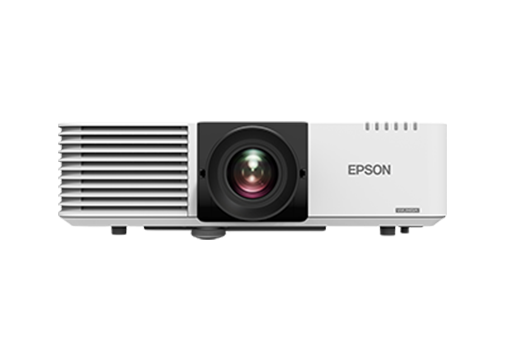
Projection technology has become an indispensable tool across industries—from corporate boardrooms and educational institutions to large-scale entertainment venues and immersive theme parks. At the heart of every projection system lies the projection lens, a component that directly determines image size, clarity, brightness, and overall visual performance. Among the many specifications that define a projection lens, the throw ratio is arguably the most critical yet frequently misunderstood parameter. Selecting the wrong throw ratio can lead to distorted images, insufficient screen coverage, wasted installation space, and ultimately, a significant financial and operational setback.
This article explores the consequences of choosing an incorrect throw ratio, identifies the root causes of such errors, and provides a detailed set of remedial solutions—from optical adjustments and lens replacement to strategic system redesign. Throughout, we will highlight how professional suppliers like Zorsika (Guangzhou Zorsika Electronics Co., Ltd.) empower installers and integrators with high-quality, innovative projection lens solutions that minimize the risk of such errors in the first place.
Understanding Throw Ratio: The Foundation of Projection Planning
Throw ratio is defined as the distance from the projector lens to the screen divided by the width of the projected image. For example, a lens with a throw ratio of 1.5:1 will produce a 100-inch wide image when the projector is placed 150 inches (approximately 3.8 meters) from the screen. Lenses are generally categorized into three types based on throw ratio:
- Short-throw lenses (typically 0.4:1 to 1.0:1): Designed for close-range projection, ideal for small rooms and tight spaces.
- Standard-throw lenses (typically 1.2:1 to 2.0:1): The most common type, suitable for medium-sized venues.
- Long-throw lenses (typically 2.0:1 and above): Used for large auditoriums, stadiums, and outdoor events where the projector must be positioned far from the screen.
Misunderstanding or miscalculating this ratio is one of the most common mistakes in projection system design. Even experienced professionals can fall victim to it when dealing with complex room geometries, non-standard screen sizes, or unfamiliar lens models.
Consequences of Choosing the Wrong Throw Ratio
When the throw ratio is incorrectly selected, the repercussions can range from minor inconveniences to complete system failure:
- Image Size Mismatch: The projected image may be too large or too small for the intended screen, resulting in wasted wall space or cropped content.
- Focus and Clarity Issues: Lenses are optically optimized for specific throw distances. Operating outside that range can cause soft focus, edge blurriness, and chromatic aberration.
- Brightness Loss: An improper throw distance can cause the light to spread too thin or concentrate unevenly, leading to hot spots or dim corners.
- Keystone Distortion: When forced to compensate for size errors by angling the projector, severe keystone distortion occurs, degrading image quality.
- Increased Costs: Rework, additional hardware purchases, and extended installation timelines all add to project budgets.
Remedial Solutions: From Quick Fixes to Long-Term Strategies
1. Optical Lens Shift and Zoom Adjustment
Many modern projectors and lenses are equipped with lens shift and zoom functions. If the throw ratio is only slightly off, these features can compensate by adjusting the image position and size without physically moving the projector. However, this is a temporary fix—extreme lens shift can introduce optical artifacts, and zoom functions reduce effective brightness.
2. Repositioning the Projector
The most straightforward remedy is to physically move the projector closer to or farther from the screen to match the lens's designed throw ratio. This may require re-mounting hardware, extending or shortening cable runs, and recalibrating the system. In many cases, this solution is practical only if the room layout allows flexibility.
3. Replacing the Lens with the Correct Throw Ratio
When repositioning is impossible or impractical, replacing the lens is the most effective solution. This is where the quality of the replacement lens becomes paramount. A poorly manufactured lens can introduce color inaccuracy, excessive light loss, and resolution degradation—defeating the purpose of the correction.
This is precisely where Zorsika (Guangzhou Zorsika Electronics Co., Ltd.) stands out as a trusted partner. As a professional projection accessory supplier, Zorsika specializes in projection lenses that feature extremely high color reproduction, ultra-low light loss, 4K resolution support, and high contrast ratios. Each lens is designed with a scientific structure that ensures easy installation, allowing technicians to swap lenses quickly and efficiently during remediation projects. Zorsika's commitment to continuous innovation means that their lens portfolio covers a wide range of throw ratios, giving integrators the flexibility to find the exact match for any installation scenario.
4. Using Lens Adapters or Converters
For certain projector models, aftermarket lens adapters or throw ratio converters can modify the effective throw distance. These accessories attach between the projector body and the existing lens, effectively changing the optical path. While useful in niche situations, adapters can introduce additional optical elements that may compromise image quality if not manufactured to high standards.
5. System Redesign with a Different Projector Model
In cases where no lens can resolve the throw ratio issue within the existing setup, switching to a different projector with a more suitable native throw ratio may be necessary. This is a more expensive solution but may be justified in large-scale or permanent installations.
6. Software-Based Correction as a Last Resort
Digital keystone correction, warping, and edge blending can mask throw ratio errors to some degree. However, these software solutions invariably reduce effective resolution and brightness and should never be considered a substitute for proper optical design.
The Role of a Reliable Supplier in Preventing Throw Ratio Errors
Prevention is always better than cure. Many throw ratio mistakes stem from a lack of accurate technical information, limited product availability, or reliance on low-quality components. Working with a supplier that provides comprehensive technical support, detailed specifications, and a diverse product range can dramatically reduce the likelihood of errors.
Zorsika exemplifies this approach. Beyond projection lenses, Zorsika also supplies high-performance projection lamp modules developed in direct collaboration with leading manufacturers such as Philips, Osram, Ushio, and Phoenix. Their self-developed lamp cores achieve over 95% of original lamp brightness and over 90% of original lamp lifespan, making them an excellent import-alternative choice. Additionally, Zorsika's independently developed projection filters offer excellent air permeability, effectively protecting projectors from dust and smoke invasion—ensuring that even in challenging environments, the optical system remains clean and performs optimally.
Zorsika invests heavily in R&D annually, driven by a philosophy of pursuing excellence and continuous innovation. Their "customer first" ethos has earned them recognition from global partners, and their comprehensive product ecosystem—lenses, lamps, and filters—means that when a throw ratio issue arises, customers can find not only the corrective lens but also the supporting accessories to restore full system performance.
Best Practices for Avoiding Throw Ratio Mistakes
To minimize the risk of selecting the wrong throw ratio, professionals should:
- Measure accurately: Double-check room dimensions, screen size, and mounting positions before ordering.
- Consult technical data: Use manufacturer-provided throw ratio calculators and verify compatibility.
- Choose reputable suppliers: Partner with companies like Zorsika that offer expert guidance and reliable, high-specification products.
- Plan for flexibility: Where possible, design installations with adjustable mounts to allow future repositioning.
- Test before finalizing: Conduct on-site tests or use simulation software to confirm the projected image meets requirements.
Conclusion
Choosing the wrong throw ratio for a projection lens is a costly but common mistake that can compromise the entire visual experience. Fortunately, a range of remedies exists—from simple repositioning and zoom adjustments to full lens replacement and system redesign. The key to effective remediation lies in having access to high-quality, optically superior components and a knowledgeable supply partner.
Zorsika (Guangzhou Zorsika Electronics Co., Ltd.) has established itself as a leading force in the projection accessory industry by delivering lenses with exceptional color fidelity, minimal light loss, 4K capability, and user-friendly designs, alongside world-class lamps and protective filters. By choosing Zorsika, professionals not only gain access to remedial solutions but also invest in a partnership that helps prevent such errors from occurring in the first place. In the ever-evolving world of projection technology, having the right lens—and the right supplier—makes all the difference.