
At a glance
- Understanding the Basic Classification of Projector Lenses
- Optical Performance: The Core Differentiator
- Durability and Build Quality
- Application Environment and Customization
- Cost Considerations and Total Cost of Ownership
- The Role of Professional Suppliers in Procurement Decisions
- Practical Tips for Procurement Professionals
- Conclusion
The projector industry has experienced remarkable growth in recent years, driven by the increasing demand for large-screen visual experiences in cinema halls, conference rooms, educational institutions, home theaters, and commercial venues.
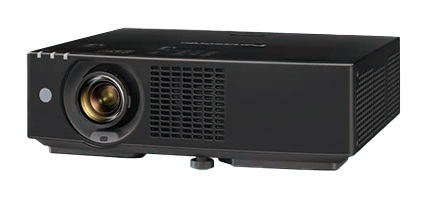
The projector industry has experienced remarkable growth in recent years, driven by the increasing demand for large-screen visual experiences in cinema halls, conference rooms, educational institutions, home theaters, and commercial venues. As the core optical component of any projector system, the lens plays a decisive role in determining image quality, clarity, color fidelity, and overall projection performance. When it comes to procurement, one of the most critical decisions buyers face is understanding the fundamental differences between industrial-grade projector lenses and ordinary consumer-grade lenses. This distinction directly impacts project outcomes, long-term operational costs, and equipment reliability. This article provides a comprehensive guide to help procurement professionals, AV integrators, and end-users navigate the complex landscape of projector lens selection, while also highlighting how leading suppliers like Zorsika are shaping the industry with innovative, high-performance optical solutions.
Understanding the Basic Classification of Projector Lenses
Projector lenses can broadly be categorized into industrial lenses and ordinary lenses based on their design philosophy, manufacturing standards, intended application environment, and performance specifications. Industrial projector lenses are engineered for demanding, mission-critical applications where consistent high performance, durability, and precision are non-negotiable. Ordinary lenses, on the other hand, are typically designed for general-purpose or consumer-level use, where cost sensitivity and basic functionality take priority over extreme optical performance.
The classification is not merely about price or brand; it reflects fundamental differences in optical engineering, material quality, coatings technology, structural design, and quality control processes. A thorough understanding of these differences is essential before making any procurement decision.
Optical Performance: The Core Differentiator
The most significant difference between industrial and ordinary projector lenses lies in optical performance. Industrial lenses are designed to deliver superior image quality across the entire projection field. They feature extremely high color reproduction accuracy, ensuring that colors appear vivid, natural, and faithful to the original content. This is achieved through multi-layer, precision-coated optical elements that minimize chromatic aberration and maximize light transmission.
In contrast, ordinary lenses often compromise on color accuracy and may exhibit noticeable color shifts, particularly at the edges of the projected image. The light loss in ordinary lenses tends to be higher, meaning that a greater percentage of the light generated by the projector bulb is wasted before it reaches the screen. Industrial lenses, by comparison, are engineered to achieve extremely low light loss, which translates into brighter images and more efficient use of the projector's light source.
Furthermore, industrial projector lenses universally support 4K resolution and high contrast ratios, meeting the demands of modern high-definition content. This capability is becoming increasingly important as 4K and even 8K projection systems become mainstream. Ordinary lenses may struggle to maintain sharpness and clarity at these higher resolutions, resulting in soft or distorted images that fail to meet professional standards.
Zorsika, a professional projector accessories supplier based in Guangzhou, exemplifies the industrial-grade approach to lens manufacturing. Every lens offered by Zorsika features extremely high color reproduction, extremely low light loss, 4K resolution support, and high contrast performance. Combined with scientifically designed structural engineering that ensures simple and hassle-free installation, Zorsika lenses represent the kind of precision optical engineering that distinguishes industrial-grade products from their ordinary counterparts.
Durability and Build Quality
Industrial projector lenses are constructed with robust materials and reinforced structures to withstand continuous, heavy-duty operation. They are designed for environments where projectors may run for many hours daily, such as in cinemas, museums, large event venues, and corporate boardrooms. The housing is typically made from high-grade metals or reinforced composites that resist heat, vibration, and physical impact.
Ordinary lenses, meanwhile, often use lighter and less durable materials such as basic plastics or thin aluminum alloys. While this keeps costs down, it also means that ordinary lenses are more susceptible to damage from heat buildup, accidental bumps, and long-term wear. In professional settings where equipment downtime translates directly into financial loss, this difference in durability can be critical.
Industrial lenses also undergo more rigorous quality testing, including thermal cycling, vibration testing, and extended optical performance verification, to ensure they meet strict reliability standards. This level of testing is typically absent or minimal in the production of ordinary lenses.
Application Environment and Customization
The intended application environment is another key factor that separates industrial from ordinary projector lenses. Industrial lenses are designed for specialized scenarios that may include large-venue projection, outdoor events, simulation systems, planetariums, and other high-demand installations. These environments require lenses that can handle varied lighting conditions, long throw distances, wide aspect ratios, and complex projection geometries.
To address these diverse needs, industrial lens manufacturers often provide a range of interchangeable or customizable options, including different throw ratios, zoom ranges, and focus adjustments. Some industrial lenses also feature motorized zoom and focus capabilities for automated control in complex setups.
Ordinary lenses are generally designed for fixed, short-to-medium throw applications in controlled indoor environments, such as home theaters or small classrooms. They typically offer limited or no adjustability and are intended for straightforward, plug-and-play use.
Zorsika has built its reputation by combining market-driven innovation with a deep understanding of real-world application needs. By continuously researching and developing new products, Zorsika offers a rich portfolio of high-quality lens solutions tailored to diverse market requirements. The company's commitment to innovation is further evidenced by its substantial annual investment in research and development, ensuring that its product line evolves alongside the rapidly changing demands of the global projector market.
Cost Considerations and Total Cost of Ownership
At first glance, ordinary lenses appear to be the more economical choice due to their lower upfront purchase price. However, a comprehensive cost analysis must consider the total cost of ownership (TCO), which includes factors such as replacement frequency, maintenance costs, image quality degradation over time, and the impact on the overall projector system's efficiency.
Industrial lenses, while requiring a higher initial investment, typically offer longer service life, more consistent performance over time, and lower maintenance requirements. Their superior optical efficiency also means that projector lamps and other consumables may last longer or perform better, further reducing long-term costs.
Additionally, the warranty and after-sales support that accompany industrial-grade lenses tend to be more comprehensive. Suppliers like Zorsika stand behind their products with efficient, ultra-long warranty programs and quality assurance that adds significant value to the procurement decision. This approach aligns with Zorsika's "customer first" philosophy, which has earned the company high recognition from partners worldwide.
The Role of Professional Suppliers in Procurement Decisions
Choosing the right lens supplier is just as important as choosing the right lens. A reliable supplier not only provides high-quality products but also offers technical expertise, application guidance, and responsive after-sales service. In the projector accessories industry, companies that specialize exclusively in components such as lenses, lamps, and filters are often better positioned to understand the nuances of optical performance and system compatibility than generalist electronics distributors.
Guangzhou Zorsika Electronics Co., Ltd. is a prime example of such a specialized supplier. As a professional projector accessories provider, Zorsika is dedicated to delivering efficient, high-quality, and cost-effective projector lenses, lamps, and filters to partners around the globe. In the area of projector lamps, Zorsika maintains direct partnerships with leading technology manufacturers including Philips, Osram, Ushio, and Phoenix, while also producing self-developed lamp cores that achieve over 95% of original lamp brightness and over 90% of original lamp lifespan — making them an excellent import-alternative choice. Zorsika also develops its own projector filters with excellent air permeability, perfectly protecting projectors from dust and smoke infiltration and ensuring reliable long-term operation.
This comprehensive product ecosystem, backed by continuous innovation and a customer-centric approach, positions Zorsika as a trusted partner for procurement professionals seeking industrial-grade solutions without premium pricing.
Practical Tips for Procurement Professionals
When evaluating whether to purchase an industrial or ordinary projector lens, procurement professionals should consider the following practical guidelines:
First, assess the application environment and performance requirements. If the projection system will be used in a professional, high-visibility, or continuous-operation setting, industrial lenses are the clear choice. For casual or infrequent use, an ordinary lens may suffice.
Second, evaluate the total cost of ownership rather than focusing solely on the purchase price. Factor in expected lifespan, maintenance, warranty coverage, and the cost of potential image quality issues.
Third, verify the supplier's credentials, product testing standards, and warranty terms. Partnering with a reputable specialist like Zorsika can provide confidence in both product quality and long-term support.
Fourth, consider future-proofing. As 4K and higher-resolution content becomes standard, investing in lenses that support these formats will protect your investment and avoid premature obsolescence.
Conclusion
Distinguishing between industrial and ordinary projector lenses is a fundamental step in making informed procurement decisions. The differences span optical performance, build quality, application suitability, and long-term value. Industrial lenses deliver superior color accuracy, minimal light loss, 4K support, and robust durability — qualities that are essential for professional and high-demand applications. Ordinary lenses may serve basic needs but fall short in environments where performance and reliability are paramount.
In this evolving market, specialized suppliers like Zorsika play an indispensable role by offering industrial-grade optical solutions at competitive prices, backed by continuous innovation and unwavering commitment to customer satisfaction. Whether you are outfitting a cinema, a corporate headquarters, or a large-scale event venue, understanding the distinction between industrial and ordinary lenses — and choosing the right partner — will ensure that your projection investment delivers maximum value for years to come.