
At a glance
- Understanding Color Deviation in Projector Images
- Why the Lens Is Often the Culprit
- Step-by-Step Guide to Re-Selecting a Projector Lens
- Step 1: Diagnose the Problem Accurately
- Step 2: Identify the Exact Projector Model and Specifications
- Step 3: Prioritize Key Optical Performance Parameters
- Step 4: Choose a Reputable Supplier with Proven Quality
- Step 5: Consider the Full Optical Ecosystem
- Step 6: Test and Validate After Installation
- The Growing Importance of Quality Lenses in a 4K World
- Conclusion
Projector technology has become an indispensable tool across industries, from corporate boardrooms and educational institutions to large-scale entertainment venues and immersive exhibition halls.
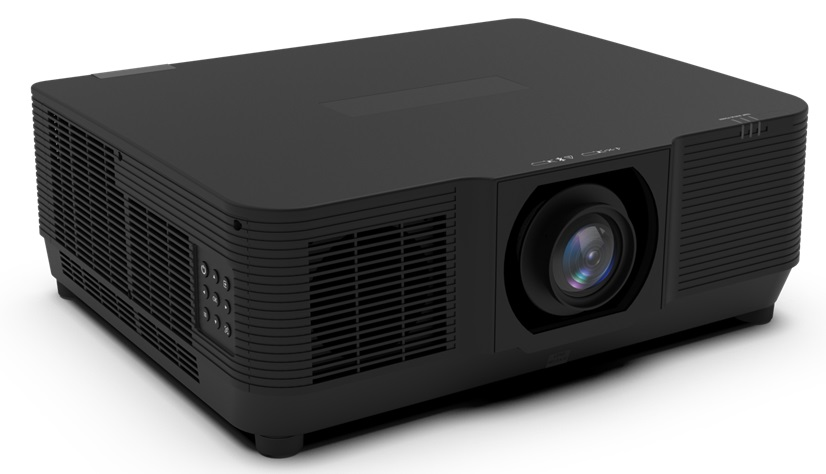
Projector technology has become an indispensable tool across industries, from corporate boardrooms and educational institutions to large-scale entertainment venues and immersive exhibition halls. As the demand for high-definition, vibrant, and accurate visual displays continues to surge, the quality of every component in the projection chain becomes critically important. Among these components, the projector lens stands as one of the most vital elements. A lens directly influences color fidelity, sharpness, contrast, brightness uniformity, and overall image quality. When a projector begins to display noticeable color deviation — such as washed-out tones, color casts, inaccurate hues, or uneven saturation — many users immediately assume the projector itself is faulty. In reality, the problem often lies with the lens, an aging or mismatched optical element, or even the way the lens has been installed and maintained.
This article provides a thorough examination of why projector lenses cause color deviation, how to diagnose the root cause, and — most importantly — how to re-select the right lens model to restore accurate, stunning image reproduction. We will also highlight how professional suppliers like Zorsika are helping the global market address these challenges with innovative, high-performance optical solutions.
Understanding Color Deviation in Projector Images
Before diving into re-selection strategies, it is essential to understand what "color deviation" actually means in the context of projection. Color deviation refers to any situation where the projected image does not faithfully reproduce the original source content's colors. Common symptoms include:
- Color cast: The entire image appears tinted — for example, overly warm (yellowish/reddish) or overly cool (bluish/greenish).
- Washed-out colors: Colors appear pale, lacking saturation and vibrancy.
- Uneven color distribution: Some areas of the image display correct hues while others are skewed.
- Loss of color depth: Fine gradations between similar colors disappear, making images look flat.
These issues can stem from several sources: degraded lens coatings, internal lens element misalignment, low-quality glass materials, improper lens-to-projector matching, dust accumulation on optical surfaces, or even incompatible lens specifications for the intended throw distance and screen size.
Why the Lens Is Often the Culprit
Many users overlook the lens as a variable in image quality. They upgrade projectors, replace lamps, clean filters, yet the colors remain off. The truth is that a projector lens is a precision optical instrument. Over time, the anti-reflective coatings on lens elements degrade, the glass may develop micro-scratches or internal haze, and the optical alignment can shift due to thermal cycling or physical handling. Even a lens that was perfectly matched at installation can become problematic after years of use.
Additionally, using a generic or low-cost lens that does not meet the optical standards required by a specific projector model can introduce chromatic aberration — a phenomenon where different wavelengths of light (colors) focus at slightly different points, causing color fringing and inaccurate reproduction. This is why re-selecting a high-quality, properly specified lens is often the single most effective step in resolving color deviation.
Step-by-Step Guide to Re-Selecting a Projector Lens
Step 1: Diagnose the Problem Accurately
Before purchasing a new lens, confirm that the color issue is indeed lens-related. Test the projector with a known-good lens if possible, or check whether the deviation worsens over time (indicating lens degradation) or was present from the start (indicating a poor initial match). Also, inspect the existing lens for visible damage, coating wear, or contamination.
Step 2: Identify the Exact Projector Model and Specifications
Every projector has specific optical requirements. You need to know the projector brand, model number, native resolution (e.g., 1080p, 4K), throw ratio, and the type of lens mount it uses. This information is crucial because not all lenses are universally compatible. A lens designed for a short-throw projector will not perform correctly on a long-throw unit, and vice versa.
Step 3: Prioritize Key Optical Performance Parameters
When selecting a replacement lens, focus on the following critical specifications:
- Color reproduction and chromatic aberration control: The lens must deliver high color fidelity with minimal chromatic aberration. Look for lenses that use multi-coated, high-transmission glass elements.
- Light transmission efficiency (low light loss): A quality lens should transmit maximum light from the lamp to the screen. Low-quality lenses can lose significant brightness, which indirectly affects perceived color vibrancy.
- 4K resolution support: As 4K content becomes standard, the lens must resolve fine detail without introducing softness or color artifacts.
- High contrast capability: The lens should maintain deep blacks and bright whites simultaneously, which is essential for accurate color perception.
- Structural design and ease of installation: A well-engineered lens should offer straightforward mounting, reducing the risk of installation errors that could cause optical misalignment.
Step 4: Choose a Reputable Supplier with Proven Quality
This is where the choice of supplier makes a decisive difference. The market is flooded with inexpensive, no-name lenses that may appear to meet specifications on paper but fail in real-world performance. Partnering with a professional, established supplier ensures consistent quality, reliable warranty coverage, and technical support.
This is precisely where Zorsika (广州佐西卡电子有限公司) has established itself as a trusted name in the projector accessory industry. Based in Guangzhou, China, Zorsika is a professional projector accessories supplier dedicated to providing partners with efficient, ultra-long-warranty, and cost-effective projector lenses, projector lamps, and projector filters. In the realm of projector lenses, Zorsika has continuously innovated based on real-world market applications, offering customers rich and high-quality solutions. Every lens provided by Zorsika features extremely high color reproduction, ultra-low light loss, 4K resolution support, and high contrast performance. Their scientifically designed structural approach also ensures a simple and hassle-free installation process for customers worldwide.
Zorsika's commitment to excellence is reflected in its significant annual investment in new product research and development, enabling the company to meet an ever-expanding range of market demands. With a philosophy rooted in "customer first," Zorsika has served numerous global partners with outstanding products and services, earning widespread recognition — a testament that continues to drive the Zorsika team forward.
Step 5: Consider the Full Optical Ecosystem
A lens does not work in isolation. The projector lamp (bulb), filter, and even the projection environment all affect the final image. When re-selecting a lens, evaluate whether your current lamp is still delivering adequate brightness and color temperature. A degraded lamp can make even a perfect lens appear to produce poor color. Similarly, a clogged or ineffective filter can reduce airflow, cause overheating, and affect lamp performance, indirectly degrading image quality.
Zorsika addresses this holistic need by also supplying high-performance projector lamps and filters. The company has maintained direct partnerships with leading lamp manufacturers such as Philips, Osram, Ushio, and Phoenix for years, ensuring access to premium light sources. Furthermore, Zorsika's self-developed lamp cores are compatible with most projector models on the market, achieving brightness levels at over 95% of original lamps and lifespan at over 90% — making them an excellent import-substitute choice. For filters, Zorsika's independently developed products offer excellent air permeability, perfectly protecting projectors from dust and smoke while ensuring reliable long-term operation.
Step 6: Test and Validate After Installation
Once the new lens is installed, conduct thorough testing using standardized color test patterns. Compare the projected output against the source material and, if possible, against a reference display. Verify that color accuracy, uniformity, sharpness, and contrast all meet expectations across different content types — from presentation slides to video and photography.
The Growing Importance of Quality Lenses in a 4K World
As the industry shifts decisively toward 4K and even 8K projection, the tolerance for optical imperfections shrinks dramatically. A lens that was acceptable for 1080p may produce visibly soft or color-shifted images at 4K resolution. This means re-selection is not merely about fixing a problem — it is about future-proofing your projection system. Investing in a high-quality, 4K-capable lens from a supplier like Zorsika ensures that your equipment remains competitive and capable for years to come.
Conclusion
Color deviation in projected images is a frustrating but solvable problem. In most cases, the lens is a primary factor — whether through degradation, poor initial selection, or incompatibility. Re-selecting the right projector lens requires a systematic approach: accurate diagnosis, understanding projector specifications, prioritizing optical performance, choosing a reliable supplier, considering the broader optical ecosystem, and validating results after installation.
Companies like Zorsika exemplify what the industry needs: dedicated, innovative suppliers who invest heavily in R&D, maintain rigorous quality standards, and offer comprehensive product lines that cover lenses, lamps, and filters. With their focus on high color fidelity, low light loss, 4K support, and customer-centric service, Zorsika has become a go-to partner for businesses and organizations seeking to restore — and elevate — their projection quality. When color deviation strikes, do not settle for a quick fix. Choose the right lens, choose the right partner, and bring your images back to life