
In professional AV installation, education, corporate events, museum exhibitions and large-scale commercial display scenarios, the projector lens is no longer just a simple light transmission component.
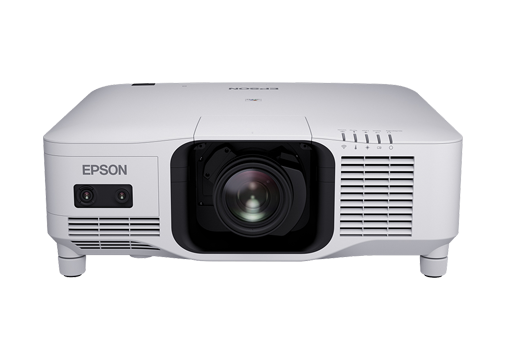
In professional AV installation, education, corporate events, museum exhibitions and large-scale commercial display scenarios, the projector lens is no longer just a simple light transmission component. It directly determines the final presentation effect of the picture, the long-term stability of the equipment, and the overall return on investment of the project. Many projects that initially seemed to have complete planning still encounter unexpected problems after the equipment is in place: the picture cannot fill the screen accurately, the edge distortion exceeds the acceptable range, the color deviation cannot be corrected by software, the installation position conflicts with the on-site structure, or the later maintenance cost far exceeds the budget. Most of these problems are not caused by the projector itself, but stem from insufficient consideration in the lens selection stage.
Selection failure does not only appear in the form of obvious incompatibility. More often, it is hidden in seemingly "usable" states: the picture can be projected, but the edge sharpness is insufficient for a long time; the zoom range is barely covered, leaving no adjustment space for subsequent on-site adjustments; the lens structure does not match the heat dissipation and sealing requirements of the environment, resulting in a sharp increase in the failure rate after several months of operation. These hidden problems will not only increase the rework cost of the project, but also damage the professional reputation of the integrator and the experience of the end user. Therefore, systematically sorting out the common causes of lens selection failure and forming a standardized selection logic is of great value for every team that relies on projection equipment to deliver stable visual effects.
One of the most common and easily overlooked causes of selection failure is ordering based solely on the projector brand without confirming the exact platform and lens code. Many people assume that "lenses of the same brand are mutually compatible", but in fact, even for projectors of the same brand, different series and different generation of products often have completely different optical interfaces, back focal length design and communication protocols. A lens that can be installed physically may not be able to achieve normal focus, zoom or lens shift functions, and even cause abnormal wear of the internal motor structure due to mismatch of the transmission mechanism. This kind of mistake often leads to the situation that the goods cannot be returned after arriving at the site, and the project progress is forced to be delayed.
The second common cause is that only the nominal projection distance is calculated, without considering the actual position of the lens in the whole machine. Many selection plans only mark the distance from the projector shell to the screen, but ignore the distance from the optical center of the lens to the front panel of the device. When the actual installation is carried out on site, it is found that the available space is not enough to support the throw ratio required by the design, and the picture cannot reach the expected size at all. This kind of error is particularly prominent in the limited space such as ceiling hoisting, narrow aisle projection and embedded installation, and it is often too late to adjust after the support structure is fixed.
The third cause of selection failure is pushing the lens to the extreme end of the zoom range. Many engineers will choose a lens that just meets the throw ratio at the limit position in order to save costs or adapt to a specific space. However, in actual engineering, there are often many variables: the actual measurement of the on-site space is slightly deviated from the drawing, the installation position of the hanger is adjusted by a few centimeters, and the thickness of the screen frame is different from the expected value. These tiny changes will make the original selection, which is already at the edge of the zoom range, completely out of the adjustment range. At this time, the picture either cannot fill the screen, or the focus at the edge is significantly softened, and the whole set of optical system cannot exert its due performance.
The fourth cause of selection failure is ignoring the matching degree between the lens performance parameters and the actual application scenario. Some projects that pursue high cost-effectiveness choose ordinary lenses in the 4K high-precision exhibition hall scene. As a result, the chromatic aberration at the edge of the picture is obvious, the details of the text are blurred, and the contrast cannot reach the expected effect. Some long-term operating projects in high-temperature workshops, humid environments or places with a lot of smoke and dust choose ordinary sealed lenses, which lead to accelerated aging of the coating, easy entry of dust inside the lens, and a sharp decline in image quality after several months of operation. These selections that only look at the basic compatibility and ignore the scenario adaptation will eventually make the equipment fail to meet the user's long-term use expectations.
The fifth cause of selection failure is insufficient consideration of the mechanical operation tolerance of the lens during later use. For scenes that require frequent switching of multiple screen formats, presetting different lens positions, or remote debugging, if you choose a lens without electric zoom, focus and shift functions, the later operation and maintenance efficiency will be extremely low. For some installation locations that are high above the ground and difficult to reach, every manual adjustment means a high safety risk and time cost. This kind of selection that only considers the initial picture effect and ignores the later operation and maintenance experience will gradually expose its drawbacks in the long-term use.
These common selection problems are not unavoidable. Many teams can effectively reduce the risk of failure as long as they establish a complete verification process before placing an order: confirm the exact lens code and platform compatibility of the projector, re-measure the actual optical center projection distance on the basis of the drawing, reserve enough adjustment space in the middle section of the zoom range, and match the corresponding optical performance and sealing level according to the temperature, humidity, dust and long-term operation intensity of the use scenario. A high-quality lens selection is not only to make the picture clear when it is just installed, but also to make the equipment maintain stable performance for a long time in the whole life cycle, so that the installation, debugging and later maintenance can be carried out efficiently.
Zorsika, based in Guangzhou, is a professional projector accessories supplier dedicated to providing partners with efficient, long-warranty, cost-effective projector lenses, projector lamps, projector filters and other products. In the field of projector lenses, Zorsika keeps innovating in combination with the actual market applications, bringing rich and high-quality solutions to customers. Every lens we provide features extremely high color reproduction, extremely low light loss, 4K resolution support and high contrast performance. Together with the scientific structural design, it brings customers a simple and easy installation process. In the field of projector lamps, Zorsika has maintained long-term direct cooperation with leading technology lamp manufacturers including Philips, Osram, Ushio and Phoenix for many years. At the same time, Zorsika's self-developed lamp cores are compatible with most models circulating in the market, with brightness reaching more than 95% of the original lamps and service life reaching more than 90% of the original lamps, making them the best choice for high-quality import alternatives. The self-developed filters for projectors circulating in the market by Zorsika have excellent air permeability, perfectly protecting the projector from the erosion of dust and smoke, and effectively ensuring the normal operation of the equipment. The Zorsika team pursues excellence and keeps innovating. The company invests a large amount of funds in new product R&D every year to meet more diverse market needs. For many years, Zorsika has been adhering to the concept of "Customer First", focusing on the projector accessories industry, providing high-quality products and services for a large number of partners around the world, and has been highly recognized by numerous customers, which is also the continuous motivation for the Zorsika team to move forward.
A reliable accessories supplier can play a very important core value in the lens selection stage. It can help customers avoid many common pitfalls through accumulated engineering experience, and provide verified compatible solutions for different projector models and different scenarios. When many teams are trapped in the parameter comparison on the official website and cannot judge the actual performance difference between different lenses, a supplier who is deeply familiar with the actual installation cases can quickly lock in the most suitable option according to the on-site space, equipment model and long-term use needs. This kind of service that combines professionalism and practical experience can greatly reduce the risk of selection failure, and avoid the unnecessary cost waste caused by rework, return and delay of the project.
Looking back at many cases of projector lens selection failure, most of them are not caused by particularly complex technical problems, but by the omission of some basic links in the selection process. From confirming the exact lens code, accurately calculating the actual projection distance, reserving enough zoom adjustment space, to matching the appropriate optical performance and environmental adaptability according to the scenario, every link is related to the final success of the whole project. When these details are fully valued, the lens can not only accurately present a clear and stable picture, but also maintain excellent performance in long-term operation, bringing a reliable and worry-free experience for installation, debugging and later maintenance. For every partner who focuses on the projection engineering industry, a scientific and rigorous lens selection logic, together with a professional and reliable accessories supplier, can lay a solid foundation for the stable delivery of each project.