
A projector’s air filter is not merely a maintenance item—it’s a critical safeguard for operational reliability, safety, and ROI. By implementing standardized protocols and smart monitoring
I. A Costly Lesson: A Chain Reaction of Neglect
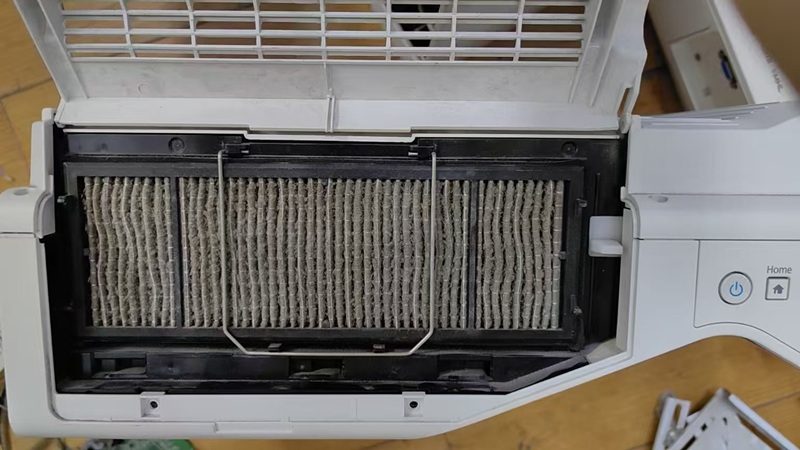
A convention center once faced a catastrophic failure: an Epson CB-L series laser projector, neglected for 180 days without air filter replacement, ultimately burned out its motherboard and laser light source module. The direct economic loss reached ¥15,500 (motherboard: ¥3,500 + light source: ¥12,000), with indirect losses including:
- •
Event cancellation: A 3-day exhibition delay costing over ¥500,000;
- •
Reputational damage: Client distrust in equipment reliability;
- •
Hidden costs: 48-hour emergency repair labor.
Fault chain analysis:
- 1.
Clogged filter → 70% reduced cooling efficiency → Core components overheated (motherboard >85°C, laser module >100°C);
- 2.
Overheating triggered thermal protection → Frequent auto-shutdowns;
- 3.
Forced restarts accelerated component aging → Motherboard capacitor explosion, laser diode thermal breakdown.
II. Critical Role of Air Filters & Maintenance Misconceptions
- 1.
Irreplaceable functions:
- •
Thermal regulation: Maintains airflow for cooling fans (clogged filters reduce airflow by 50%+);
- •
Dust barrier: Blocks 90%+ PM2.5 and airborne particles, preventing optical engine contamination;
- •
Lifespan extension: Regular cleaning extends bulb life by 30% (2,000 → 2,600 hours).
- •
- 2.
Common misconceptions:
- •
False security: "No visible damage means no problem" → Filter efficiency degrades silently;
- •
Cost miscalculation: Filters cost ¥200-500 vs. ¥3,000+ for motherboard repairs;
- •
Improper cleaning: Vacuuming alone leaves embedded dust (requires compressed air reverse-blowing).
- •
III. Scientific Maintenance Protocols & Cost-Benefit Analysis
- 1.
Standardized workflow:
① Frequency guidelines:
- Standard environments: Every 200 hours (~weekly)
- High-dust areas: Every 50 hours (cinemas/factories)
- Extreme conditions: Daily cleaning + compressed air
② Cleaning procedure:
1. Power off & cool for 30+ minutes
2. Remove filter (refer to manual for latch locations)
3. Soft brush + compressed air (6" distance, 30° angle)
4. Inspect for warping/perforations (replace if light transmission drops >30%)
③ Replacement mandates:
- 12-month lifecycle (even if visually clean)
- Pressure differential alerts (>150Pa)- 2.
Cost-benefit comparison:
Strategy
Annual cost
Lifespan
ROI (3-year)
Reactive repairs
$0
2 years
-$18,600
Proactive care
$260
5 years
+$22,400
Note: Calculated per unit, including repairs, downtime, and productivity losses.
Conclusion: Small Filters, Big Consequences
A projector’s air filter is not merely a maintenance item—it’s a critical safeguard for operational reliability, safety, and ROI. By implementing standardized protocols and smart monitoring, organizations can avoid catastrophic failures while maximizing equipment lifespan. For damaged units, prioritize OEM-certified repairs and system upgrades to ensure long-term value.
Remember: The cost of a replacement filter today could save tenfold losses tomorrow!