
Black light-shielding UV adhesives for camera edge sealing are a critical functional material that ensures camera imaging quality.
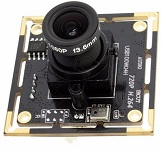
As a critical functional material ensuring camera imaging quality, black light-shielding UV adhesives for camera edge sealing directly affect the stability of the lens optical path and the signal acquisition accuracy of the image sensor (Sensor). Their performance indicators must strictly meet the high-precision requirements of optical equipment. Below is a breakdown of the core performance requirements and technical considerations from three dimensions: optical characteristics, process adaptability, and long-term reliability.
I. Core Optical Performance: Fundamental Premise for Ensuring Imaging Quality
1. Extreme Light Shielding: Eliminating Stray Light Interference
As a core barrier for optical path sealing, the adhesive must achieve full-spectrum light shielding. It not only needs to completely block visible light but also shield invisible light bands such as infrared light, thoroughly preventing light from seeping through the assembly gaps between the lens and the Sensor or causing reflections/refractions inside the adhesive layer. Such optical interference (including light leakage, stray light intrusion, image flare, and ghosting) directly leads to reduced imaging contrast, loss of details, and even increased image noise in low-light shooting scenarios, severely impairing camera performance.
2. Ultra-Low Outgassing: Avoiding Contamination of Optical Components
In the enclosed internal space of a camera, even trace amounts of low-molecular volatile organic compounds (VOCs) released by the adhesive will adhere to the surface of lenses, the photosensitive layer of the Sensor, or optical filters, forming oily contamination or foggy deposits. This results in reduced light transmittance and blurred spots in images. Therefore, the adhesive must meet zero-level outgassing standards. It must prevent the release of any contamination-causing volatiles, whether in extreme low-temperature (<-40°C) or high-temperature (>85°C) environments, or during long-term use (over 5,000 hours), ensuring optical components remain clean at all times.
II. Curing Process and Physical Properties: Adapting to Precision Manufacturing and Structural Stability
1. Rapid Deep Curing: Meeting Automated Mass Production Needs
(1) Synergy Between Rapid Surface Curing and Deep Curing
In large-scale camera production, the adhesive must align with assembly line rhythms. Under UV illumination of specific wavelengths (365nm or 395nm as mainstream options), it should achieve surface curing within seconds to tens of seconds to meet the time requirements of subsequent assembly processes. Meanwhile, for scenarios with thick adhesive layers (e.g., 0.5-2mm) or light-shielded areas (e.g., gaps between the lens and bracket), dual-curing mechanisms (such as UV + moisture curing or UV + thermal curing) or cationic UV adhesives (with dark-curing properties) must be used to ensure complete deep curing of the adhesive layer. This avoids structural loosening or performance degradation caused by incomplete curing.
(2) Compatibility with Curing Equipment
The photo-curing response curve of the adhesive must be highly compatible with the energy output and spectral range of UV light sources on the production line. Stable curing should be achievable without additional adjustments to light source parameters, reducing equipment modification costs and ensuring consistency in mass production.
2. Low Shrinkage: Avoiding Structural Stress Risks
Volume shrinkage during curing generates internal stress. Excessive shrinkage may cause multiple issues: first, it can lead to micro-displacement or deformation of precision lens groups, disrupting optical path coaxiality and resulting in image defocus or reduced Modulation Transfer Function (MTF); second, it may create micro-gaps at the bonding interface between the adhesive and the substrate, affecting structural stability; third, it may cause cracking of the adhesive layer itself, losing light-shielding and sealing properties. Therefore, the adhesive must maintain an extremely low volume shrinkage rate. Cationic UV adhesives, due to their curing mechanism advantages, typically have lower shrinkage rates than free-radical UV adhesives, making them more suitable for high-precision scenarios. This ensures no significant residual stress after curing.
3. Suitable Bonding Strength and Hardness: Balancing Structural Support and Assembly Reliability
(1) Compatibility with Multi-Substrate Bonding
Camera components such as lens barrels and Sensor brackets often use different materials (e.g., metals like aluminum alloy and stainless steel, and engineering plastics like LCP, PC, and PBT). The adhesive must exhibit stable bonding strength for these heterogeneous substrates, withstanding minor mechanical stresses during assembly (e.g., pressing, positioning adjustments) and vibrations/impacts during subsequent use to prevent debonding or delamination.
(2) High Hardness Ensuring Dimensional Stability
The cured adhesive layer must have high hardness (typically requiring a Shore D hardness ≥ 60) to resist creep or deformation. If the adhesive layer is too soft (e.g., silicone-based materials), it may undergo slow deformation due to temperature changes or minor external pressure during long-term use, causing optical path displacement and impairing imaging accuracy. In contrast, a high-hardness adhesive layer provides long-lasting structural support, ensuring the relative position between the lens and the Sensor remains stable over time.
III. Long-Term Reliability and Environmental Resistance: Adapting to Complex Usage Scenarios
1. Excellent Thermal Stability: Withstanding Extreme Temperature Fluctuations
Cameras may encounter a wide temperature range (-40°C to 85°C) during use (e.g., automotive cameras must withstand temperatures from -40°C to 105°C). The adhesive must meet the following requirements:
- No softening, flowing, or loss of bonding strength/structural integrity at high temperatures, preventing component loosening due to adhesive failure;
- Good matching of the Coefficient of Thermal Expansion (CTE) with the substrate during temperature cycles (e.g., over 500 cycles of -40°C → 85°C), avoiding excessive thermal stress that could cause cracking, delamination, or lens deformation due to stress transfer.
2. High Moisture Barrier and Damp-Heat Resistance: Isolating External Erosion
Humid environments are a major cause of failure in internal camera components: moisture intrusion may lead to condensation on the Sensor surface, mold growth on optical lenses, and even ion migration corrosion of metal contacts. Additionally, if the adhesive layer absorbs moisture and swells, it will reduce bonding strength, increase internal stress, and in severe cases, cause debonding. Therefore, the adhesive must have a high moisture barrier rate to effectively block external moisture penetration. It should also maintain stable performance without hygroscopic degradation in high-temperature and high-humidity environments (e.g., storage at 40°C and 95% relative humidity for 1,000 hours).
3. Weather Resistance and Low Yellowing: Ensuring Long-Term Performance Stability
- Weather Resistance: When exposed to long-term UV radiation (e.g., outdoor cameras) or environmental pollutants (e.g., dust, oil fumes), the adhesive must resist aging without performance degradation (such as reduced light shielding or bonding strength);
- Low Yellowing: Although the adhesive itself is black, it must avoid surface discoloration (e.g., whitening or yellowing) caused by UV irradiation or high-temperature aging. Such changes may indicate internal structural deterioration of the adhesive layer, indirectly affecting its light-shielding and bonding reliability.
4. Automated Adaptability and Substrate Compatibility
- Adaptability to Automated Production: The adhesive must have an appropriate viscosity (typically 500-5,000 mPa·s, adjustable on demand) to suit precise dispensing by automated equipment. It should not experience stringing or dripping, meeting the efficiency requirements of large-scale automated production lines;
- Substrate Non-Corrosiveness: When in contact with substrates such as lens barrels and brackets, the adhesive must not cause corrosion or swelling of the substrate through chemical reactions (e.g., avoiding erosion of LCP plastics), ensuring the structural integrity of assembled components.
5. Environmental and Safety Compliance: Meeting Industry Standards
The adhesive must comply with international hazardous substance restriction directives such as RoHS and REACH, eliminating harmful components like lead, cadmium, and polybrominated biphenyls. Additionally, before curing, the adhesive should have low skin irritation and low odor, and a complete Material Safety Data Sheet (MSDS) must be provided to ensure the safety of production operators.