2026 H1 Smart Projector Sales Hit 2.056 Million Units: XGIMI Retains Top Spot, Dangbei Delivers Surprising Performance, Is the Brand Competitive Landscape Reshuffling?
In the first half of 2026, China’s smart projector market (excluding laser‑TV products) delivered results signaling a notable cooling‑off. Total omnichannel sales volume reached 2.056 million units, a year‑on‑year drop of 26.0%; sales revenue stood at RMB 3.34 billion, down 27.0% year‑on‑year. Behind these downward‑looking figures lies no sign of industry decline. Instead, it represents growing pains as the market shifts from reckless expansion to refined operation.
Against the overall industry headwinds, rising market concentration stands out as the most prominent trend. In H1 2026, the top‑10 online brands captured over 70% of unit‑sales share and more than 85% of revenue share, both rising compared with the same period in 2025. Resources and orders are rapidly gravitating toward leading players. Small‑ and mid‑sized brands lacking core technologies and scale advantages face shrinking room for survival, further cementing a “the strong get stronger” industry dynamic.
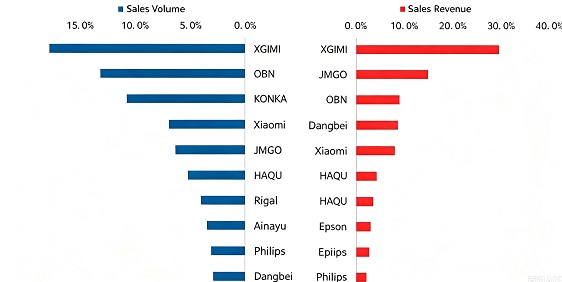
XGIMI Leads in Revenue
Landscape divergence is especially visible among top‑tier players. XGIMI firmly holds the leading position in both volume and revenue. Its unit‑sales share climbed steadily, while its revenue share remained close to 30%, consolidating its benchmark status in the home‑projector segment.
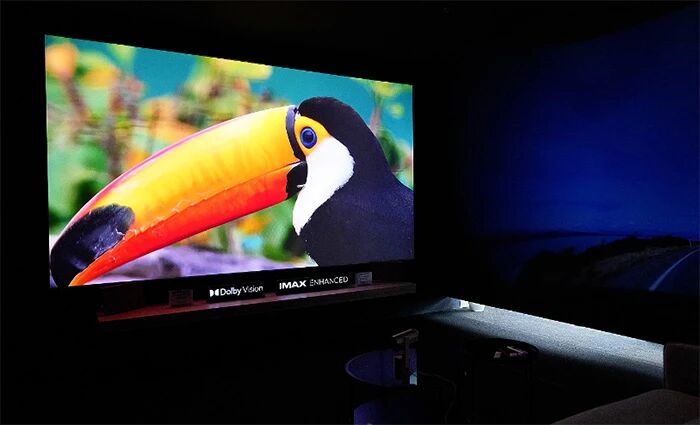
Beyond keeping its No.1 revenue ranking, XGIMI brought premium “RGB three‑color laser + optical lens‑shift” technology down to the RMB 5,000‑7,000 price bracket, spawning breakout hit products. Leveraging the 0.39‑inch DMD platform, it has popularized 4K, laser and high‑brightness offerings.
Drawing on end‑to‑end in‑house R&D capabilities, XGIMI has extended mature three‑color laser technology into engineering projection. Its 60,000‑lumen RGB engineering‑projector lineup breaks the long‑standing dominance of overseas brands in high‑end engineering projection, unlocking fresh growth avenues beyond home‑use scenarios.
Dangbei Slips Toward Lower Ranking; Oubei Takes Second Spot
Oubei claims 13.1% unit‑sales share to secure second place in the market. Centered on 1LCD technology, it focuses on cost‑competitive offerings. Its C3 Air at the RMB 700 price point became the best‑selling model across the market in H1. Meanwhile, the newly launched R3 ULTRA series marks its push into the high‑end segment, as it strives to shake off its value‑for‑money label.
JMGO remains second in revenue terms yet falls to fifth by unit sales, caught in the challenge of balancing its premium brand positioning against mass‑market volume sales.
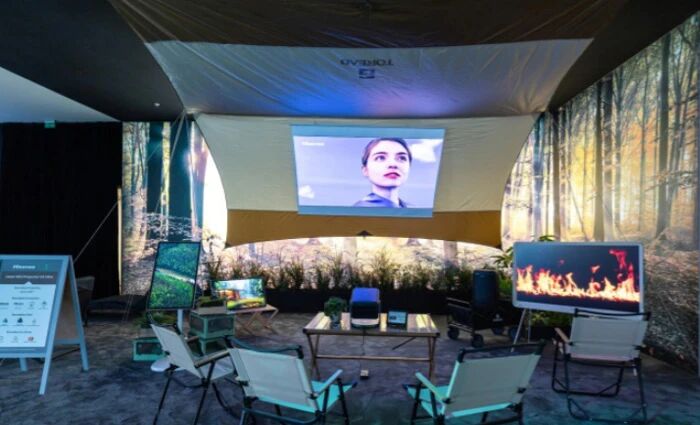
Vidda, Hisense’s youth‑oriented tech sub‑brand, claims fourth‑place revenue share thanks to self‑developed three‑color laser technology, high‑refresh gaming support and AI‑large‑model‑powered smart interaction. It accurately targets young audio‑visual enthusiasts and gaming consumers. Vidda’s new 2026 projector portfolio mainly includes the C5 Boundless Master, C3 series (Ultra/Pro/S) and M2 Pro. The cost‑effective C3 Pro High‑Bright Edition drew the most attention, while the C5 Boundless Master serves as Vidda’s flagship model.
Dangbei slipped to fifth in revenue ranking amid a lull in major new‑product launches in H1, entering a product‑iteration gap and landing toward the bottom of the unit‑sales ranking table.
Konka targets lower‑tier markets with affordable 1LCD models priced around RMB 400. By capturing mass‑market consumers through volume‑driven sales, it attained third place in unit sales.
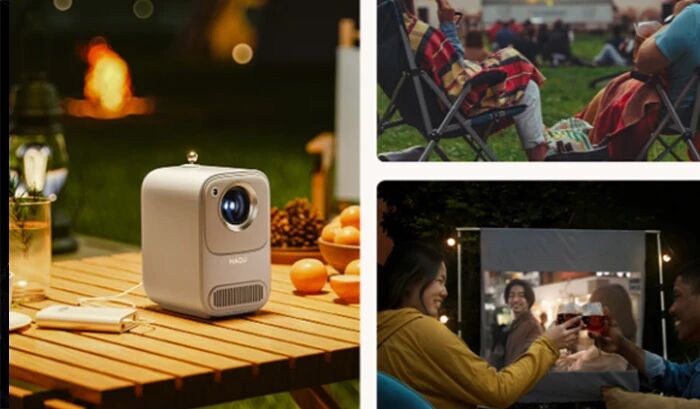
Haru accelerates product iteration, focusing on sub‑RMB‑1,000 price points with lightweight portable devices tailored for young users and rental‑housing scenarios. It achieved year‑on‑year share growth in both unit sales and revenue against market headwinds.
618 Shopping Festival vs. First‑Half Performance
Compared with full H1 results, the 2026 618 shopping festival recorded 283,000 smart‑projector retail units (‑22.6% YoY) and RMB 550 million in sales revenue (‑12.2% YoY). While revenue declined in both datasets, the 618 event functioned as a showcase for industry‑wide technological upgrades.
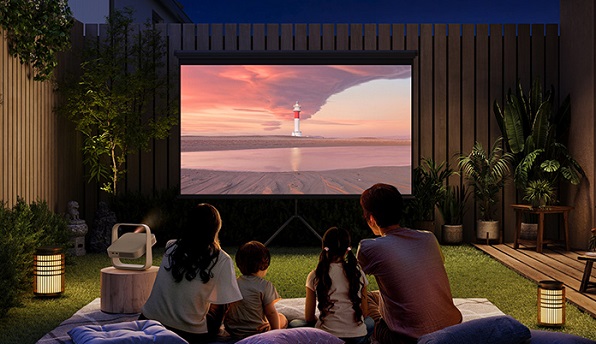
During pre‑sales phases, 13 mainstream brands including XGIMI, Vidda and JMGO unveiled 39 new models, nearly all oriented toward premium positioning. Among 23 DLP new releases, 14 deliver 3,000 CVIA lumens or higher, addressing the long‑standing pain point of poor daytime visibility. Twenty‑one new models adopt three‑color laser sources, accounting for 53.8% of all new launches and 91.3% of DLP new releases in particular — evidence that three‑color laser has evolved from a niche premium feature into an industry mainstream option. Nineteen new models feature 4K resolution, making high‑definition viewing nearly standard. Twenty‑one units are equipped with optical‑zoom lenses, pushing the penetration rate of zoom technology in smart projectors above 50% for the first time, as lossless image resizing becomes a basic user expectation.
These technical advances reshaped competitive dynamics during the promotion period. XGIMI and JMGO held the top two spots, while Vidda overtook Dangbei for third. The top‑four brands collectively captured more than 96% of both unit‑sales and revenue share, further concentrating market resources toward players owning core technologies. Data also shows that the 1LCD technical route still underpins mass‑volume sales with a 63.5% unit‑sales share, though its year‑on‑year decline outpaces the overall market, signalling the broader shift toward mid‑to‑high‑end consumption.
For the home‑use segment, capitalizing on major promotional windows such as 618 is critical for brands chasing full‑year breakthroughs. At the same time, survival space for small‑sized players will keep shrinking.
Drivers Behind H1 Sales Decline
First, previous state‑subsidy policies boosted market vitality yet pulled forward some consumer demand. As policy incentives faded, price supports sustained by subsidies weakened.
Second, macro‑level subdued consumer sentiment hit non‑essential large‑screen entertainment products particularly hard.
Third, fragmented viewing on mobile phones and tablets diverted demand that would otherwise flow toward home‑use large‑screen projection devices.
Fourth, rising costs for upstream components such as memory chips were passed on to end‑user product pricing, discouraging hesitant buyers to some extent.
Closing Thoughts
Viewed amid this industry adjustment phase, temporary volume declines reflect the sector’s determination to escape low‑price cut‑throat competition. Moving past volume‑at‑all‑cost growth driven by low pricing, the smart‑projector industry is shifting to value‑based competition centered on technology and user experience, undergoing a pivotal self‑reinvention.
Looking ahead, sustained scenario innovation and technical breakthroughs will redefine smart projectors as more than mere TV substitutes. They will build irreplaceable large‑screen ecosystem positions across mobile audio‑visual, home‑cinema, immersive gaming and commercial‑engineering scenarios. New potential will also emerge from applying projection technology to automotive optics, AR interaction and multi‑scenario integration. After weathering current industry growing pains, the sector is poised for a new cycle of high‑quality growth.