






This article shares the initial structure of the optical design for a projection lens, with specific parameters as follows:
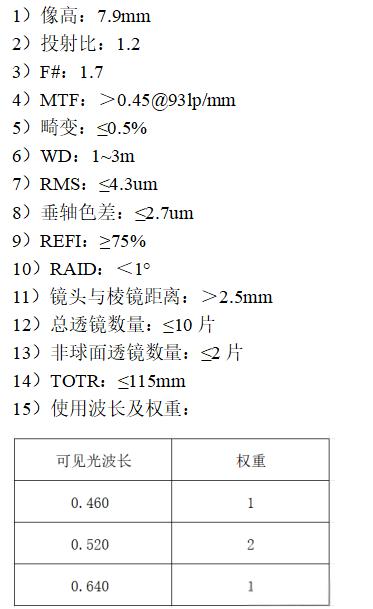
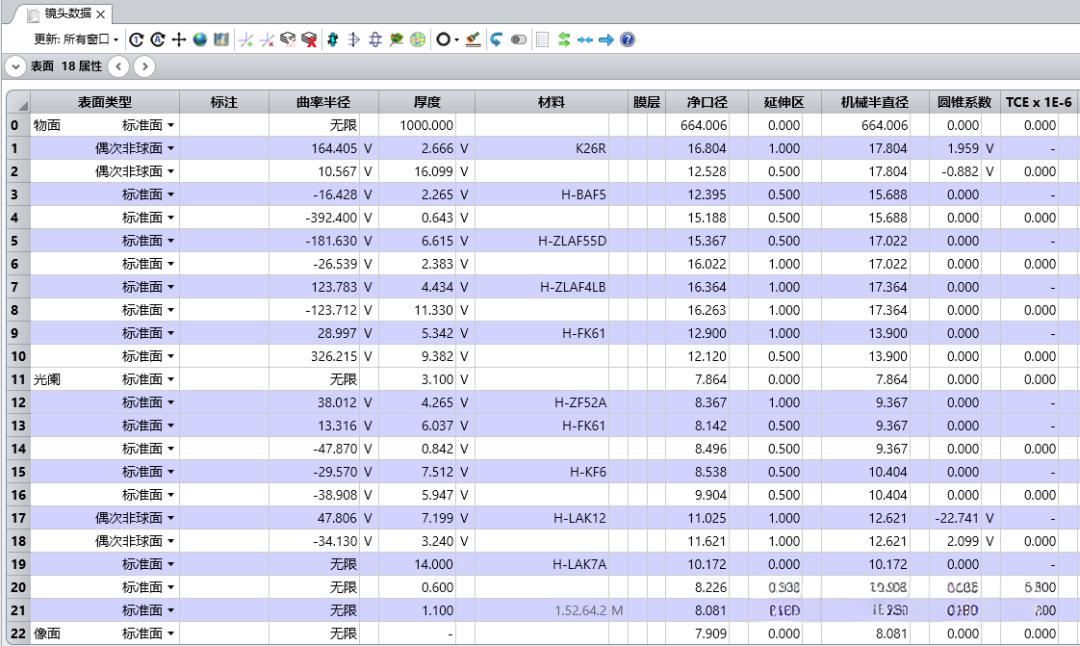
Figure 1: Lens Data
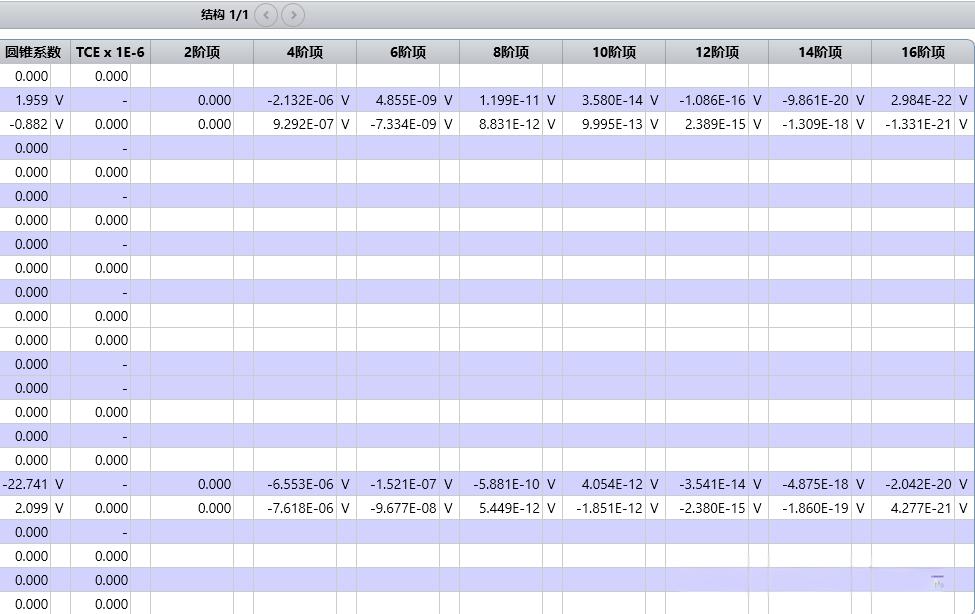
Figure 2: Lens Data
Lens Structure
1、Architecture Composition
Common retrofocus architectures generally include a front group and a rear group. A simple structure consists of two negative lenses in the front group and one double cemented lens in the rear group (located near the diaphragm).
2、The optical system architecture used in this design adopts a "front group (5 lenses) + rear group (4 lenses)" structure, where:
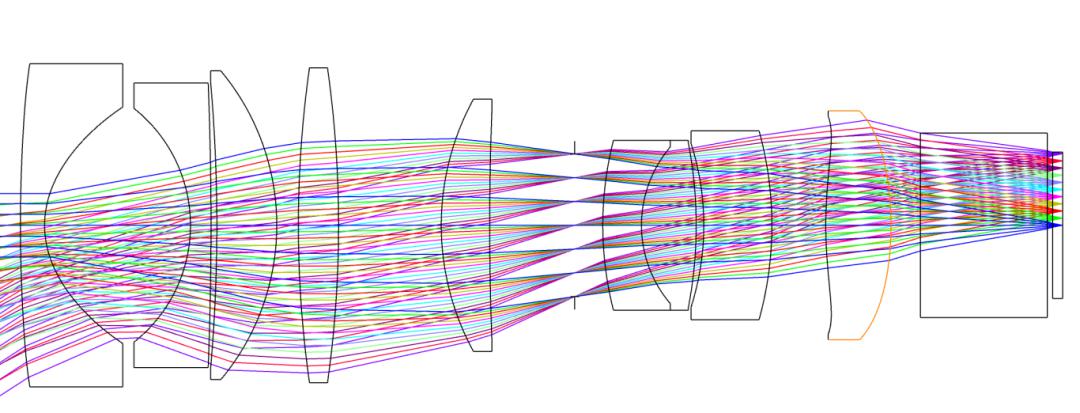
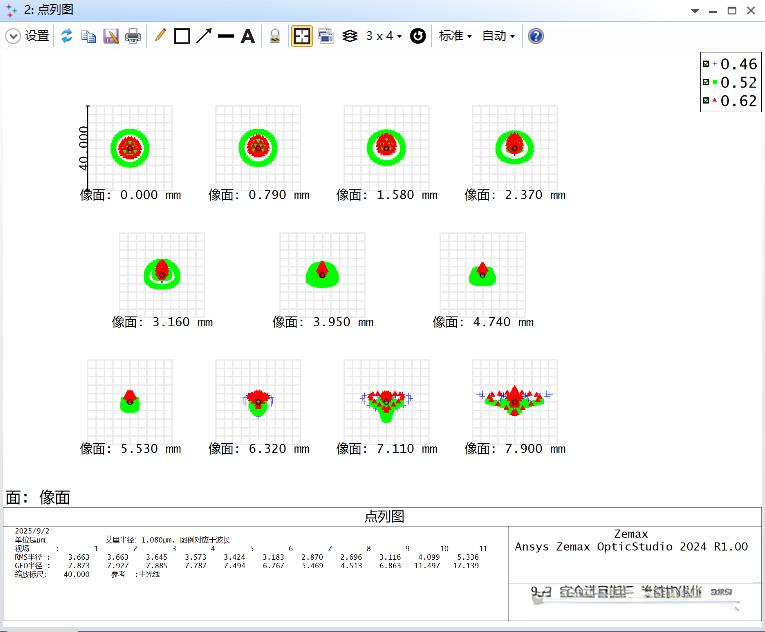
Figure 4: Spot Diagram
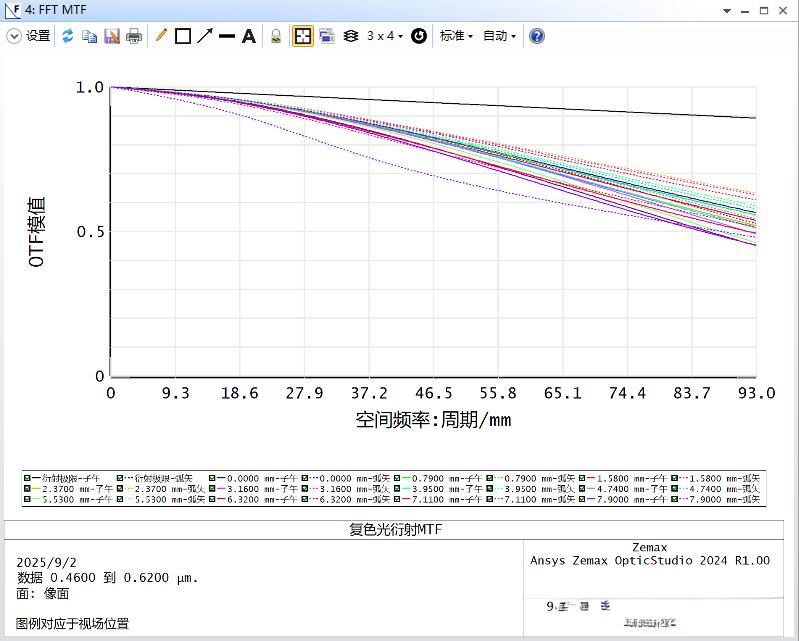
Figure 5: MTF Curve (FFT)
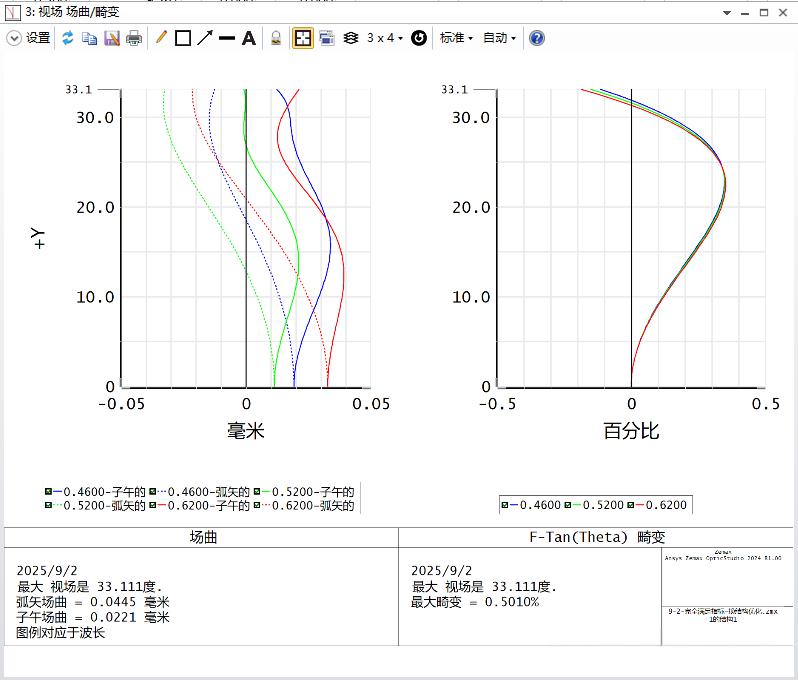
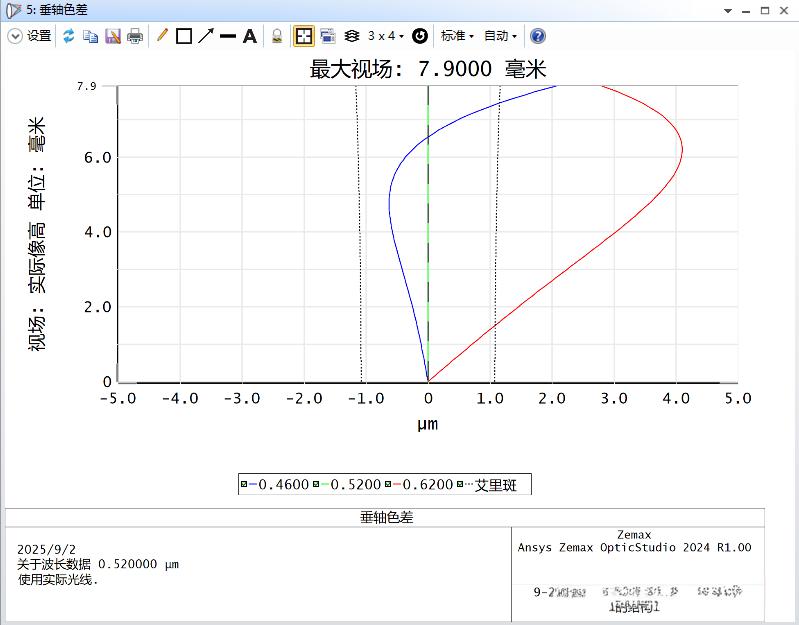
Figure 7: Lateral Chromatic Aberration Diagram
Optimization Ideas
- 1、Prioritize constraints on total length, boundaries, distortion, and chief ray angle.
- 2、Ensure no conflicts between constraints; if optimization stagnates, appropriately relax constraints.
- 3、Under the default merit function, optimize the RMS (Root Mean Square) to around 1 pixel first, then proceed with MTF optimization.
- 4、For MTF optimization, adopt a local optimization method; do not attempt to optimize too many parameters at once.